
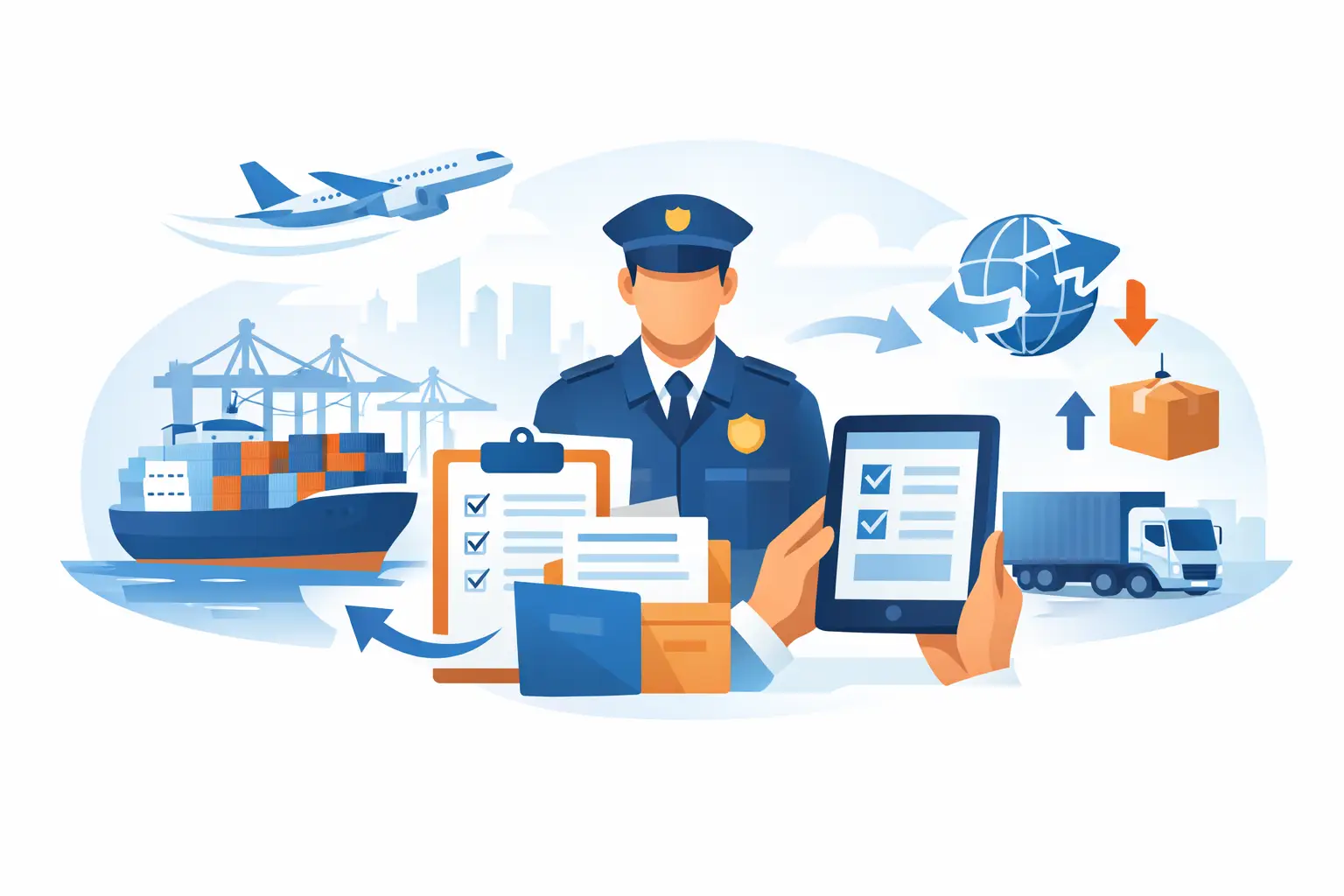
A truck is at the border, the carrier is asking for status, the warehouse is waiting on inbound product, and one bad data point can stop the whole move. That is the reality of the cbp entry filing process. It is not just a customs formality. It is the control point that determines whether freight clears cleanly, gets held for review, or creates downstream cost across transportation, inventory, and customer service.
For importers moving freight from Mexico into the United States, the filing itself is only one piece of the job. The harder part is getting the right commercial data, aligning documents from multiple parties, transmitting entry details accurately, and doing it fast enough to support real transit schedules. When teams treat entry filing as back-office paperwork, they usually pay for it in demurrage, detention, missed appointments, and production delays.
What the CBP entry filing process actually covers
At a practical level, the CBP entry filing process is how imported goods are formally presented to U.S. Customs and Border Protection for release and duty assessment. The importer of record, or its customs broker, submits shipment data, classification details, valuation information, and supporting documentation so CBP can decide whether the cargo can enter the country.
That sounds straightforward until you look at the inputs. A typical cross-border shipment may involve a shipper in Mexico, a U.S. importer, a carrier, a drayage provider, a warehouse, and separate compliance contacts handling tariff classification or trade program questions. If the invoice, packing list, bill of lading, and product data do not match exactly, the filing can stall before the truck even reaches the port.
For US-Mexico freight, timing matters even more because border operations run on handoffs. A delayed entry is rarely just a customs issue. It affects linehaul planning, trailer utilization, dock scheduling, and final delivery performance.
Core steps in the CBP entry filing process
The sequence is simple. Execution is not.
1. Shipment data is collected
The process starts with source documents. Usually that means a commercial invoice, packing list, transportation details, importer information, and product-level data needed for classification and admissibility review. Depending on the commodity, there may also be partner government agency requirements, country of origin declarations, or special program documentation.
This is where many problems begin. Documents often arrive by email, in different formats, from different parties, and at different times. Product descriptions may be vague. Quantities may not match between invoice and packing list. Manufacturer information may be incomplete. When that happens, the broker has to stop and chase corrections.
2. Classification and entry data are validated
Once the documents are in hand, the goods need to be classified under the Harmonized Tariff Schedule. That classification drives duty rate, admissibility, and whether additional agency review applies. Valuation, incoterms, country of origin, and importer details also need to be checked because each affects how the entry is filed.
There is no shortcut here. If the tariff code is wrong, the filing may still transmit, but the risk moves downstream. That can mean a CBP exam, a request for information, a post-entry correction, or exposure in an audit. Fast is good. Fast and wrong is expensive.
3. Entry information is transmitted to CBP
The customs broker submits the entry data electronically to CBP. Depending on the shipment type and mode, this may include release information first and formal entry data after, or a more consolidated filing workflow. The objective is the same: give CBP enough accurate information to determine whether the freight can be released.
If the data passes system checks and does not trigger a hold, the shipment can move toward release. If there is a mismatch, missing field, or agency flag, the process slows down immediately.
4. CBP reviews and decides release status
CBP can release the goods, reject the filing, request clarification, or place the shipment on hold for enforcement or inspection. Some holds are document-related. Others are compliance-related. In some cases, the issue has nothing to do with the carrier or transit timing and everything to do with how the shipment was described, classified, or valued.
From an operations standpoint, this is where visibility matters. If your team does not know whether a truck is waiting on customs, agriculture, exam scheduling, or a missing document, nobody can make a good recovery decision.
5. Duties, fees, and post-release requirements are handled
After release, entry processing is not necessarily over. Duties and fees must be accounted for, records must be maintained, and any corrections need to be managed properly. If the shipment qualified for a special trade program or duty treatment, that support needs to be defensible.
The filing may be complete from the carrier's perspective once the truck moves. From the importer's perspective, the compliance record stays alive much longer.
Where delays usually happen
Most border delays blamed on customs are actually data failures upstream.
The first common issue is incomplete commercial documentation. If the invoice does not contain a usable product description, manufacturer name, value breakdown, or country of origin, the broker has to guess or pause. A good broker will pause. Guessing creates larger problems later.
The second issue is fragmented communication. One person has the invoice, another has the classification file, someone else is handling the shipment appointment, and the carrier only knows the pickup number. That fragmentation creates avoidable lag, especially when freight is moving overnight or on tight plant schedules.
The third issue is manual rekeying. Every time data is copied from email to spreadsheet to broker system, the chance of error increases. One transposed quantity, one incorrect unit of measure, or one outdated tariff code can create a reject or hold.
The fourth issue is treating customs and transportation as separate workflows. They are not. If the entry team does not know when the truck will arrive, or the carrier does not know whether the filing is accepted, both sides lose time.
Why the process is harder for US-Mexico freight
Cross-border freight between Mexico and the United States is operationally dense. A single move may involve Mexican export handling, transloading or drayage, U.S. customs entry, and domestic final-mile delivery. Each handoff creates another point where data can break.
That is why operator-led control matters. If customs filing sits in one silo and transportation sits in another, nobody owns the full move. When there is one accountable workflow, teams can see document status, filing status, border status, and delivery status in sequence instead of chasing updates across vendors.
For importers moving through Laredo, that matters even more because freight volume and border timing leave little room for document lag. The filing has to be accurate, but it also has to be synchronized with the physical movement.
How to make the CBP entry filing process faster without increasing risk
The answer is not more emails, more spreadsheets, or another portal nobody wants to log into. The answer is better intake, cleaner data, and tighter operational ownership.
Start with document standardization. Your suppliers and shipping teams should know exactly what commercial data must be present before a shipment moves. If descriptions are vague at origin, they will not become clearer at the border.
Next, reduce manual touchpoints. The more often your team re-enters the same shipment data, the slower and riskier the process gets. Automation helps most when it handles repetitive intake work like pulling data from emailed documents, mapping fields correctly, and flagging exceptions before a broker has to intervene.
Then connect customs to transportation execution. A filing status should not live in a black box. Your logistics team needs to know whether freight is clear, pending, held, or missing information, because each status has a different operational response.
Finally, work with a partner that can own the workflow instead of one narrow step. Border operations break down when the broker, carrier, drayage provider, and warehouse all operate on separate clocks. A unified model reduces handoff failure and gives the importer one accountable team.
A better way to think about entry filing
The CBP entry filing process is not paperwork at the edge of the shipment. It is part of shipment execution itself. When the filing is treated as a live operational workflow, import teams get better clearance speed, fewer avoidable holds, and better control over the full move.
That is the real objective - not just getting an entry on file, but keeping freight moving with compliance fully under control. If your current process depends on chasing PDFs, reconciling conflicting data, and waiting for updates from three different providers, the problem is not volume. It is workflow design.
At the border, speed comes from clean data and clear ownership. Everything else is just waiting.