
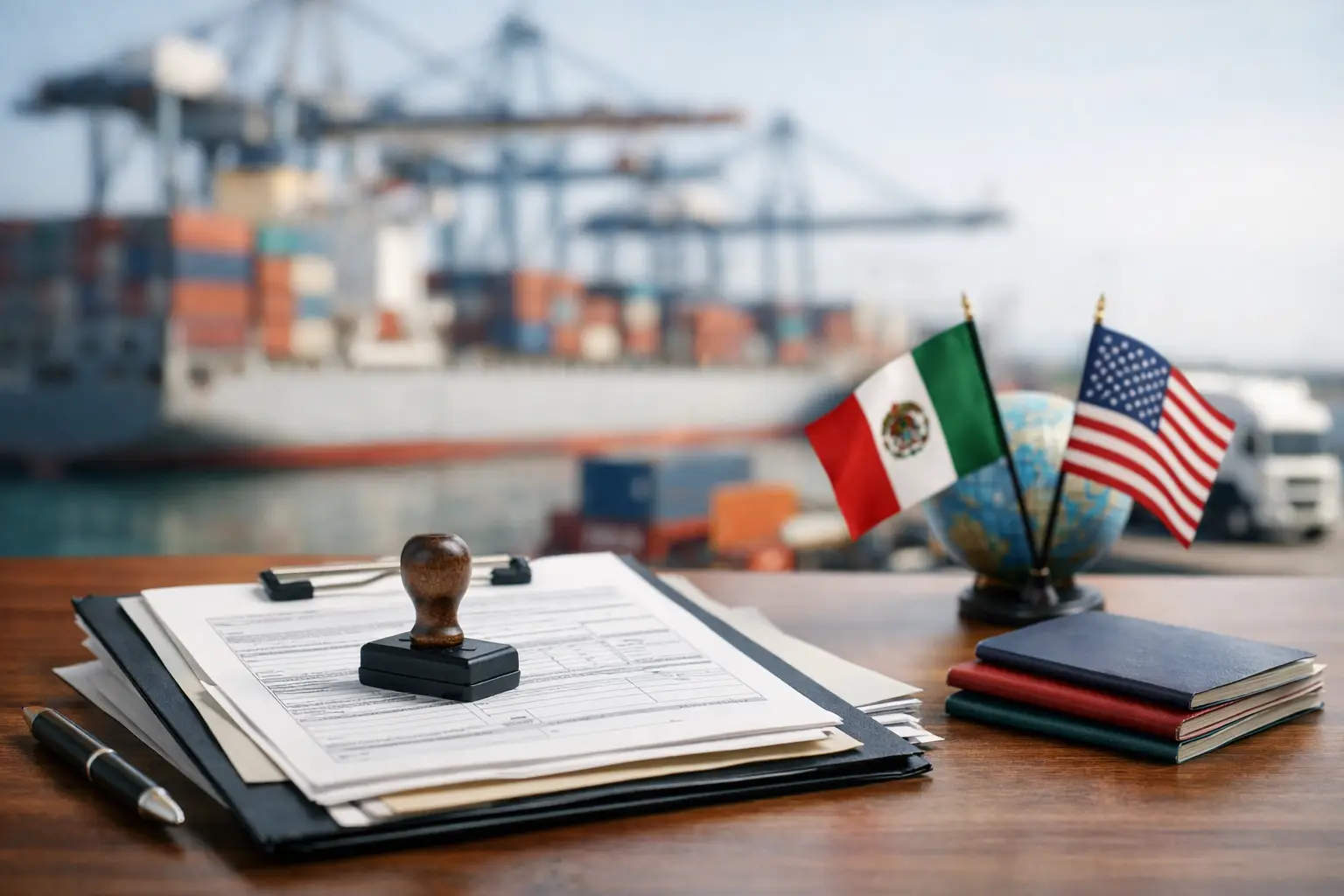
A truck is loaded, the commercial invoice is clean, the carrier is on schedule - and the shipment still stalls because the pedimento is wrong. That is why "what is a pedimento" is not a basic paperwork question. In US-Mexico trade, it is a control point. If your team moves freight into or out of Mexico, the pedimento is one of the core customs documents that determines whether cargo clears, how duties are assessed, and whether the shipment can stand up to an audit later.
What Is a Pedimento?
A pedimento is the official Mexican customs entry document used to declare goods being imported into or exported from Mexico. It is filed through Mexico's customs system by a licensed customs broker or authorized customs representative, and it records the key facts of the transaction: importer or exporter data, tariff classification, customs value, taxes, duties, origin, regime, and shipment details.
In practical terms, the pedimento is the legal customs record for the move. It is not just a form attached to freight. It is the document Mexican customs uses to validate the shipment, collect applicable taxes, and confirm that the goods are entering or leaving the country under the correct legal framework.
For operators, the simplest way to think about it is this: if the commercial invoice explains the transaction, the pedimento formalizes it with customs.
Why the Pedimento Matters in Real Operations
The pedimento affects more than border release. It drives compliance, cost, timing, and downstream documentation. If the data on the pedimento does not match the invoice, packing list, certificates, or transportation details, customs can flag the shipment for review, request corrections, or stop release altogether.
That matters most when freight is time-sensitive. Automotive, electronics, industrial parts, and retail replenishment shipments often run on tight delivery windows. A pedimento issue can trigger storage charges, missed production schedules, line-down exposure, or cross-dock disruption.
It also matters after the freight moves. Mexican customs compliance does not end at clearance. Companies may need to retain pedimento records for audit support, VAT recovery, IMMEX control, inventory reconciliation, or proof of lawful importation. If the filing was rushed or inaccurate, the operational pain shows up later.
What Information Is Included in a Pedimento
A pedimento contains structured customs data, not just narrative shipment notes. The exact fields vary depending on the operation and customs regime, but the document typically includes the pedimento number, customs office, broker information, importer or exporter identification, tariff codes, customs value, country of origin, quantity, unit of measure, transportation mode, and tax calculations.
It may also reference supporting documents such as invoices, certificates of origin, permits, manifests, and transport records. For certain commodities or programs, additional data elements apply. That is where mistakes happen. The filing logic may look straightforward until one detail changes the treatment - a temporary import instead of a definitive import, a USMCA claim instead of standard duty treatment, or a regulated product requiring extra permits.
This is why experienced operators do not treat pedimentos as generic paperwork. They treat them as high-impact data submissions.
What Is a Pedimento Used For?
The pedimento is used to legally clear goods through Mexican customs. That includes definitive imports, temporary imports, exports, returns, transfers, and other customs regimes recognized under Mexican law. The same core concept applies across use cases, but the filing requirements and consequences vary.
For example, a definitive import pedimento supports goods entering Mexico for permanent use or sale. A temporary import pedimento may apply when goods enter under IMMEX or another program with a specific intended use and return path. Export pedimentos document goods leaving Mexico and can be critical for traceability, tax treatment, and proof of export.
The difference is not academic. Filing under the wrong regime can create tax exposure, inventory mismatches, or compliance issues that are expensive to unwind.
Who Files the Pedimento?
In Mexico, pedimentos are generally filed by a licensed customs broker, known as an agente aduanal, or by an authorized customs agency structure operating under current Mexican customs rules. Importers and exporters provide the commercial and product data, but the actual filing into the customs system must be handled by authorized parties.
That division of responsibility creates a common problem in cross-border operations. The shipper owns the data, the broker owns the filing, the carrier owns the movement, and no one fully owns the handoff risk unless the workflow is tightly managed. When information moves by email, spreadsheet, PDF, and phone call across multiple parties, pedimento errors become more likely.
This is one reason integrated border execution matters. The customs entry is only as good as the upstream document flow feeding it.
How a Pedimento Fits Into the Border Workflow
A pedimento does not exist in isolation. It sits inside a sequence that usually starts with commercial documents and shipment planning, then moves into classification, valuation, permit review, filing, transportation coordination, arrival, customs processing, and final release.
If any upstream document is incomplete, the pedimento can be delayed or filed with bad data. If transportation timing changes and the customs team is not aligned, the filing may miss the actual crossing window. If the importer of record details are wrong, release can fail even when the freight is physically at the border.
For US-Mexico shippers, this is where fragmented vendor management causes avoidable friction. A broker may have the pedimento ready, but the drayage provider may not have the right references. The carrier may arrive before the customs packet is complete. The warehouse may be expecting release before customs has validated the entry.
The document matters, but the orchestration around it matters just as much.
Common Pedimento Mistakes
Most pedimento issues come from data quality, timing, or regime confusion. A wrong tariff code, inconsistent invoice values, missing permits, incorrect quantities, or mismatched importer details can all create problems. So can using stale product master data or relying on manual rekeying from emailed documents.
Some mistakes are obvious immediately because customs rejects the filing or holds the shipment. Others are quieter. The freight clears, but the pedimento carries a classification error, valuation issue, or origin inconsistency that surfaces in an audit or reconciliation process later.
There is also an "it depends" layer here. Not every discrepancy causes a shipment stop. Some issues can be corrected quickly. Others require formal amendment, additional payment, or legal review. The impact depends on the product, regime, customs office, and timing of the discovery.
What Is a Pedimento Number?
The pedimento number is the unique identifier assigned to the customs entry. It is used to track the filing and tie the shipment to its official customs record. For compliance teams, finance teams, and warehouse operators, that number often becomes the reference point for validating import status, proving lawful entry, and matching goods to customs documentation.
If your team manages audits, inventory controls, or post-entry review, the pedimento number is not a minor detail. It is the retrieval key for the transaction history.
Why Pedimento Accuracy Is a Systems Problem
Many companies still treat pedimento prep as a broker-side task instead of an end-to-end operational workflow. That is where preventable errors start. Customs data is assembled from invoices, packing lists, product masters, shipment schedules, routing details, permit records, and importer instructions. If those inputs are scattered across disconnected systems and inboxes, the filing team is forced to patch together the entry under time pressure.
That approach can work at low volume. It breaks down fast when shipments scale, SKUs multiply, or crossing windows tighten. Accuracy then depends less on heroics and more on process control.
Operators who consistently reduce border friction do a few things well. They standardize document intake, validate shipment data before the truck is at the bridge, align customs and transportation timelines, and keep one accountable workflow from origin to delivery. That is the difference between reacting to customs issues and preventing them.
When You Should Pay Extra Attention to the Pedimento
Some shipments deserve more scrutiny than others. Temporary imports under IMMEX, high-value goods, regulated commodities, parts with frequent classification disputes, and freight moving under tight just-in-time schedules all carry more risk. The same is true when supplier documentation is inconsistent or when a company is launching a new lane, product line, or importer entity.
In those cases, speed matters, but speed without controls is expensive. The right move is to tighten the data review upstream, not wait for the border to expose the problem.
A pedimento is easy to underestimate because it often sits inside a larger stack of trade documents. But at the border, it is one of the documents that turns intent into legal entry. If your freight depends on Mexico customs clearance, the pedimento is not admin work. It is operational infrastructure. Treat it with that level of discipline, and the rest of the move gets easier.