
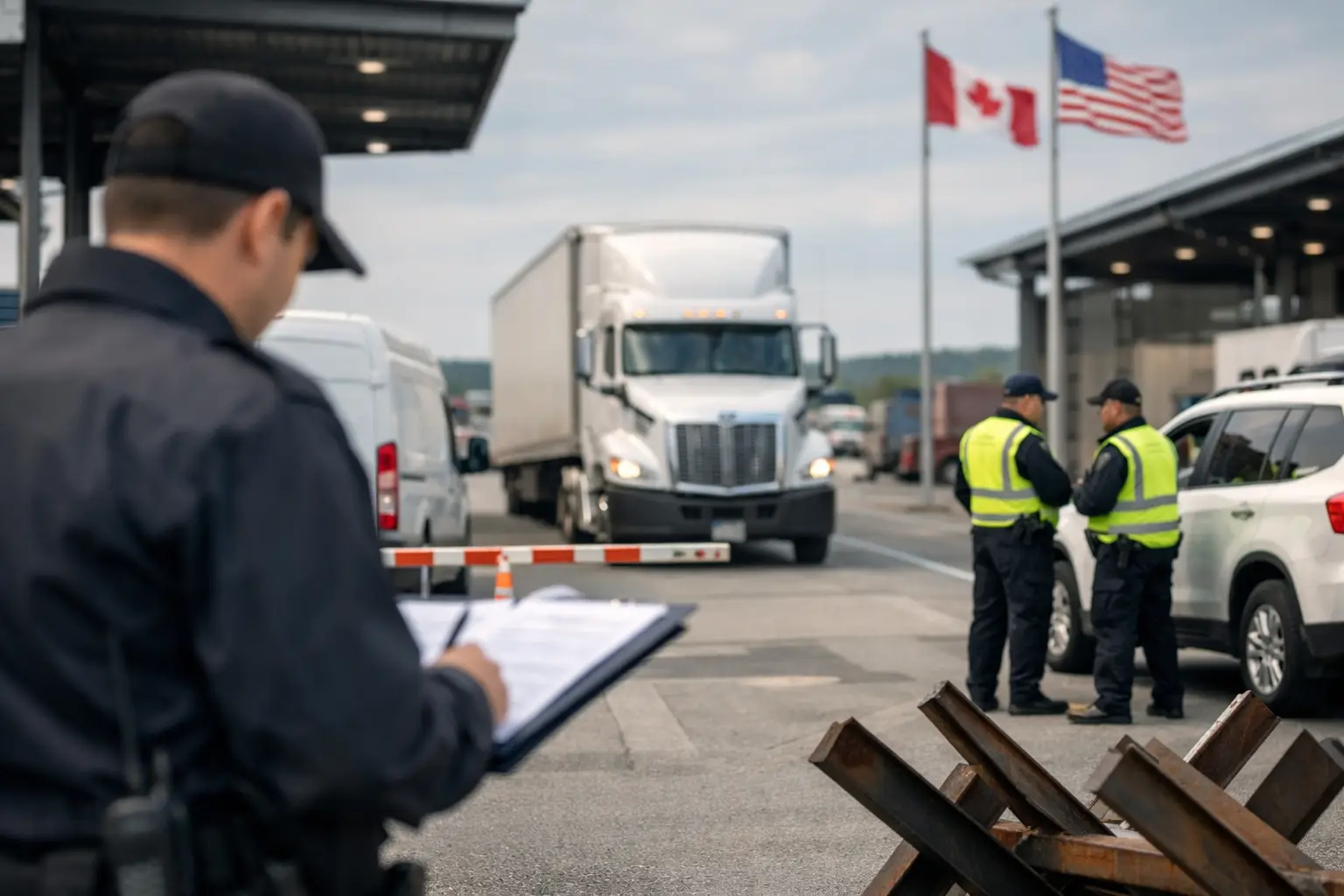
A truck can arrive at the border on time and still lose a day to one incorrect unit of measure, an outdated manufacturer address, or a commercial invoice that does not match the entry data. The best practices for border compliance are not a binder on a shelf. They are operating controls that make accurate customs data available before freight reaches the port.
For US-Mexico shippers, compliance has to work at shipment speed. Production schedules, carrier appointments, drayage capacity, and customer delivery windows do not pause while someone searches an inbox for a revised invoice. The goal is not merely to avoid penalties. It is to create a repeatable process that clears freight predictably, protects duty exposure, and gives operations teams control when exceptions occur.
Build Compliance Into the Shipment Workflow
The most common compliance failure is treating customs as a final checkpoint after transportation has already been arranged. By that point, the load may be loaded, dispatched, and approaching the port with missing or conflicting information. The customs team is then forced to repair data under a deadline, often through multiple brokers, carriers, suppliers, and warehouse contacts.
Start compliance at order creation or pickup planning. Every shipment should have a defined data package before it is tendered: commercial invoice, packing list, purchase order references, product descriptions, country of origin, manufacturer information, quantities, values, Incoterms, and the correct tariff classification. The exact documents vary by commodity and transaction, but the operating principle does not: customs data should be validated before it becomes a border problem.
This does not mean slowing the floor down with more forms. It means assigning ownership for the information that already exists. Procurement may own supplier data. Engineering may own product specifications. Trade compliance may own classification rules. Transportation may own shipment timing and carrier details. A reliable workflow makes those inputs visible in one place and flags what is missing before the truck is dispatched.
Establish One Source of Truth for Customs Data
A commercial invoice should not tell one story while the broker receives a different story by email and the carrier moves a third version of the shipment manifest. Disconnected data creates entry corrections, holds, and avoidable questions from customs authorities.
Create a controlled master record for each SKU and each trading relationship. At minimum, it should include the approved product description, HTS or HS classification, country of origin, manufacturer or producer data where required, valuation method, unit of measure, and applicable program eligibility. When product information changes, the master record needs a review process. A new supplier, a material substitution, a design revision, or a packaging change can affect classification and origin analysis.
Descriptions deserve special attention. “Auto parts,” “electronics,” and “machinery” are not useful customs descriptions. A defensible description identifies what the item is, what it does, and what it is made of when relevant to classification. The person preparing an entry should not have to infer the product from a vague invoice line.
For recurring freight, use standardized templates and approved data fields rather than allowing every plant or supplier to create documents from scratch. Standardization reduces errors, but it should not erase needed detail. High-risk commodities, regulated products, and complex assemblies may require more specific supporting documentation than routine replenishment loads.
Classify Products Before Volume Starts Moving
Tariff classification is a business control, not clerical cleanup. It determines duty treatment, reporting requirements, potential trade remedies, and whether other government agency rules apply. A classification error can create a cost issue, a compliance issue, or both.
Set a formal classification process for new parts and products before their first commercial shipment. That process should use product specifications, bills of materials, composition details, intended use, and technical literature. Keep the rationale supporting the decision. If a classification is later questioned, a code without supporting analysis is difficult to defend.
The same discipline applies to country of origin. Origin is not always the country where the invoice was issued or where the final shipment departed. For goods moving through Mexico, teams need to distinguish between shipment routing, country of export, and legal origin. The answer depends on the manufacturing and transformation performed, the applicable rules, and the specific trade program being used.
Review classifications on a schedule that matches your risk profile. A stable, low-complexity catalog may need periodic audits. Fast-changing automotive, electronics, industrial, or consumer product lines may need reviews whenever engineering or sourcing changes occur. The right cadence depends on product turnover, duty exposure, and regulatory sensitivity.
Treat Mexico Documentation as a Separate Control Point
US-Mexico freight is not one customs event. It is an export, import, or temporary movement process that can require separate documentation and filings on each side of the border. Teams that manage the US entry carefully but treat the Mexican pedimento as an afterthought create unnecessary exposure.
Confirm which party is the importer of record in each country, who is authorized to act, and which documents must be available before crossing. For Mexico-bound freight, verify invoice values, product descriptions, importer information, and the documentation supporting the pedimento. For US-bound freight, ensure the entry data aligns with the commercial documents and that advance requirements, including ISF when applicable for ocean freight, are handled on time.
Temporary import programs add another layer. If goods, equipment, packaging, or materials are entering Mexico temporarily for manufacturing or repair, controls must track both the entry and the required return, transfer, or regularization. A missed closure can become a financial and compliance problem long after the truck has cleared.
Make Exceptions Visible Before They Become Holds
No high-volume cross-border operation runs without exceptions. Suppliers send revised invoices. A truck arrives with a quantity variance. A customer changes delivery terms. Customs requests supporting documents. The issue is not whether exceptions happen. The issue is whether anyone sees them early enough to act.
Build exception rules into the workflow. Flag mismatched quantities, missing values, unclear descriptions, expired authorization documents, unusual tariff codes, and shipment changes after entry preparation. Route each exception to a named owner with a clear deadline. “Someone from customs will look at it” is not an operating model.
A useful escalation process separates freight urgency from compliance judgment. An operations manager can escalate a load because a line is at risk. The customs decision still needs to be made by the person accountable for that determination. Speed matters, but it does not justify guessing at classification, origin, or valuation.
This is where automation has practical value. Document intake, data extraction, validation rules, and entry preparation can remove repetitive manual work. But automation should surface uncertainty, not hide it. If an invoice description is incomplete or a value is inconsistent with prior shipments, the system should trigger review rather than force a clean-looking record through the process.
Align Brokers, Carriers, Drayage, and Warehouses
Border compliance breaks down at handoffs. The broker may have the entry ready, but the carrier has an old reference number. The drayage provider may be waiting for release status while the warehouse expects a delivery appointment. The shipper may not know the load is held until a customer asks where it is.
Give every party a shared operating sequence: document cutoff, entry preparation status, release confirmation, crossing instruction, drayage handoff, and final delivery status. The most effective setup is not necessarily the one with the most dashboards. It is the one where each party receives the correct information at the moment they need to act.
For frequent Laredo crossings, timing discipline matters especially because congestion, carrier availability, and port conditions can turn a small documentation delay into a missed delivery window. A unified execution model reduces the number of handoffs, but it still requires defined accountability at every step.
BorderFlow applies this approach by connecting document intake, customs preparation, brokerage coordination, cross-border trucking, and delivery execution in one workflow. The operational benefit is straightforward: fewer status gaps and fewer chances for shipment data to get rekeyed or lost between providers.
Audit the Process, Not Just the Entry
Entry audits are necessary, but they only show the final output. To prevent repeat issues, audit the process that produced the entry. When an error occurs, trace it back to the source: supplier master data, invoice creation, classification governance, communication timing, or a system handoff.
Measure patterns that operations teams can act on. Track document-complete time before pickup, entries corrected after submission, holds by root cause, classification changes, release-to-crossing time, and recurring exceptions by supplier or plant. A monthly report is useful only if it leads to a process correction and an owner.
The best practices for border compliance become real when they are tested under pressure. Run a controlled review after a delayed shipment, a customs query, or a documentation failure. Ask what information was unavailable, who needed it first, and which handoff created the delay. Then change the workflow before the next urgent load reaches the border.
A compliant border operation is not the one that never sees an exception. It is the one that detects the exception early, assigns it clearly, and keeps the freight moving without losing control of the customs record.