
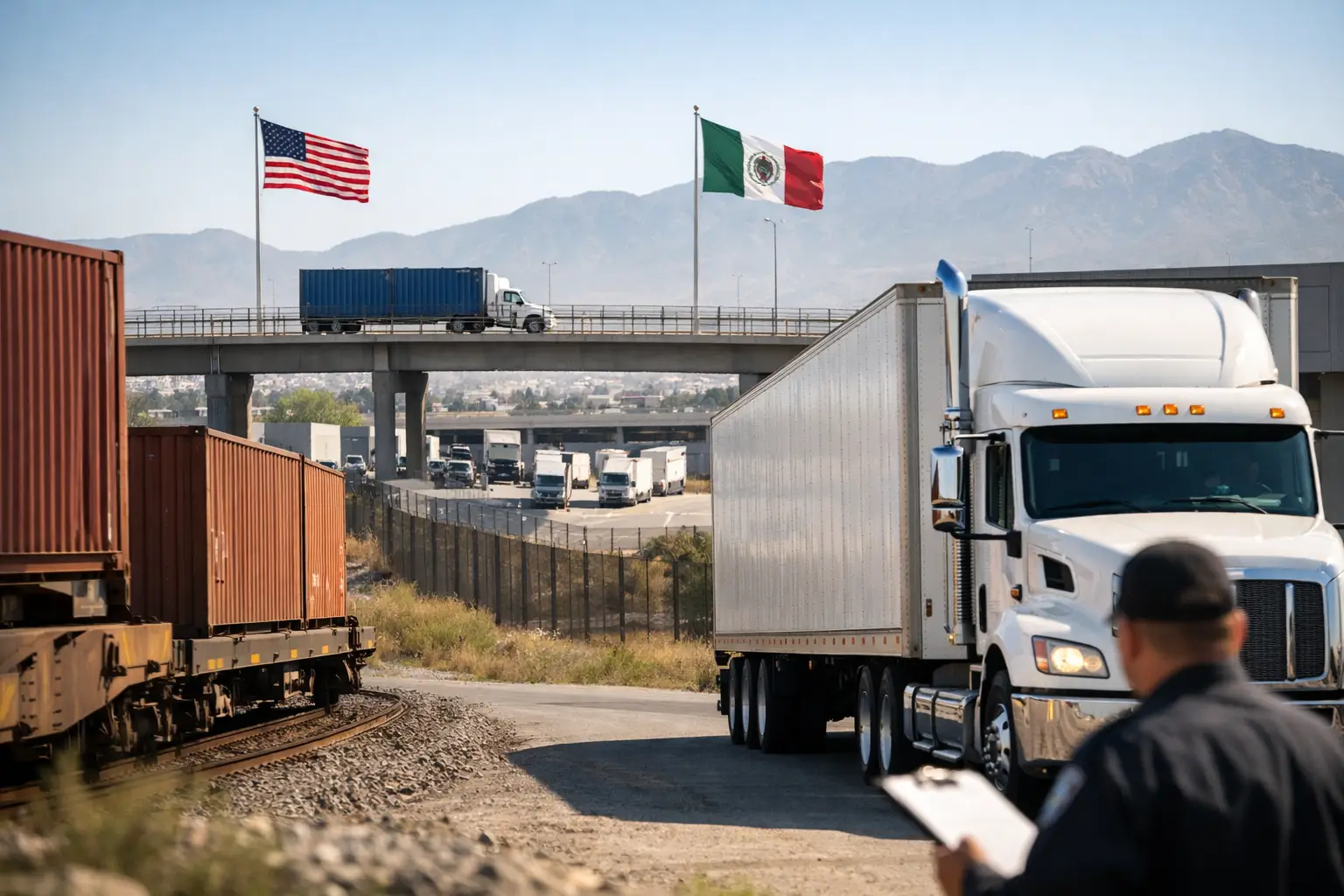
A trailer can cross the border, clear the primary inspection point, and still not be released for delivery. That distinction is where many operations lose time. This bonded freight movement guide explains how to move cargo under customs control without turning an in-bond shipment into a visibility gap, a document chase, or an avoidable compliance exposure.
For US-Mexico freight, bonded movement is usually a controlled transfer of goods from one customs location to another before final entry, export, or other authorized disposition. It is not a shortcut around customs clearance. It is a structured process with carrier responsibility, strict reporting requirements, and a deadline that operations teams must actively manage.
What bonded freight movement actually means
In the United States, an in-bond movement allows merchandise that has arrived from abroad to move between authorized locations while remaining under U.S. Customs and Border Protection control. The goods have not yet been entered for consumption, and duties and taxes generally have not been finalized or paid at that point.
The common operational reason is straightforward: the most efficient border crossing is not always the best place to clear freight. A shipper may move a load from the port of entry to an inland port, a bonded warehouse, an airport, or an export point where the entry, inspection, consolidation, or onward movement can be managed more effectively.
Do not confuse an in-bond move with a bonded warehouse program. A bonded warehouse is an approved facility where imported merchandise can be stored under CBP supervision. An in-bond movement is the transportation authority that gets cargo from one approved point to another. A shipment may use both, but they solve different problems.
For freight entering from Mexico, the language can also get muddled by Mexican customs transit procedures, pedimentos, and carrier practices. The correct process depends on the direction of travel, the country of import, the port, commodity, and intended final disposition. Treat “bonded” as a customs-control status, not a generic label for any cross-border load.
The three in-bond movement types shippers need to know
CBP in-bond filings generally fall into three movement types. The right choice is driven by where the merchandise is going and what will happen there.
Immediate Transportation, or IT
Immediate Transportation, commonly called an IT movement, moves freight from the first U.S. port of arrival to another U.S. port where it will be entered or otherwise processed. A Mexico-origin load might cross at Laredo and move in-bond to an inland CBP location closer to the importer’s distribution center.
IT can reduce congestion at the border and place customs work nearer to the receiving operation. The trade-off is that the shipment remains open under bond during transit. The carrier, broker, and consignee need clear ownership of arrival reporting and final entry timing.
Transportation and Exportation, or T&E
A T&E movement brings merchandise into the United States solely to move it through the country and export it. The cargo is not intended for U.S. consumption. This is common when a U.S. port or carrier lane is part of an international routing.
T&E freight demands disciplined export confirmation. The in-bond does not simply disappear when the truck reaches a border. The required export reporting and closure steps must match the actual movement. A missed export confirmation can leave an in-bond open and create follow-up work long after the freight is gone.
Immediate Exportation, or IE
Immediate Exportation applies when goods arriving in the United States will be exported directly from the port of arrival. It is less common in day-to-day truckload operations than IT, but it matters for certain port, air, and urgent transshipment scenarios.
The key point is that these codes are not interchangeable. Filing the wrong movement type can create a mismatch between the customs record and the freight plan, especially if the destination changes after dispatch.
How a controlled bonded move should run
The best bonded freight workflow starts before the truck reaches the border. Waiting until a driver is at the crossing to determine the in-bond number, bonded carrier, or final port is how preventable holds become expedites.
First, confirm the commercial plan. Identify the importer or exporter of record, the ultimate U.S. destination, the planned port of arrival, the receiving location, and whether the merchandise will be entered, exported, stored, or transferred onward. This determines whether an in-bond is appropriate at all.
Next, build the filing data from source documents. At minimum, the operation needs accurate shipper and consignee details, commodity descriptions, piece counts, weight, value where required, conveyance data, and the intended destination. Incomplete descriptions and mismatched quantities are not minor clerical issues when cargo is moving under customs control. They can prevent acceptance, complicate inspection, or make reconciliation difficult at arrival.
The in-bond is then transmitted through the appropriate CBP system, typically using the electronic in-bond process in ACE. The party filing must coordinate with the carrier that will physically move the freight. A broker can prepare the filing, but the bonded carrier has obligations tied to the movement and must be able to execute the route, custody, and reporting requirements attached to it.
Once the shipment is released to proceed, dispatch must treat the in-bond number as a live control reference. Put it in the load record, carrier instructions, driver packet where applicable, and receiving plan. If a seal is applied, capture the seal number and verify it at delivery. If the tractor, trailer, route, or destination changes, determine whether the customs record must be updated before the freight moves.
At destination, the responsible party must report arrival within the required timeframe and complete the next customs action. That may mean filing the consumption entry, placing freight into a bonded warehouse, transferring it under another authorized procedure, or documenting export. “Delivered” is not the same as “arrived in bond,” and “arrived in bond” is not the same as “entered.” Each status needs its own confirmation.
The operational failures that put bonded freight at risk
Most in-bond problems are not caused by a complex regulation. They are caused by handoffs. One team believes the broker is closing the movement. The broker expects the destination carrier or facility to report arrival. The warehouse receives the freight but does not recognize that it is under bond. By the time someone checks the status, the deadline is close or has passed.
A few failure patterns appear repeatedly:
- The carrier is not properly authorized or does not understand its in-bond reporting responsibility.
- Commercial documents, manifest details, and the in-bond filing show different piece counts, consignee names, or destinations.
- The load is diverted after crossing without confirming that the in-bond record supports the new plan.
- The destination facility accepts freight without a process to verify seals, documents, and arrival status.
- Customs entry work begins too late, leaving freight physically present but not ready for release.
The fix is not more email. It is a defined control tower: one shipment record, named owners for each customs milestone, document validation before dispatch, and exception alerts when arrival, entry, or export confirmation is missing.
When bonded movement is the right answer
Bonded movement makes sense when it gives the operation a real advantage. That could mean avoiding border-side storage, moving freight to an inland examination site, consolidating entries at a preferred location, supporting a distribution strategy, or routing international cargo through the United States for export.
It is not automatically the fastest choice. If the final customs entry is complete, the receiving location is close to the port, and there is no operational reason to defer release, a direct entry may be simpler. Every in-bond move adds a controlled leg, another status to monitor, and another opportunity for a carrier or facility handoff to fail.
The decision should be based on total cycle time, not just crossing time. Compare border dwell, drayage or linehaul cost, availability of bonded carriers, inspection exposure, entry readiness, warehouse capability, and the cost of a missed deadline. For high-volume programs, those variables should be measured lane by lane rather than decided from a one-off shipment experience.
Build accountability into the US-Mexico handoff
US-Mexico freight often involves a Mexican carrier, a transfer at the border, a U.S. bonded carrier, a customs broker, a drayage provider, and a receiving warehouse. Fragmented ownership is the core risk. Each party may perform its task correctly while the overall movement still fails because no one owns the transition between tasks.
A unified operator model reduces that exposure by connecting document intake, customs filing, dispatch, status updates, and delivery confirmation in one workflow. BorderFlow applies that approach to cross-border execution, pairing customs coordination with freight movement so the same operating record follows the shipment from origin through final delivery.
The practical standard is simple: before a bonded trailer crosses, your team should know who filed the in-bond, which carrier is responsible for it, where it must arrive, what closes the movement, and who will verify closure. If those answers live in different inboxes, the freight is not under control yet.