
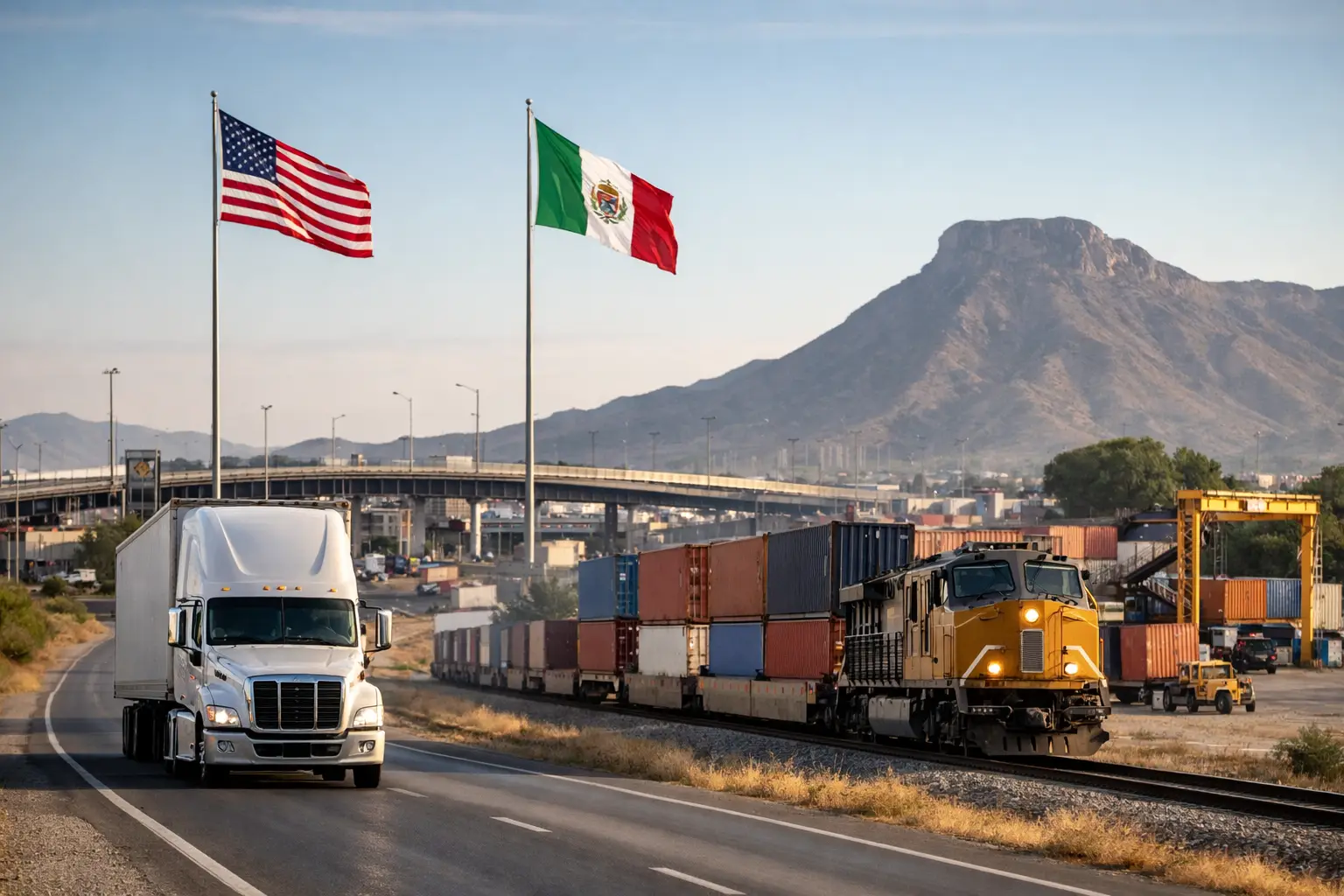
A truck can arrive at the border on time and still miss its delivery window because one commercial invoice was revised, a tariff classification was incomplete, or the broker received documents too late to act. That is why cross border logistics trends are moving beyond capacity and transit time. The real competitive advantage is control over the information, decisions, and handoffs that determine whether freight actually clears.
For US-Mexico shippers, the border is not a single event. It is a sequence of customs, drayage, carrier, warehouse, and communication tasks that must stay synchronized. The companies improving performance are not merely adding more vendors or dashboards. They are tightening the operating system behind every load.
Cross Border Logistics Trends Are Shifting to Execution Control
Nearshoring has increased the strategic importance of Mexico manufacturing, but it has also increased the volume of freight that must move through a constrained and highly regulated corridor. Automotive, electronics, industrial equipment, consumer goods, and medical-device supply chains are building more dependency into northbound and southbound flows. When a shipment fails, the impact can reach a production line, a distribution center, or a customer order within hours.
That pressure is changing what shippers expect from their logistics partners. A carrier update is no longer enough. Operations teams need to know whether documents are complete, whether an entry is ready to submit, whether a trailer is staged for crossing, and who owns the next exception. Visibility without action is just a better view of a problem.
The strongest trend is therefore operational unification. Shippers are reducing the gaps between customs brokerage, freight execution, drayage, document management, and final-mile delivery. This does not always mean using one provider for every service. It means establishing one accountable workflow where data and status do not disappear at each handoff.
Customs automation is moving upstream
Manual document handling remains one of the most expensive weak points in cross-border freight. Teams still receive invoices, packing lists, bills of lading, certificates, and shipment changes through email. Someone must identify the relevant files, compare fields, chase missing details, determine classifications, and prepare the entry. At volume, that process creates delay before the truck ever reaches the border.
The next phase of automation is focused on intake and readiness, not simply filing faster after the paperwork arrives. Systems are extracting shipment data from documents, flagging missing or conflicting fields, and routing exceptions to the person who can resolve them. AI can assist with classification recommendations and document interpretation, but it must operate inside a controlled customs workflow with licensed review and clear audit trails.
The trade-off is straightforward: automation can reduce repetitive work, but it cannot compensate for bad master data or unclear ownership. A shipper with inconsistent product descriptions, outdated HTS classifications, or uncontrolled invoice changes will still generate exceptions. The practical objective is not to eliminate human customs expertise. It is to reserve that expertise for the shipments that actually need judgment.
Email-first workflows are replacing forced portal adoption
Many logistics platforms promise visibility but require every shipper, supplier, warehouse, and broker to log into a new system. In real operations, adoption often breaks down. Suppliers continue sending documents by email. Warehouse teams work from their existing transportation process. Customs teams maintain separate records. The result is another portal layered on top of the same fragmented workflow.
A more practical approach meets users where they already work. Documents can arrive through email, be captured automatically, and enter a structured customs and transportation workflow without asking every participant to change behavior. BorderFlow applies this model through its BorderFlow OS and Zight AI customs agent, which turn emailed documents into actionable customs data while keeping execution under one operating layer.
This matters because speed often comes from reducing behavioral friction. No portal requirement does not mean less control. It means control is built into the workflow rather than dependent on whether a busy supplier remembered another login.
The Cross Border Logistics Trends That Matter at the Border
Pre-clearance is becoming a transportation discipline
Customs readiness used to be treated as a brokerage task that began near arrival. That model does not hold up well when delivery appointments, trailer utilization, and production schedules are tight. Leading operators are moving entry preparation earlier in the shipment lifecycle, often while freight is still at origin or en route to the border.
Pre-clearance requires more than submitting data early. It requires a clear cutoff process for commercial-document changes, rapid escalation for exceptions, and direct coordination between the customs team and transportation dispatch. If a consignee changes quantities after an entry is prepared, someone needs to know immediately whether the correction affects filing, release timing, or the trailer’s crossing plan.
Earlier filing does not remove every inspection or government-system delay. It does reduce the number of avoidable holds caused by internal readiness failures. For time-sensitive freight, that distinction is material.
Freight visibility is becoming exception visibility
A map with a truck icon is useful, but it does not tell an operations manager whether the shipment is at risk. The more valuable visibility layer combines physical movement with execution status: documents received, entry submitted, release confirmed, trailer at yard, drayage assigned, and final delivery appointment secured.
This is especially important around Laredo, where high freight volumes can make small coordination failures expensive. A trailer may be physically close to the crossing but operationally blocked by an unresolved document issue, a missing authorization, or a carrier handoff that no one owns. Status must explain what is preventing progress, not just where the equipment is located.
The best exception management is specific. It identifies the problem, assigns the responsible party, records the deadline, and gives the shipper a realistic next action. Generic messages such as “customs delay” create noise. A useful update says which document or review is pending and whether the delivery commitment is still recoverable.
Compliance is being treated as live operating data
Classification, valuation, country of origin, USMCA qualification, importer-of-record information, and product data are often stored in disconnected spreadsheets and institutional memory. That creates risk when product lines change, suppliers shift, or shipment volume scales quickly.
Shippers are increasingly treating compliance data as an active operational asset. Product records need governance. Classifications need a review process. Supplier documentation needs a defined owner. Changes need to reach customs and transportation teams before freight is tendered.
There is no one-size-fits-all compliance model. A company importing a stable catalog of finished goods has different needs than a manufacturer moving components with frequent engineering changes. But both benefit from a single source of truth and a process for handling exceptions before they become border problems.
Service consolidation is gaining ground, with limits
Managing separate brokers, carriers, drayage providers, and warehouses can provide flexibility and negotiating leverage. It can also create a familiar failure pattern: each party reports that its portion is complete while the shipment remains stalled between them.
More shippers are consolidating accountability across the full move, from origin pickup through customs and final delivery. The benefit is fewer handoffs, clearer escalation, and a more complete view of cost and performance. This approach is particularly useful for high-volume lanes, recurring freight, and loads where a missed delivery has real operational consequences.
Consolidation should not mean blind dependency. A sound program still measures provider performance, maintains contingency options for capacity disruptions, and defines service-level expectations for both freight and customs activity. The goal is one coordinated execution model, not reduced oversight.
Build for the Exceptions You Already Know Will Happen
The border will continue to produce variables that no forecast can eliminate: inspections, weather, congestion, document corrections, supplier changes, and carrier disruptions. The question is whether your operation discovers them late or manages them early.
Start by mapping one recurring US-Mexico shipment from document creation to final delivery. Identify every handoff, every system, every party that must confirm status, and every point where information is rekeyed. The most valuable improvements usually appear in those gaps, not in a new status report.
Then establish a simple standard: every load should have a known customs-readiness state, a named owner for the next action, and an escalation path before it reaches the crossing. That discipline turns border complexity from a daily fire drill into an execution process your team can actually control.