
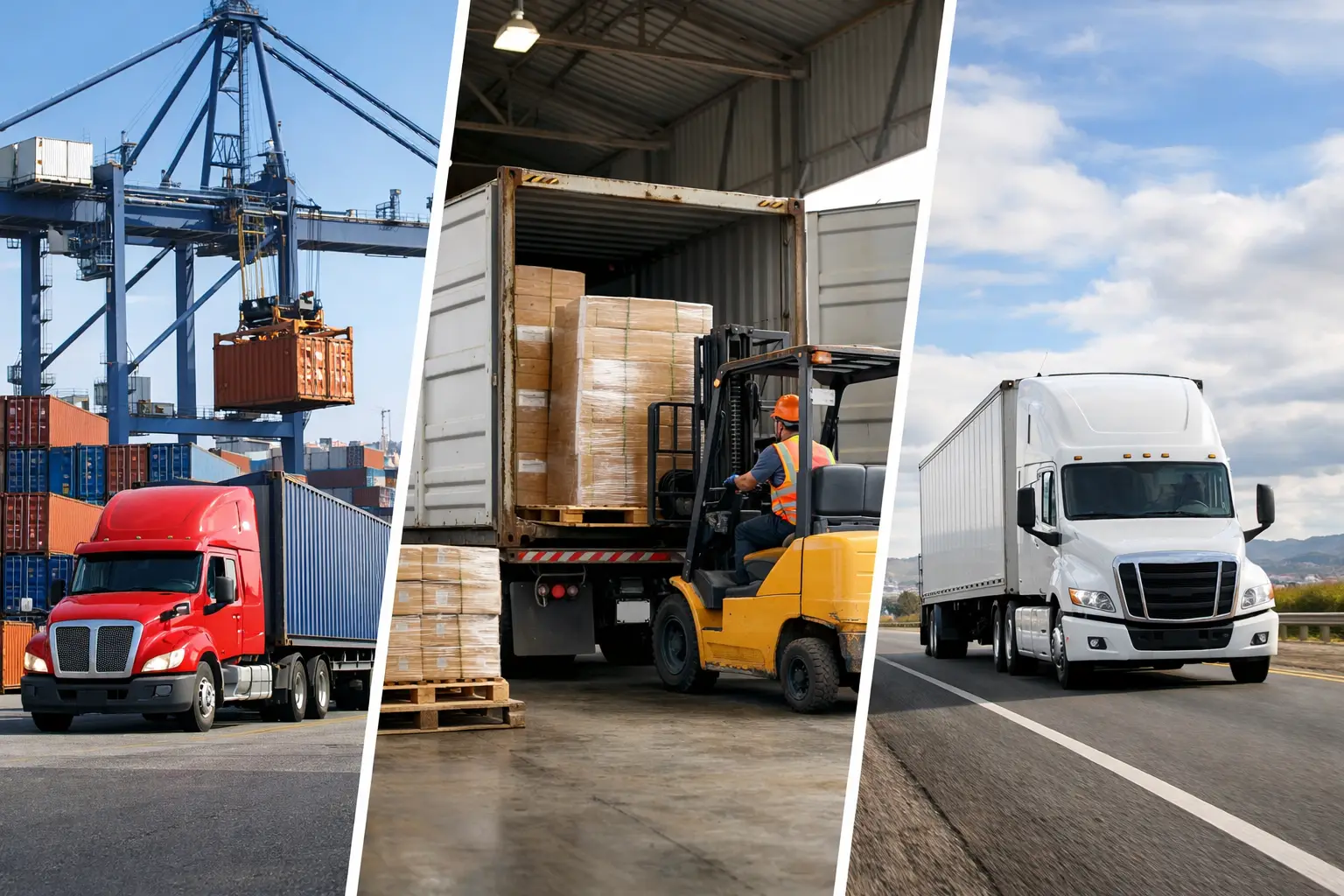
A container arrives at a rail ramp or crosses the border, but it is still not where the freight needs to be. That gap is where the drayage vs transloading vs trucking decision becomes operationally expensive. Use the wrong service model and freight sits, appointments are missed, drivers wait, and customs-cleared cargo loses another day to handoffs.
These terms are often used loosely because all three involve moving freight. They are not interchangeable. Each solves a different problem in the transportation workflow, and a single US-Mexico shipment may use all three.
Drayage vs Transloading vs Trucking: The Core Difference
Drayage is a short-distance move, usually involving an intermodal container. A drayage carrier might pull a container from a port, rail ramp, or border-adjacent yard and deliver it to a warehouse, transload facility, or nearby consignee. The work is highly appointment-driven and equipment-specific. Chassis availability, terminal hours, demurrage, per diem, and empty-container returns can matter as much as the miles traveled.
Transloading is not transportation by itself. It is the physical transfer of cargo from one piece of equipment to another. A team may unload floor-loaded freight from an ocean container and reload it into a domestic dry van. It may transfer palletized freight from a Mexican trailer into a US trailer, or consolidate several smaller shipments into one outbound load. The purpose is to change equipment, improve cube utilization, meet carrier requirements, or reposition cargo for the next leg.
Trucking is the broader over-the-road movement of freight by truck. It can be a short local delivery, a cross-border FTL move from Monterrey to Dallas, or an LTL shipment moving through a carrier network. Trucking is defined by the road leg. It does not require a container, a terminal, or a cargo transfer.
The simplest way to frame it: drayage gets equipment in or out of an intermodal node; transloading changes the equipment or load configuration; trucking carries freight between origins and destinations.
Where Each Service Fits in a Real Freight Move
Consider an importer moving components from Asia through a US port to a production facility in northern Mexico. A drayage carrier pulls the import container from the port to a nearby warehouse. At that warehouse, the cargo is transloaded from the ocean container into a Mexico-bound trailer. A cross-border trucking provider then moves the trailer to the plant, with customs processing coordinated before the border crossing.
Now consider a manufacturer shipping finished goods from Saltillo to a distribution center in the Midwest. If the freight is loaded in a dedicated trailer at the plant and stays in that trailer through delivery, the shipment may only need cross-border trucking. There is no container to dray and no reason to transload.
A third scenario is common around Laredo: freight crosses in a Mexican trailer, then transfers to a US carrier's trailer or is consolidated with other orders at a warehouse. That transload can be necessary for carrier network coverage, delivery scheduling, trailer compatibility, or freight optimization. The border crossing is only one part of the move. The warehouse handoff determines whether the shipment continues cleanly or becomes a tracking problem.
When Drayage Is the Right Tool
Drayage is the right answer when cargo begins or ends its journey at a port, rail terminal, container yard, or intermodal facility. It is designed for the short, controlled movement of containers and chassis, not long-haul freight distribution.
The operational risk in drayage is rarely the driving distance. It is timing. A container can incur storage charges if it is not pulled before free time expires. A missed rail appointment can delay pickup. A consignee that cannot receive the container can create chassis charges and detention. Empty return instructions can change after the cargo is unloaded.
For importers, the question is not just, "What is the drayage rate?" It is whether the provider can secure appointments, monitor free time, communicate terminal status, and coordinate delivery with the warehouse that will receive or unload the container. Cheap drayage without control of those steps is usually not cheap for long.
When Transloading Creates Value
Transloading earns its place when keeping freight in the original equipment creates a cost, capacity, or compliance problem. Ocean containers are not always the best equipment for domestic delivery. Mexican trailers are not always the best fit for a US carrier's network. And mixed freight may need to be sorted before it can move efficiently.
For floor-loaded imports, transloading can convert a container into properly palletized outbound freight. That can accelerate receiving, reduce labor at the destination, and allow multiple orders to move separately. For high-volume shippers, it can also improve trailer utilization by loading domestic equipment to match outbound lanes rather than accepting the capacity constraints of the inbound container.
There are trade-offs. Every transfer creates handling cost and potential damage exposure. It also requires accurate counts, photos, seal control, labeling discipline, and clear exception reporting. If cargo is subject to customs control, the facility and process must support the applicable requirements before freight is released or moved onward. Transloading should reduce friction, not introduce a blind spot between customs release and final delivery.
When Standard Trucking Is Enough
Trucking is usually the cleanest option when freight can be loaded once, cleared correctly, and delivered without an equipment change. This is common for dedicated FTL cross-border freight, repeat lanes, and shipments with stable pickup and delivery requirements.
For US-Mexico moves, the trucking plan still needs to account for the border process. A carrier arriving at the port of entry without complete commercial documents, correct shipment data, or coordinated broker instructions does not create speed. It creates a queue. The linehaul may be straightforward, but customs execution, driver communication, and trailer status must be managed as part of the same operating plan.
LTL trucking adds another layer. A shipment may move through terminals, be cross-docked, and share space with other freight. That can lower cost for smaller shipments, but it also introduces more touches and less direct control over transit. When freight is time-sensitive or requires strict handling, a dedicated solution may be worth the premium.
Compare the Services by What They Control
| Service | Primary function | Typical equipment | Main operational risk | |---|---|---|---| | Drayage | Moves containers short distances between terminals and facilities | Container and chassis | Free time, appointments, detention, equipment returns | | Transloading | Transfers cargo between equipment or load configurations | Containers, trailers, forklifts, warehouse space | Damage, count errors, missed handoffs, inventory visibility | | Trucking | Moves freight over the road from origin to destination | Dry van, reefer, flatbed, or specialized trailer | Transit variability, capacity, border coordination, delivery appointments |
The table is useful, but the services should not be selected in isolation. A transportation manager planning a cross-border import needs to ask what happens before the border, at the border, after the border, and at final delivery. If four vendors own those four answers, no one owns the outcome.
Build the Workflow Before You Book the Move
The best model starts with the freight's actual constraints: equipment type, cargo value, customs status, delivery deadline, warehouse receiving capacity, and the number of times the cargo can safely be handled. From there, determine whether the shipment needs a direct truck move, a terminal pull, an equipment transfer, or a combination.
Document ownership matters just as much as physical movement. The commercial invoice, packing list, classification data, entry instructions, pedimento information, and release status need to be available to the people dispatching trucks and receiving freight. Manual email chains often break at the exact moment a driver is waiting at a terminal or border crossing.
BorderFlow coordinates customs and freight execution in one workflow, so the team handling documents can work from the same shipment status as the team managing drayage, cross-border trucking, and delivery. No portal. No login. No change to your workflow. The goal is not to add another layer of transportation management. It is to remove the gaps where freight, documents, and accountability separate.
The Decision Is Usually a Sequence, Not a Choice
Drayage vs transloading vs trucking is not a contest between three competing services. It is a question of which parts of the freight journey need to happen, in what order, and under whose control. A direct trailer move may be the fastest path for one lane. A port dray followed by a carefully managed transload may be the lowest-cost and most reliable path for another.
Start with the cargo's next required action, not the service label. If it needs to leave a terminal, plan drayage. If it needs different equipment, plan a transload. If it needs to cover miles, plan trucking. Then make sure customs status, warehouse readiness, and shipment visibility move with it. Freight does not experience your vendor structure. It experiences every handoff.