
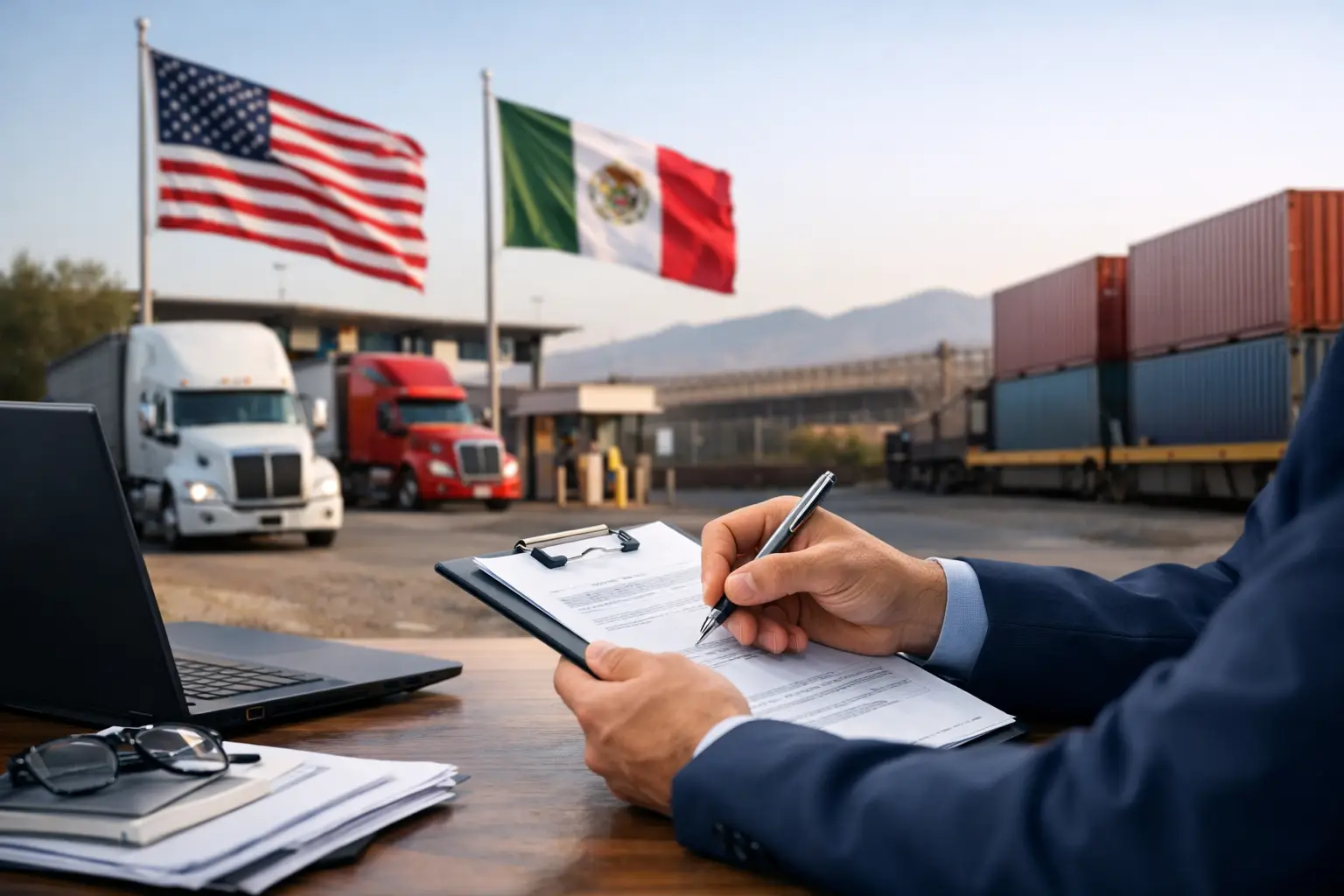
A trailer can be loaded, dispatched, and sitting near the border with every mile planned - then lose a day because a commercial invoice does not match the packing list or a classification question goes unanswered. That is why knowing how to choose a customs broker is an operational decision, not a procurement formality.
For US-Mexico freight, the right partner does more than submit entries. They control document flow, resolve exceptions before freight reaches the port, coordinate across carriers and drayage, and give your team a clear answer when a shipment is at risk. The wrong one may file the entry correctly but leave every handoff, update, and recovery effort to your team.
How to choose a customs broker: start with your actual freight
Do not evaluate a broker based on a generic service sheet. Start with the freight you move, the ports you use, and the failures your team is trying to prevent. A broker that performs well for occasional, low-value imports may not be equipped for high-volume automotive components, food products, electronics, regulated goods, or time-sensitive production freight.
Map your typical shipment from origin to delivery. Include who creates documents, who reviews them, where freight crosses, what happens after clearance, and who owns communication when a document is missing. This exposes whether you need filing support only or a partner that can manage the full cross-border move.
A few questions quickly sharpen the requirement: Are you importing into the United States, exporting to Mexico, or doing both? Do you run full truckload, LTL, parcel, or a mix? Are your goods subject to partner government agency requirements, special marking rules, antidumping duties, USMCA origin claims, or Mexico-specific documentation? Do missed delivery appointments stop a production line?
The answers determine the right operating model. There is no benefit in paying for a broad managed service if your internal customs team has clean data, stable lanes, and only needs reliable entry filing. But if your shipments involve multiple vendors, frequent changes, border drayage, and separate US and Mexican parties, a brokerage-only relationship can create more handoffs than it removes.
Verify authority, coverage, and practical expertise
A US customs broker must be licensed by U.S. Customs and Border Protection. Ask who will hold the power of attorney, who is responsible for entry preparation, and how escalation works if a filing needs immediate review. A broker should be able to explain these controls directly, without hiding behind vague statements about having “coverage.”
Mexico requires its own customs representation and procedures. Your provider should clearly explain how Mexican clearance is handled, who manages pedimentos, and how the US and Mexico sides coordinate shipment data. Certifications and security programs can be valuable, but they do not replace proper authority or a proven operating process at the border.
Port experience matters too. A broker can have a national footprint and still lack depth at the crossing points that affect your freight. For high-volume US-Mexico traffic, ask about the team supporting your lane, after-hours coverage, local escalation paths, and experience with the specific commodities you move. Laredo, for example, is not simply another checkpoint. It is a major operating environment with its own congestion patterns, carrier coordination demands, and urgency when freight is moving between manufacturing networks.
Do not confuse a broker’s license with commodity expertise. Classification, valuation, country of origin, and admissibility all depend on the product details your team provides. A capable broker will ask precise questions about material composition, function, assembly, packaging, and end use before a problem reaches the border.
Test the broker’s document-control process
Most customs delays begin before the truck arrives. They begin when documents arrive late, arrive incomplete, or contain conflicting data. A broker should show you exactly how it receives, validates, and resolves shipment information.
Ask what happens when the commercial invoice, packing list, bill of lading, purchase order, and prior classification records do not align. Who sees the issue? How quickly is it flagged? Does the broker contact your supplier directly when authorized, or does every question pass through three internal inboxes first?
The best process is not necessarily the one with the most dashboards. It is the one that fits the way your team already works while creating a reliable audit trail. If your operations staff sends documents by email, a system that can extract data, identify missing fields, and route exceptions automatically may be more useful than another portal that suppliers will not use.
Automation also needs human oversight. Optical extraction and AI-assisted classification can reduce manual work, but a broker should define when a licensed professional reviews exceptions, how changes are documented, and how data quality improves over time. Fast bad data is still bad data.
Measure communication under pressure
Every broker promises communication. Ask for the mechanics instead: who sends status updates, what triggers an alert, which channel is used, and who can make a decision after normal business hours.
A useful service model separates routine visibility from true exceptions. Your team should not need to request a status update on every shipment. At the same time, an automated “in process” message is not enough when an entry is held, a driver is waiting, or a document must be corrected before cutoff.
During the evaluation, present a realistic scenario. For example: a supplier changes the quantity on an invoice two hours before a northbound truck reaches the port. Ask the prospective broker to walk through the exact response. A strong answer names the owner, the document correction process, the filing impact, the carrier communication, and the customer update. A weak answer is simply, “We will take care of it.”
Look for accountability across the full move
Brokerage is one part of cross-border execution. The freight still needs to arrive at the border, clear, move through drayage if required, and reach its final delivery point. When each function belongs to a separate vendor, delay ownership becomes blurry.
That does not mean every shipper needs a single provider for every service. Specialized providers can be the better choice when your internal transportation team has strong control and defined escalation procedures. The trade-off is management overhead: your team must connect status data, document timing, carrier updates, and accountability across multiple parties.
For complex or high-frequency lanes, evaluate whether the broker can coordinate customs, drayage, and cross-border trucking in one workflow. BorderFlow, for example, combines US brokerage, Mexican customs handling, transportation execution, and customs automation so that exceptions can be managed without waiting for separate systems or vendors to catch up.
The central question is simple: when freight is delayed, can one accountable operator see the full chain and act on it? If the answer is no, your team remains the integration layer.
Review compliance discipline, not just clearance speed
Fast clearance is valuable. Compliant clearance is non-negotiable. Your importer of record remains responsible for the accuracy of information provided to customs, even when a broker prepares and files the entry. A good broker will not treat compliance as a back-office task disconnected from operations.
Ask how the provider manages classification records, valuation questions, USMCA claims, post-entry corrections, audits, and recordkeeping. Request examples of the types of information it needs from your company to make defensible decisions. If a broker accepts vague product descriptions without challenge, that may feel convenient until a review exposes a classification or origin issue.
Also ask how they handle recurring changes. New suppliers, engineering revisions, revised bills of materials, and changed country-of-origin data need a controlled update process. Your broker should make it easy to communicate changes, but not so easy that unreviewed data silently enters a filing workflow.
Use a scorecard before you sign
A short scorecard keeps a sales presentation from outweighing operational reality. Score each candidate based on the requirements that affect your freight most:
- Licensing, customs authority, and experience in your specific US-Mexico lanes
- Commodity knowledge, classification discipline, and support for applicable government requirements
- Document intake, data validation, exception management, and audit visibility
- Response times, escalation ownership, and after-hours operating coverage
- Ability to coordinate brokerage with drayage, trucking, and final delivery when needed
Include a transition plan in the evaluation. Changing brokers can create risk if powers of attorney, bond arrangements, classification data, open shipments, and supplier instructions are not managed carefully. The right provider will make the handoff controlled, not treat it as an administrative detail.
Your broker should make border execution quieter. Not because the work disappears, but because documents are checked earlier, exceptions have owners, and the people moving your freight can see what happens next. Choose the partner that proves this discipline before the first truck is at the port.