
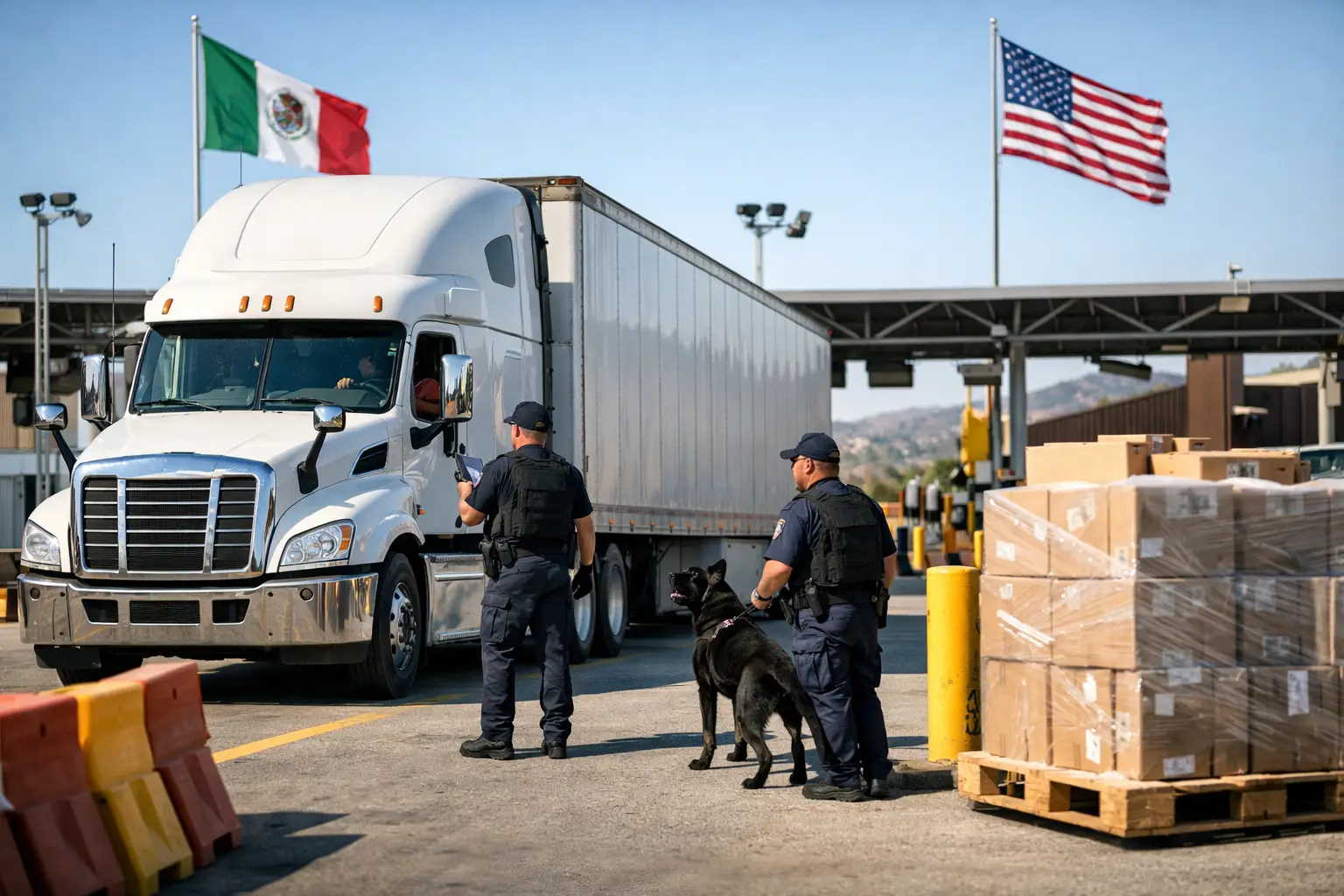
A trailer can be loaded, dispatched, and on schedule through Laredo - then sit because one document says one thing and the entry says another. Knowing how to prevent customs holds is less about rushing paperwork at the border and more about controlling shipment data before freight moves.
For US-Mexico shippers, a customs hold can affect more than transit time. It can disrupt production schedules, miss warehouse receiving windows, create detention exposure, and force operations teams to chase updates across brokers, carriers, suppliers, and drayage providers. The root cause is often not the inspection itself. It is a preventable gap in data, documentation, or ownership.
You cannot eliminate every customs exam. Customs authorities can inspect freight based on targeting criteria, random selection, enforcement priorities, or product-specific concerns. What you can eliminate is the avoidable friction that turns a routine review into a multi-day exception.
Start With the Real Reason for the Hold
Not every border delay is a customs hold. A carrier may be missing a driver, a yard may be congested, a broker may be waiting for documents, or a shipment may not be released because entry data has not been transmitted. These are different problems and require different owners.
A true customs hold occurs when a government authority stops release pending review, examination, documentation, payment, or another compliance action. On US imports, this can involve U.S. Customs and Border Protection, a partner government agency, or both. On Mexico-bound freight, the issue may involve pedimento data, import documentation, valuation, permits, or a discrepancy identified during the customs process.
Operations teams need status language that is specific. “Held at customs” is not enough. Ask whether the entry has been filed, whether a release request is pending, which authority placed the hold, what data or document is required, and who owns the next action. Clear status definitions prevent a paperwork issue from being managed like a capacity issue.
Prevent Customs Holds Before Freight Is Dispatched
The strongest control point is upstream. Once a shipment is at the border, the cost of correcting bad information rises quickly. The commercial invoice, packing list, purchase order, product master, and customs data should agree before the trailer is sealed.
Use complete, commercial-grade product descriptions
Vague descriptions invite questions. “Auto parts,” “metal components,” “electronics,” and “samples” do not give customs enough information to validate classification, admissibility, value, or country of origin.
A useful product description identifies what the item is, what it is made of when relevant, how it is used, and enough detail to distinguish it from similar goods. For example, “steel bracket” is weak. “Stamped carbon-steel mounting bracket for passenger vehicle seat assembly” gives the broker and customs reviewer a meaningful commercial description.
Descriptions should remain consistent across the invoice, packing list, entry data, and supporting records. A mismatch does not automatically create a hold, but it creates doubt. At the border, doubt becomes an exception queue.
Treat classification as a controlled process
HTS classification is not a line-item task to revisit only when a shipment is moving. Classification affects duty treatment, trade remedy exposure, admissibility requirements, and the government data transmitted with the entry.
Build a maintained classification record for recurring SKUs. That record should include the HTS classification, a plain-language rationale, material composition, use, country-of-origin treatment, supplier part number, and any applicable agency requirements. When a product changes - even a material substitution, design update, or new supplier - require a review before the next shipment moves.
The trade-off is obvious: maintaining product master data takes effort. But relying on last-minute email confirmation from a supplier takes more effort when a shipment is stopped and a plant is waiting for parts.
Validate origin, value, and related-party data
Country of origin is not the same as ship-from location. A part shipped from Mexico may have a different origin based on where it was manufactured or substantially transformed. That distinction matters for entry data, duty assessment, and USMCA eligibility.
Value should also be defensible. Confirm that invoice values match the commercial transaction and that additions or adjustments are handled correctly when applicable, including assists, royalties, commissions, or related-party considerations. If the importer is claiming preferential tariff treatment under USMCA, maintain the supporting certification and origin analysis. A preference claim without support creates exposure well beyond a single delayed load.
Build a Document Packet That Matches the Shipment
Customs teams do not need more documents. They need accurate documents available early enough to act. The practical goal is one controlled shipment packet, not separate versions circulating across email threads.
For most cross-border moves, the core records include the commercial invoice, packing list, transportation information, purchase order or shipment reference, and product-level customs data. Depending on the commodity and direction of travel, the shipment may also require permits, certificates, licenses, registrations, or other supporting documents.
On Mexico imports, pedimento preparation depends on accurate commercial and regulatory data. On US imports, the entry must align with the actual imported goods and any applicable partner government agency requirements. Ocean shipments to the United States add another time-sensitive requirement: Importer Security Filing must be submitted on time. Do not treat an ISF as a border document. It is an upstream filing obligation with its own data and deadline.
Document control is especially important when suppliers create invoices manually. Establish a format, required fields, and a deadline for sending documents. Then reject incomplete packets before dispatch. That may feel strict with a high-volume supplier, but it is more manageable than explaining why a loaded trailer cannot clear.
File Early and Separate Release From Arrival
Freight should not be the trigger for customs work. A disciplined operation transmits entry-ready data before the truck reaches the border, leaving time to identify missing information or filing errors while the shipment is still recoverable.
The exact lead time depends on the lane, port, commodity, operating hours, and whether the freight is moving FTL, LTL, or by a mode with separate filing rules. The principle does not change: document receipt, data validation, entry preparation, and filing should happen on a schedule independent of the driver’s arrival.
This requires a clean handoff between the shipper, supplier, carrier, customs broker, and drayage provider. If each party assumes another party sent the invoice or confirmed release, the shipment has no real control point. Assign one accountable owner for release readiness and make that status visible before pickup.
Manage Exceptions Like an Operations Queue
Even well-run programs generate exceptions. The difference is whether those exceptions are discovered early, routed to the right person, and closed with evidence.
Create reason codes for common failure points: missing invoice, unclear description, classification conflict, origin discrepancy, valuation question, permit requirement, entry rejection, examination notice, or carrier-arrival mismatch. Over time, those codes show where the process is breaking. If one supplier repeatedly sends incomplete invoices or one product family generates classification questions, the fix belongs upstream, not with the border team working late.
Set response expectations for each exception. A missing document may need resolution within an hour. A classification question may require trade compliance review before release. An exam may require coordination with the carrier, facility, and customs authorities. These are not interchangeable events, and treating them as one generic “delay” slows every response.
Technology can reduce the manual load when it extracts shipment data from incoming documents, flags missing fields, compares line items against approved product records, and routes exceptions before filing. The useful standard is simple: no portal, no login, no change to a supplier’s workflow should be required just to get usable customs data. Automation should remove rekeying and expose risk, while experienced customs teams retain control over decisions that require judgment.
Keep Broker, Carrier, and Warehouse Actions Connected
A customs release is only one part of a successful crossing. The broker may have the entry ready while the carrier lacks release confirmation. The trailer may be released while the receiving warehouse has no updated ETA. The driver may arrive at the wrong facility because a delivery change never reached dispatch.
That is why fragmented vendor management creates avoidable holds and perceived holds. Use one shipment reference across customs, transportation, and warehouse operations. Share a common event sequence: documents received, entry prepared, entry filed, release confirmed, border crossed, delivery appointment confirmed, and proof of delivery received.
For high-volume US-Mexico freight, a unified workflow also creates accountability. There should be no uncertainty about who owns a document gap, who is communicating with the customs authority, or who is updating the consignee. BorderFlow is built around that operating model: customs execution and cross-border freight managed in one workflow rather than across disconnected handoffs.
Audit the Shipments That Cleared, Not Just the Ones That Failed
The most useful compliance review is not limited to freight that was held. Review a sample of cleared shipments for description quality, invoice consistency, classification support, origin records, filing timeliness, and document retention. A shipment can clear cleanly while still carrying a data problem that surfaces later in an audit, reconciliation, or enforcement review.
Track a few operational measures: document-complete time before pickup, percentage of entries filed before arrival, exception rate by supplier and SKU, release-to-crossing time, and hold reason by authority. Those metrics turn customs performance into an operating discipline instead of a monthly complaint about delays.
The next shipment does not need a heroic border recovery plan. It needs a clean product record, a matching document packet, early filing, and one team accountable for the handoffs. Build those controls before the wheels move, and customs holds become exceptions to manage - not a routine cost of doing business.