
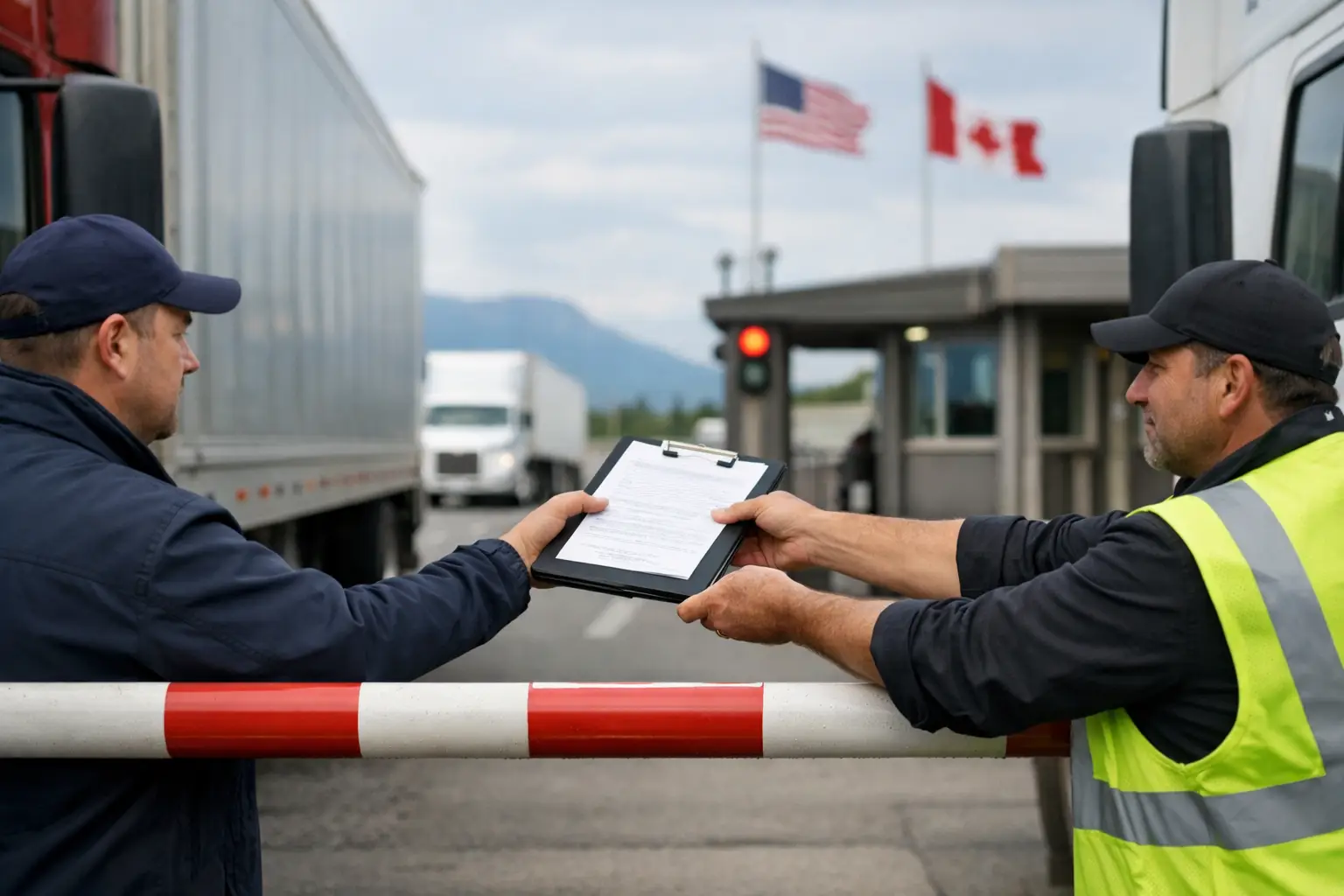
A trailer can arrive at the bridge on time and still lose a shift because one document is missing, a driver has the wrong release status, or nobody owns the next call. That is the real problem behind most cross-border delays. Learning how to streamline border handoffs means treating the US-Mexico move as one controlled operating process, not a chain of separate vendor transactions.
The handoff is not just when freight changes trucks. It happens when shipment data moves from the shipper to the customs broker, when commercial documents are approved, when a Mexican pedimento is released, when a carrier checks in, and when drayage takes possession on the other side. Every one of those moments needs a clear owner, a verified data set, and a trigger for what happens next.
How to streamline border handoffs: build one operating plan
Most shippers do not have a carrier problem or a broker problem. They have an orchestration problem. Their US broker, Mexican customs team, linehaul carrier, drayage provider, warehouse, and consignee may all be competent, but they work from different information at different times. The freight becomes the only thing connecting them.
Replace that fragmented model with a shipment-level operating plan that follows the load from pickup through final delivery. The plan should establish the shipment reference, parties involved, commodity details, border crossing, document status, customs status, equipment details, driver assignment, and final delivery appointment before the truck reaches the border.
This does not require a major system replacement. It requires one operational record that everyone supporting the move can work from. The goal is simple: no team should have to call three vendors to find out whether freight is cleared, staged, moving, or held.
Separate physical handoffs from information handoffs
A physical handoff might occur when a Mexican carrier drops a loaded trailer in a transfer yard and a US carrier takes it northbound. An information handoff occurs earlier, when invoices, packing lists, classifications, and shipment instructions are sent for customs preparation. Both can stop the move.
Teams often focus on equipment and driver availability because those failures are visible. Information failures are less visible until a driver is waiting at the crossing. Document intake, classification review, country-of-origin data, valuation, and consignee instructions should be complete before the freight reaches the terminal, not while the trailer is in queue.
For repeat lanes and repeat products, create a standard shipment packet with required fields and a defined cutoff. For irregular shipments, add a review gate. A new supplier, changed part number, adjusted value, or unusual routing deserves human review before submission. Automation should eliminate repetitive handling, not eliminate judgment.
Put customs preparation ahead of truck movement
Border speed starts at origin. If customs data arrives after pickup, the entire operation is already operating on a compressed timeline. The best cross-border teams start entry preparation when the load is tendered or when commercial documents become available.
For northbound freight, confirm that the commercial invoice, packing list, importer details, tariff classification, valuation, and applicable partner government agency requirements are ready for CBP entry. For southbound freight, ensure the information needed for the pedimento and Mexican customs processing is complete and aligned with the physical shipment.
The details must match across documents. A minor conflict in quantity, unit of measure, description, or value can create a release issue that takes longer to resolve than it took to move the truck to the border. The problem is not paperwork for paperwork's sake. Customs declarations are operational instructions. If the data is wrong, the load cannot move with confidence.
Use exception rules rather than relying on inbox vigilance. Flag shipments when documents are incomplete by cutoff, a product is new to the importer, values vary outside expected ranges, or a classification needs review. The right exception queue gives customs teams time to solve a problem while it is still inexpensive.
Assign one owner for every transition
A shipment can have multiple service providers without having multiple accountable parties. The difference matters most when something changes at 4:30 p.m. and the trailer is one hour from the bridge.
Define ownership by event, not by department. One party owns document completeness. One owns customs filing and release confirmation. One owns carrier dispatch. One owns transfer-yard status. One owns delivery communication. Where responsibilities overlap, define who makes the decision and who informs the customer.
A useful rule is this: the person who detects an exception should not have to guess who owns the next action. The operating record should show the responsible party, the required response time, and the escalation path.
For example, if a CBP entry is not released by the agreed pre-arrival checkpoint, the customs owner validates the cause, the transportation owner holds or reroutes equipment as needed, and the shipper receives a status update with a specific next action. “Pending customs” is not a useful update. “Entry held for invoice-value validation; corrected invoice requested; carrier held at staging; next release check at 2:00 p.m.” is useful.
Use milestone visibility that changes decisions
Visibility is often reduced to a map dot. A map dot cannot tell a warehouse whether to keep a dock door open, whether a broker has filed an entry, or whether a trailer is cleared to cross. The milestones that matter are operational and customs-specific.
At minimum, teams should be able to confirm tender acceptance, document receipt, document validation, entry or pedimento submission, customs release, terminal arrival, crossing, handoff completion, outbound dispatch, and proof of delivery. Each milestone should be timestamped and tied to the shipment reference.
Not every load needs the same level of monitoring. High-value, production-critical, temperature-sensitive, or time-definite freight needs tighter checkpoints and faster escalation. Routine replenishment freight may be managed by exception. The trade-off is cost and attention: monitoring everything manually creates noise, while monitoring too little turns a small discrepancy into a missed production window.
For high-volume lanes, measure where handoffs actually fail. Look at document-to-filing cycle time, release-to-crossing time, yard dwell, carrier wait time, and exceptions by root cause. If most delays stem from late invoices, adding another backup carrier will not solve the issue. If the data is clean but trailers sit at transfer, the constraint is physical capacity or dispatch coordination.
Reduce the number of systems people must touch
The border does not need another portal. It needs fewer rekeyed fields, fewer version-control problems, and faster action from the systems teams already use.
Email remains a real operating channel in cross-border freight, especially for invoices, packing lists, pickup notices, and release requests. Instead of forcing every supplier, broker, carrier, and warehouse into a new login, capture incoming documents, extract usable data, compare it against shipment requirements, and route exceptions to the people who can resolve them.
This is where an orchestration layer earns its place. It connects the customs workflow to transportation execution without making operators copy the same shipment data from email into a spreadsheet, then into a transportation system, then into a broker queue. BorderFlow applies this model by combining customs handling and freight execution in one workflow, so the people managing the load can see customs status alongside transportation status.
Technology is not a substitute for licensed customs expertise, disciplined carrier management, or clear escalation. It is the control layer that makes those capabilities operate from the same facts.
Design handoffs for exceptions, not ideal loads
The clean shipment is easy. The operating model is tested by the load with a revised invoice, an unavailable driver, a damaged seal, a failed inspection, or a consignee that cannot receive freight.
Build playbooks for the exceptions that occur most often on your lanes. Define the decision authority, communication order, document requirements, and recovery options before the exception occurs. A production-stop shipment may justify expedited drayage or alternate staging. A lower-priority load may be held until the next available crossing window. The right answer depends on the freight, the customer commitment, and the cost of disruption.
Then review exceptions weekly with the parties that touch the work. Do not settle for a list of late loads. Identify the failed handoff: Was the data late? Was the filing delayed? Was release not communicated? Did dispatch not receive the updated status? Correcting the handoff is more valuable than explaining the delay.
Border operations improve when every party has the same shipment record, the same release status, and the same expectation for the next move. Start with one lane, make ownership visible, and remove one manual gap at a time. The border will always have variables. Your handoffs do not have to be one of them.