
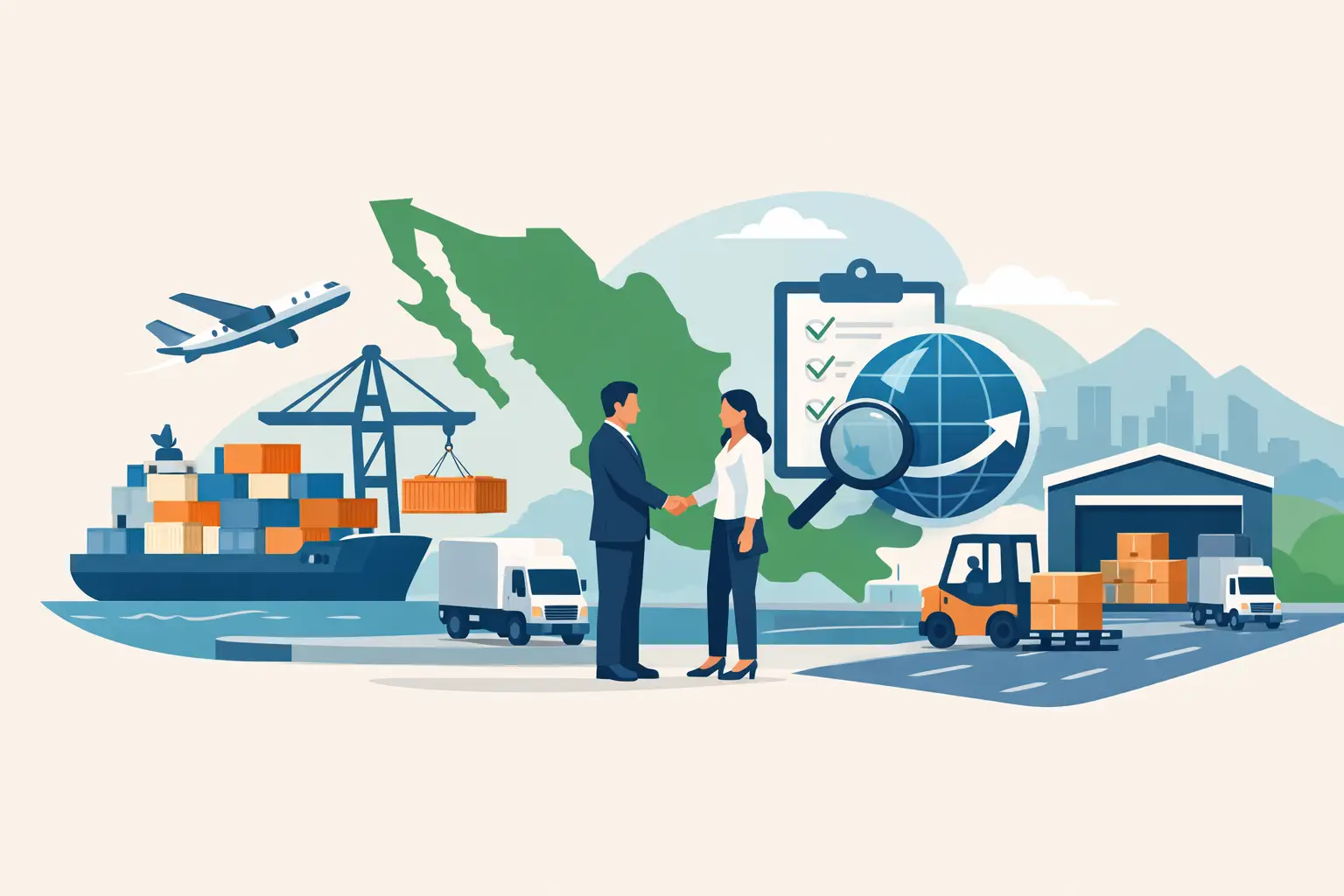
A plant can be online in northern Mexico in months. Getting its freight to move predictably into the US is usually the harder part. That is why nearshoring logistics Mexico has become less about geography and more about execution - customs timing, border capacity, trailer strategy, document quality, and who owns the handoffs when something breaks.
For supply chain teams, the appeal of nearshoring is obvious. Shorter lead times, lower inventory exposure, better alignment with US demand, and less dependence on long ocean transit all make sense on paper. But the operating model changes fast once freight starts crossing the border at scale. What worked for a single inbound lane from Asia does not automatically work for daily truckload and LTL flows out of Monterrey, Saltillo, Queretaro, or Juarez.
The companies seeing the best results are not treating cross-border as a standard domestic move with a customs stop attached. They are designing a border operating system. That means transportation, brokerage, drayage, document intake, and final-mile delivery have to run as one workflow.
Why nearshoring logistics Mexico is different
Nearshoring compresses time. That is one of its biggest advantages, but it also removes the buffer that used to hide poor coordination. When your replenishment model depends on freight moving from Mexico to a US DC in a matter of days instead of weeks, small failures become expensive very quickly.
A missing commercial invoice, a classification mismatch, a late pedimento, or a trailer not staged at the right yard can erase the lead-time gain that justified the move in the first place. The border does not reward fragmented ownership. If one provider handles linehaul in Mexico, another handles drayage, another files US customs, and someone else manages final delivery, delays often show up in the gaps between them.
This is where many nearshoring projects run into friction. The manufacturing footprint may be ready, suppliers may be producing, and demand may be strong. But execution is still stitched together across emails, spreadsheets, separate brokers, and carrier updates that arrive too late to act on.
The real pressure points in cross-border execution
Most teams assume the border delay is caused by customs alone. Sometimes it is. Often it is not. The bigger issue is that customs, transportation, and documentation are deeply linked, and one weak point destabilizes the whole shipment.
Document readiness is usually the first problem. If invoice data, shipper details, tariff classification, and shipment values are incomplete or inconsistent, entries slow down before the freight even reaches the border. That creates a cascade - drivers wait, transfer appointments slip, warehouses lose planning accuracy, and customer delivery windows tighten.
The next pressure point is equipment strategy. Nearshoring volumes often grow faster than trailer planning. Teams underestimate how much cross-border performance depends on whether they are using through-trailer, transload, or drop-and-hook models in the right lanes. There is no universal best answer. High-value or time-sensitive freight may justify a more controlled door-to-door setup, while other lanes benefit from transfer yard flexibility. The wrong choice adds cost or unpredictability.
Then there is capacity orchestration. Mexico-origin freight is not just about finding a carrier. It is about matching pickup timing, customs cutoffs, border crossing windows, drayage availability, and US final-mile capacity. In heavy corridors like Laredo, timing discipline matters more than broad carrier access. A shipment that misses one key handoff can lose a full day.
Visibility is another weak spot, especially when teams are working across multiple brokers and carriers. Plenty of companies have status updates. Fewer have operational visibility that tells them what action is needed before a delay hits. There is a difference between seeing that a truck is at the border and knowing whether customs documents were accepted, whether release is pending, and whether the downstream carrier is actually positioned.
Building a nearshoring logistics Mexico model that holds up
The strongest cross-border programs start with process design, not rate shopping. Cost matters, but low transportation spend means very little if customs errors, detention, stockouts, and missed production schedules absorb the savings.
First, document intake has to be standardized without creating more work for the shipper. This is where many operations still lose time. Teams chase PDFs, rekey invoice data, correct classification errors by hand, and rely on disconnected inboxes to manage critical filings. At higher volume, that model breaks. The practical goal is simple - intake should happen fast, data should be validated early, and customs filing should not depend on manual cleanup at the last minute.
Second, customs and transportation should be managed as one sequence. If brokerage works in isolation from the linehaul and drayage plan, nobody has full accountability for release timing versus actual trailer movement. That is how freight gets cleared but not moved, or moved to the border without the entry package ready. Unified control matters because the shipment does not care where one vendor's scope ends.
Third, lane design has to reflect product reality. Automotive components, consumer goods, electronics, industrial inputs, and food-adjacent products all behave differently at the border. Commodity profile, inspection risk, packaging method, value density, and delivery tolerance should all shape the operating model. A plant feeding a just-in-time production line needs a different setup than a shipper replenishing general inventory.
Fourth, escalation paths need to be explicit. Nearshoring increases shipment frequency, and frequent freight exposes every unresolved exception. If a shipment is held, who reviews the paperwork, who contacts customs, who coordinates the carrier, and who updates the consignee? If the answer changes by lane or provider, response time slows down when it matters most.
Where companies lose money without noticing
The obvious costs in nearshoring logistics Mexico are transportation rates, brokerage fees, and duties. The less obvious costs are usually larger over time.
Manual document handling is one. It quietly consumes labor in customs, transportation, customer service, and warehouse teams. People spend time checking attachments, reentering data, following up on missing information, and reconciling status updates across systems that do not talk to each other. That labor rarely appears as a line item on a freight report, but it is very real.
Another hidden cost is schedule unreliability. If your Mexico freight arrives with too much variation, you carry more safety stock, build more slack into production planning, and put more pressure on receiving operations. Nearshoring is supposed to tighten the supply chain. If execution is unstable, you may shorten miles while keeping the same planning inefficiency.
Vendor fragmentation is the third cost center. Separate brokers, drayage providers, long-haul carriers, and technology tools can work, but they create handoff risk. Every handoff introduces another moment where data can be delayed, responsibility can blur, or an exception can sit untouched. Operators usually feel this before finance sees it, but finance pays for it eventually.
Technology helps, but only if it removes work
Cross-border teams are not asking for another portal. They want fewer emails to chase, fewer fields to retype, and fewer calls asking where the shipment stands. That is the standard technology should meet.
Good logistics technology in the US-Mexico corridor does three things well. It captures shipment data from the documents customers already send. It turns that data into customs and transportation actions without forcing a workflow change. And it gives everyone the same operational picture fast enough to prevent delays instead of just reporting them.
That is the practical difference between software that looks modern and software that actually improves throughput. Nearshoring creates more shipment frequency and more customs events. If your systems still depend on manual intervention at each step, scale just means more friction.
This is also why operator-led platforms tend to outperform generic logistics tools in cross-border environments. Border execution is not a dashboard problem. It is a workflow problem. The technology has to reflect how entries are filed, how pedimentos are prepared, how handoffs happen at the bridge, and how exceptions are resolved under time pressure.
What to ask before you scale Mexico volume
If your team is expanding production in Mexico, ask a harder question than whether your current providers can cover the lane. Ask whether your operating model can absorb more frequency without adding more manual coordination.
Can your customs process handle invoice variability from multiple suppliers? Do transportation and brokerage teams work off the same shipment record? Can you see release status and carrier status in one place? When a shipment misses plan, is there one accountable owner or three partial explanations?
These questions matter more than broad claims about nearshoring strategy. The value of Mexico manufacturing is real, but it shows up only when border execution is controlled at the same level as plant output and inventory planning.
For teams moving high-volume freight through South Texas corridors, especially around Laredo, the difference between average and excellent execution is rarely dramatic. It is procedural. Clean documents. Early filing. Tight handoffs. Clear ownership. Fast exception handling. Repeatable visibility.
Nearshoring does not reduce complexity. It relocates it closer to your customer. That is good news if your logistics model is built for speed, compliance, and accountability. If not, the border will expose every weak handoff. The upside is that once the workflow is right, Mexico becomes more than a sourcing decision - it becomes a reliable operating advantage.