
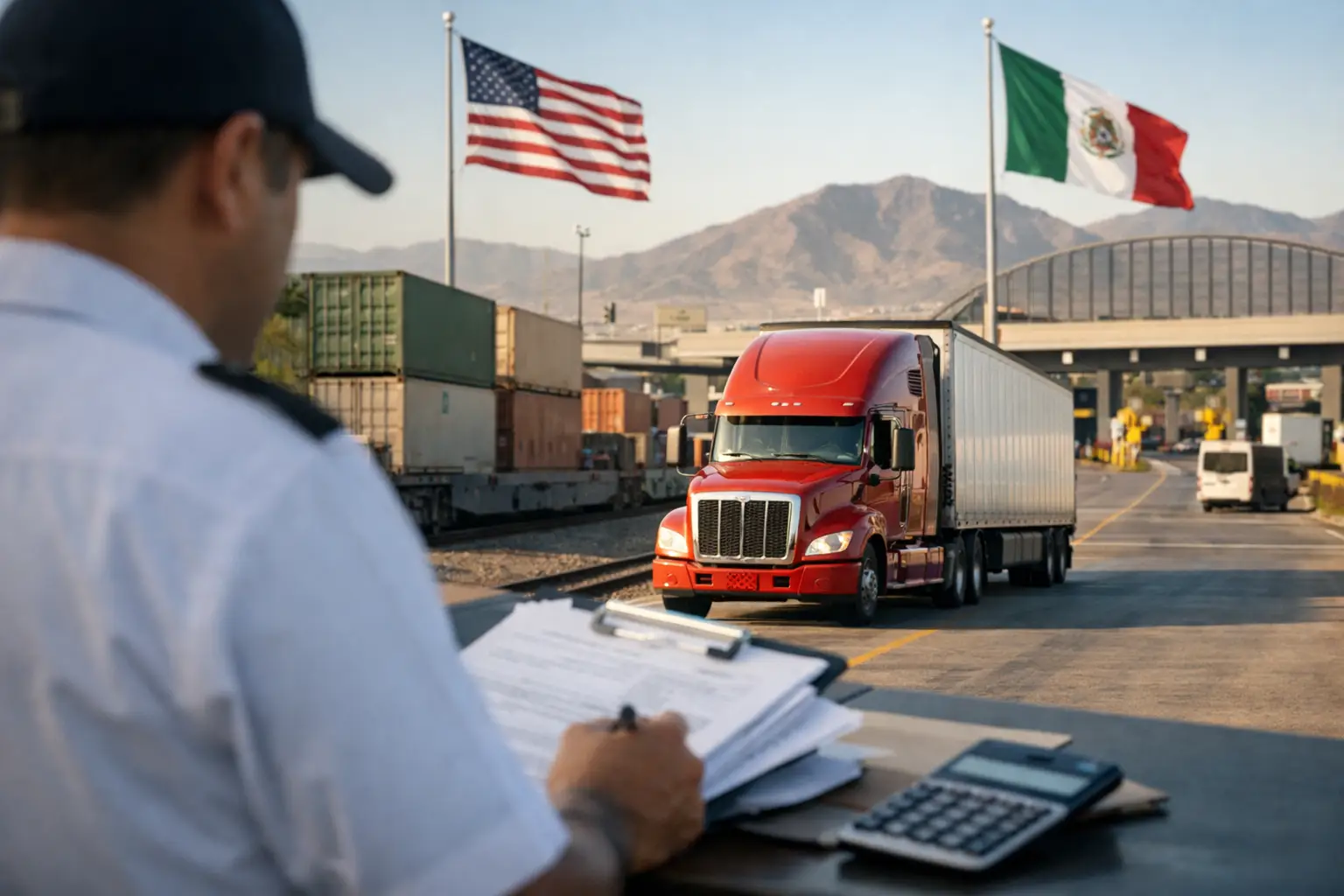
A trailer can arrive at the Mexican border with the right product, a confirmed appointment, and a carrier ready to move. Without a valid pedimento, it is not ready for release. For importers moving freight between Mexico and the United States, the pedimento is one of the documents that determines whether cargo keeps moving or becomes a costly exception.
It is not simply a form to prepare after the freight is loaded. It is the customs declaration that connects the commercial transaction, tariff treatment, taxes, permits, and physical shipment into a record Mexican customs can validate. When the underlying data is wrong, the result can be a border hold, a reassessment, a fine, or a shipment that misses its downstream production or delivery window.
What Is a Pedimento?
A pedimento is the formal customs declaration used for goods entering or leaving Mexico under a specific customs regime. It is prepared and transmitted through Mexico's customs process by an authorized customs agent or agency, with supporting records submitted electronically as required.
For a Mexican import, the pedimento identifies who is importing, what is being imported, where it came from, how it is classified, what it is worth, and what duties, taxes, or trade measures apply. It also documents the customs regime under which the goods are moving, whether that is a definitive import, temporary import, bonded movement, return, or another authorized procedure.
The document is associated with a unique pedimento number and customs validation process. Once duties and applicable taxes are calculated and paid, the shipment can proceed to customs presentation and inspection selection. A validated pedimento does not guarantee a green light, but a missing or defective one creates a problem before the cargo has a chance to clear.
For US-bound freight, the Mexican export pedimento and the US Customs and Border Protection entry are separate records. They rely on much of the same commercial truth, but they are not interchangeable. Treating them as one filing handled by two disconnected providers is where many border failures begin.
Why Pedimento Accuracy Controls Border Speed
Customs delays are often described as border congestion. In practice, many are data problems that surface at the border. A mismatch between the invoice, packing list, truck details, classification, value declaration, or permit data can force an exception review at exactly the point where time is least available.
The pedimento matters because it is built from data that crosses multiple teams and systems. Procurement may own supplier terms. Engineering may control product descriptions. Trade compliance may assign tariff classifications. Finance may approve declared values. The warehouse may determine quantities and packaging. The carrier supplies equipment and driver details. If those inputs arrive late, conflict, or are manually rekeyed, the customs filing inherits the risk.
That is why a broker receiving documents only after a truck is dispatched is operating with limited control. A better process starts before pickup. Commercial data should be reviewed while there is still time to correct a part number, resolve an origin question, confirm a valuation method, or obtain a required authorization.
Speed comes from readiness, not from asking customs to move faster.
The Data Behind a Valid Pedimento
The exact data elements vary by transaction and customs regime, but the core record must reconcile with the shipment and its commercial support. A properly prepared filing typically depends on four connected data sets:
- Importer and transaction data, including the importer of record, supplier, Incoterms, currency, payment terms, and transaction value.
- Product and classification data, including commercial descriptions, part numbers, quantities, units of measure, country of origin, tariff classification, and applicable non-tariff requirements.
- Logistics data, including the port of entry, transport mode, carrier and equipment information, package counts, and shipment timing.
- Compliance and tax data, including the applicable customs regime, duties, VAT, preferential treatment claims, permits, certificates, and other required supporting documents.
A product description such as “automotive parts” is rarely sufficient for customs analysis. Customs teams need enough detail to determine what the item is, what it is made of, what it does, and how it should be classified. For high-volume manufacturers, that level of detail should be controlled in a product master, not recreated from memory on every invoice.
Valuation also deserves more attention than it gets. The declared value is not always just the unit price on a commercial invoice. Freight, assists, royalties, related-party terms, and Incoterms can affect the analysis. The correct treatment depends on the facts of the transaction. When finance, sourcing, and customs operate from different assumptions, the pedimento becomes exposed.
Pedimento Workflow: Where Delays Actually Start
A reliable workflow begins with document intake and ends with an auditable release record. The most effective operations do not wait for a driver to reach the border before assembling the file.
First, the commercial invoice, packing list, purchase order, product data, and shipment instructions are collected early. The customs team checks whether the descriptions, quantities, values, and parties match across documents. Missing data is escalated to the owner who can fix it, not passed through as a best guess.
Next, the customs agent determines the applicable regime, tariff treatment, taxes, and regulatory requirements. Supporting documents such as electronic value records, certificates, permits, or other required files are prepared and associated with the transaction. The pedimento is then generated, validated, and paid according to the applicable process.
Only then should the physical border movement be treated as fully customs-ready. At presentation, the shipment may be selected for inspection or released through the applicable customs mechanism. If it is inspected, the physical cargo must match the declaration. A clean electronic filing does not help if package counts, labels, or goods on the trailer tell a different story.
After release, the pedimento and related records should be retained in an organized, searchable file. This matters for audits, reconciliations, VAT recovery processes, IMMEX compliance where applicable, and future corrections. A clearance event is not the end of the compliance obligation.
Common Pedimento Failures and How to Prevent Them
The highest-risk failures are usually repetitive and preventable. A late invoice is obvious, but the more damaging issues are often small inconsistencies repeated across frequent lanes.
One common issue is inconsistent product descriptions. A supplier may use a shorthand description on the invoice while the importer uses a more detailed internal description and the broker has an older classification record. Standardized descriptions tied to part numbers reduce the chance that three versions of the same product reach customs.
Another is quantity drift. Split shipments, partial loads, substitutions, and packaging changes can leave invoice quantities out of sync with the freight actually tendered. The shipping team needs a final control point before the filing is validated. When freight changes after filing, the customs team must know immediately so it can determine whether a correction is required.
A third problem is assuming preferential duty treatment without validating origin and documentation. A USMCA claim can reduce duty exposure, but it must be supported by the product's actual origin qualification and the required certification information. Origin is not the same as ship-from location, supplier nationality, or final assembly location.
Finally, fragmented ownership slows correction. If the Mexican customs broker, US broker, carrier, drayage provider, and importer each see only one section of the move, no one has the complete picture when an exception occurs. One accountable workflow gives operations teams a clearer path from document issue to resolution.
When a Standard Pedimento Process Is Not Enough
Not every shipment follows the same playbook. Temporary imports for manufacturing, returns, repairs, samples, transfers between facilities, regulated goods, and high-value equipment may require additional analysis. The correct customs regime can change the filing requirements, taxes, documentation, and post-entry obligations.
For example, a manufacturer using a temporary import program cannot treat every inbound component like a definitive import. Inventory controls, discharge obligations, and the eventual disposition of the goods can affect compliance long after the truck crosses. Likewise, a return shipment may look operationally simple but require careful documentation to avoid paying duties or taxes incorrectly on goods that were previously imported or exported.
The practical rule is straightforward: flag non-routine freight when it is planned, not when it reaches the yard. Customs decisions made early are cheaper to correct than border exceptions made late.
Build Control Before the Freight Reaches the Border
The strongest pedimento process is not built around chasing PDFs. It is built around data ownership, early validation, and shared visibility between customs and transportation. That does not require forcing every supplier, warehouse, and planner into a new portal. It requires a workflow that can capture the documents teams already send, extract the right data, identify gaps, and route exceptions to the people who can resolve them.
For frequent US-Mexico lanes, BorderFlow applies that operating model across customs filing and freight execution so document readiness is visible before a truck becomes a border problem. The goal is not more status updates. It is fewer avoidable exceptions.
A pedimento should be treated as a control point for the entire shipment, not an administrative task assigned at the last minute. When the commercial record, customs declaration, and physical load match before dispatch, the border becomes far more predictable.