
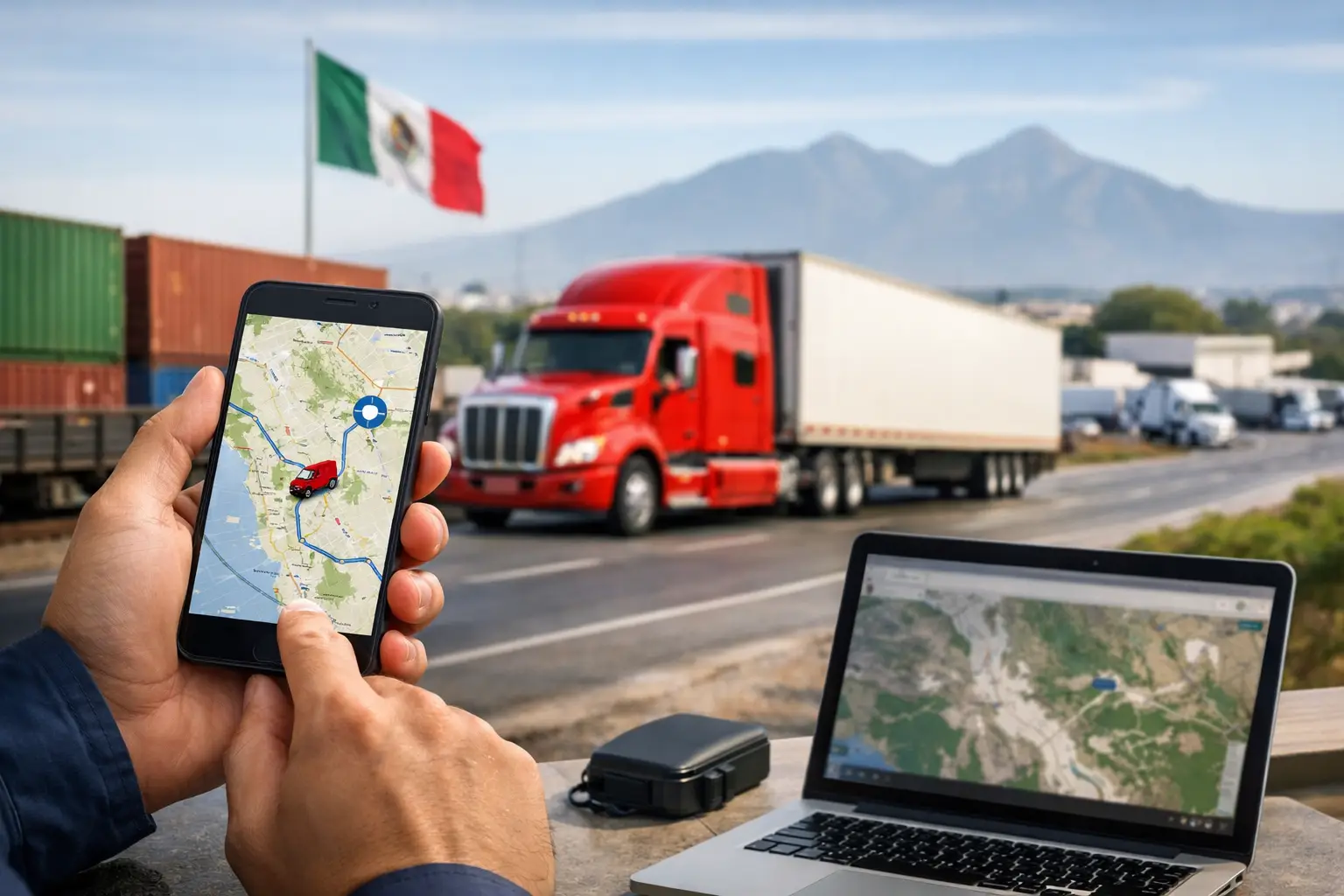
A truck can be 20 miles from the border and still be hours away from being operationally available. That gap is why real time freight tracking Mexico cannot mean a map dot alone. For US-Mexico freight, the status that matters is whether the shipment has the right documents, has cleared the correct customs steps, has been released to the next carrier, and can meet its delivery appointment.
A useful tracking operation puts transportation movement and customs execution in the same timeline. It tells your team what happened, what is waiting, who owns the next action, and whether a delay will affect production, receiving, or customer commitments.
Why real time freight tracking Mexico is different
Domestic freight tracking usually follows a straightforward chain: pickup, in transit, delivery. Cross-border freight has more custody changes and more decision points. A full truckload may move from an origin facility in Mexico to a Mexican export broker, a border drayage provider, a US customs broker, a US carrier, and then a destination warehouse. LTL freight can add consolidation and deconsolidation events on both sides.
Each handoff can create a visibility gap. A carrier may report that a trailer has arrived in Laredo, but that does not confirm whether the pedimento is complete, whether US entry data is accepted, whether a hold is active, or whether the freight has been released for onward movement. Those are separate operational facts with separate owners.
The best tracking systems do not hide this complexity behind vague labels such as "at border." They convert it into clear, timestamped milestones. Your team should be able to distinguish between a truck waiting in a yard, freight awaiting documentation, an entry under review, a physical inspection, and a released load waiting for pickup.
Build visibility around milestones, not generic statuses
A reliable control tower begins with an agreed shipment milestone model. The goal is not to create more notifications. The goal is to give every stakeholder the same definition of shipment state.
Before the freight moves
Tracking begins before pickup. The shipment record should connect the commercial invoice, packing list, bill of lading, classification data, shipper and consignee details, and any product-specific requirements to the load reference. If information is missing or inconsistent, that is an exception before it becomes a border delay.
For importers with recurring lanes, this early validation is often more valuable than another GPS update. A location signal cannot fix a quantity mismatch, an incorrect HTS classification, or a missing manufacturer detail once a truck is already committed to the crossing.
From pickup to Mexican export processing
Once freight is picked up, useful milestones include pickup confirmation, departure from origin, arrival at the Mexican broker or staging location, export documentation readiness, pedimento preparation, and export clearance status. Depending on the lane and carrier setup, GPS can provide frequent vehicle locations, but custody events should still be confirmed by the responsible operating party.
There is a trade-off here. More frequent location pings can be useful for time-sensitive freight, but they do not always improve decision-making. A supply chain manager needs an alert when a truck misses a planned arrival window or when clearance documents are not ready by cutoff, not a stream of coordinates with no operational context.
At the border and through US entry
The border segment needs the most discipline because it combines transportation, customs, and yard activity. A complete timeline should show Mexican export release, border arrival, US entry submission, entry acceptance or exception, inspection or hold status when available, release, and US-side dispatch.
Not every customs event is instantly available as an automated status. Government systems, broker workflows, carrier updates, and physical inspection processes operate on different timelines. A credible provider should be explicit about the source of each update and the time it was received. Calling every event "real time" when it is based on a manual confirmation received 45 minutes later creates false confidence.
From release to final delivery
Customs release is a major milestone, but it is not final delivery. The freight may still need to be transferred to a linehaul carrier, staged for an appointment, or moved through a destination cross-dock. The tracking record should continue through US dispatch, arrival at destination, proof of delivery, and any shortage or damage exception.
That continuity matters for warehouse teams. If receiving knows a load has cleared but is waiting for a final-mile appointment, they can adjust labor and dock planning. If they only see "cleared," they may plan for freight that will not arrive until the next day.
Exception management is the actual product
Visibility has value only when it changes an outcome. The most effective real-time tracking operation is built around exception ownership.
Every exception should answer four questions: What happened? What does it affect? Who is resolving it? When will the next confirmed update be available? A delayed truck without an owner is not an update. It is an unresolved risk.
Consider a shipment held because invoice quantities do not match the packing list. A weak process sends a generic delay notification after the truck has reached the border. A controlled process flags the discrepancy during document intake, routes it to the right customs and shipper contacts, records the correction, and confirms whether the planned crossing remains achievable.
The same standard applies to missed pickups, carrier no-shows, inspection requests, trailer breakdowns, and delivery appointment failures. These events should be attached to the shipment timeline, not buried in email chains or separate carrier portals. The operations team needs one current version of the truth.
The data must follow the shipment, not the vendor
Cross-border teams often work around fragmented systems because each provider owns a narrow segment. The Mexican broker has one update. The US broker has another. The carrier has telematics in a separate portal. The drayage company reports by phone or email. The shipper becomes the integration layer.
That model fails under volume. It creates duplicate data entry, delayed escalations, and conflicting status reports precisely when a load becomes urgent.
A unified workflow can ingest documents from the channels teams already use, extract shipment data, create customs tasks, and connect transport milestones to the same reference. BorderFlow applies this model through BorderFlow OS and Zight AI customs automation: document intake and customs execution can start from email, without requiring every shipper, carrier, or warehouse contact to change systems.
No portal requirement does not mean no controls. It means the control layer works around the operating workflow instead of forcing field teams to abandon it. Shipment IDs, purchase order numbers, trailer numbers, bills of lading, and entry references still need to reconcile cleanly across every event.
What to require from a tracking partner
When evaluating a provider, ask to see the event timeline for an actual cross-border shipment, including an exception. A polished map is not enough. You need to know whether the provider can show customs readiness before pickup, distinguish export clearance from US release, identify the current carrier and custodian, and document who resolved a delay.
Also ask how status is collected. GPS, EDI feeds, driver check calls, broker confirmations, government messages, and manual yard updates each have different latency and reliability. There is no single perfect data source. The operating advantage comes from reconciling those sources and escalating conflicts quickly.
Finally, test accountability. If a Mexico-side document issue threatens a US delivery appointment, can one team coordinate the shipper, broker, drayage provider, and carrier? Or will your staff spend the afternoon chasing four separate vendors? The answer determines whether tracking is a reporting tool or an execution system.
Make the next decision easier
The purpose of cross-border visibility is not to watch freight move. It is to make the next operational decision before a missed document, hold, or handoff becomes a missed production window. When tracking, customs, and transportation share one workflow, every status update has a job to do: protect the shipment plan.