
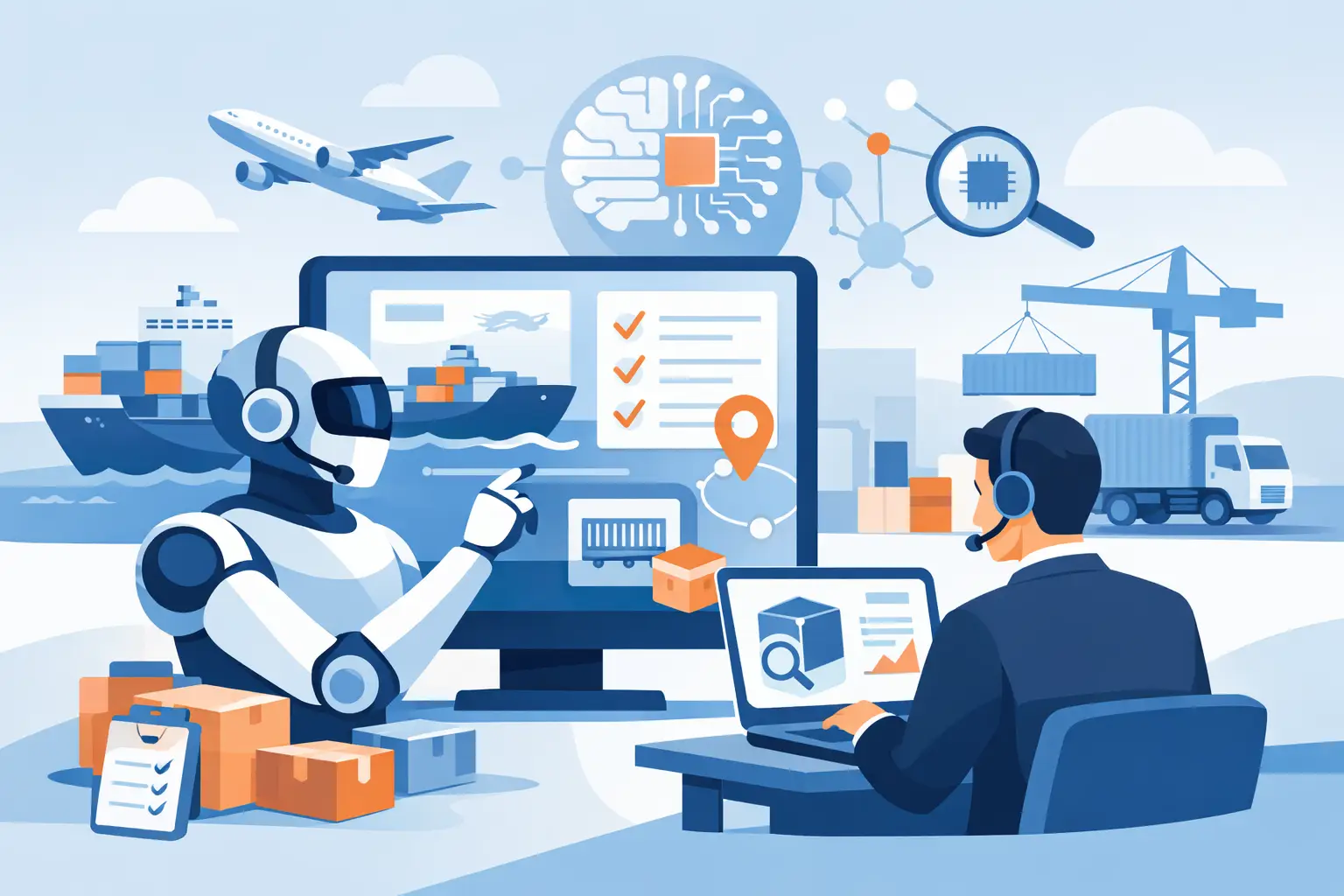
A truck is loaded in Monterrey. The commercial invoice gets revised twice. The broker packet lands in three inboxes. Someone rekeys line items into a customs system, spots a mismatch on the quantity, and now the shipment is sitting on the clock. That is where an ai customs broker starts to matter - not as a flashy add-on, but as a way to remove repetitive failure points from real cross-border execution.
For importers and logistics teams moving freight between Mexico and the United States, customs work is rarely slowed down by one big problem. It gets slowed down by dozens of small ones - missing data, late documents, inconsistent descriptions, classification questions, and disconnected handoffs between brokers, carriers, warehouses, and internal teams. AI can help. But only when it is tied to actual brokerage operations, not floating above them as a dashboard with no control over the move.
What an ai customs broker is
At a practical level, an ai customs broker is not a replacement for licensed customs brokerage. It is a layer of automation and decision support that sits inside the customs workflow. It reads inbound documents, extracts shipment data, checks for gaps, supports classification, prepares entry data, and routes exceptions to human operators before they become delays.
That distinction matters. Customs clearance is not just data processing. It is a regulated activity with legal, financial, and operational consequences. A strong AI system can reduce manual entry and speed up review, but the brokerage function still needs licensed oversight, audit controls, and accountability for the actual filing.
In other words, the useful version of AI in customs is not "set it and forget it." It is "automate the repeatable work, surface the risky work, and keep the filing moving."
Where an ai customs broker creates real value
The first gain is document intake. Most customs teams are still receiving invoices, packing lists, shipping instructions, and arrival details by email. Those documents arrive in different formats, with different naming conventions, and often with inconsistent data from one shipment to the next. An AI customs broker can pull structured data from those documents without forcing the shipper into a new portal or manual upload routine.
The second gain is speed on entry preparation. When data is extracted automatically and mapped into entry workflows, operators spend less time typing and more time reviewing exceptions. That matters most on high-volume lanes where the same delay happens over and over. If your team is processing frequent US-Mexico shipments, even a two-minute reduction per file adds up quickly.
The third gain is consistency. Human teams do not make mistakes because they are careless. They make mistakes because they are overloaded, switching between systems, and compensating for incomplete information. AI helps by applying the same extraction logic, validation rules, and workflow triggers every time. You get fewer transcription errors, fewer missed fields, and a cleaner pre-filing process.
The fourth gain is visibility. A well-designed system shows where the file stands, what is missing, and who needs to act next. That is valuable for customs teams, but it is just as important for transportation and warehouse operations. A shipment delay at the border is never only a customs problem. It affects dock scheduling, drayage timing, inventory planning, and customer commitments downstream.
What AI cannot do on its own
There is a tendency to talk about AI as if it can absorb all customs complexity. It cannot. Customs brokerage still depends on judgment, regulatory knowledge, and control over execution.
Classification is a good example. AI can suggest tariff codes based on product descriptions, past filings, and supporting documentation. That saves time. But product classification is not just pattern matching. It can require interpretation, especially when descriptions are vague, products are new, or small distinctions change duty treatment or admissibility requirements. In those cases, a licensed professional still needs to review and decide.
The same is true for exception handling. If quantities do not match across documents, if a consignee record is outdated, if PGA data is missing, or if the commercial terms create valuation questions, the issue does not disappear because software found it. Someone still has to resolve it. The benefit of AI is faster detection and cleaner escalation, not magic.
This is where many tools fall short. They automate intake, then hand the hard part back to the customer. That is not operational relief. It is just a different version of the same workload.
Why workflow design matters more than AI claims
The real question is not whether a provider has AI. The real question is where that AI sits in the workflow and whether it is connected to the people who can actually move the file forward.
If your AI tool extracts invoice data but your broker still works in a separate queue, you have created another handoff. If your transportation provider cannot see customs status, dispatch still operates blind. If your warehouse learns about a hold after the truck misses its slot, the automation did not solve much.
That is why the strongest model is orchestration, not isolated software. The customs function works better when document intake, entry prep, filing, transportation coordination, and shipment visibility are connected. For US-Mexico freight, that alignment matters even more because there are more parties, more border events, and more opportunities for a small communication gap to turn into a real delay.
A platform like BorderFlow approaches this the right way when AI is built into the operating layer itself - reading documents from email, extracting the data, preparing customs workflows, and keeping execution tied to the actual broker and freight movement. No portal. No login. No change to your workflow. That is what practical automation looks like in the field.
How to evaluate an ai customs broker
Start with the intake process. Ask how documents enter the system and whether your team has to change behavior to make the automation work. If the answer is "upload everything into our portal," adoption will be uneven from day one. Email-based intake with structured extraction is usually much closer to how shipping teams already operate.
Next, ask about exception handling. You want to know what happens when the AI encounters unclear data, conflicting quantities, missing values, or classification ambiguity. A serious provider will have a defined escalation path to brokerage operators, not just a generic error message or a request for the customer to start over.
Then ask how the system handles auditability. Customs work needs traceability. You should be able to see what data was extracted, what changes were made, who reviewed the file, and when the entry moved to the next step. If the AI behaves like a black box, that creates compliance risk.
Finally, look at execution ownership. This is the part buyers often miss. If the technology provider is separate from the brokerage provider, and both are separate from the freight operator, accountability gets diluted fast. When the shipment is delayed, everyone has an explanation and no one has control. The better model is one accountable workflow across customs and transportation.
The trade-off: speed versus control
Every automation decision has trade-offs. More automation can increase throughput, but only if the underlying data quality is good enough to support it. If your documents are highly inconsistent, your product catalog changes constantly, or your trade requirements are unusually complex, the system will need tighter review controls.
That is not a reason to avoid AI. It is a reason to implement it honestly. Some importers can push a high percentage of routine files through automated workflows with minimal intervention. Others will need a more conservative approach where AI handles extraction and validation, while licensed operators review a larger share of entries before submission.
The right setup depends on shipment profile, product complexity, and internal process discipline. A mature automotive supplier with stable SKUs has a very different opportunity set than a mixed-goods importer handling frequent documentation changes.
What this means for US-Mexico operations
On the US-Mexico corridor, customs delays rarely stay contained. A filing issue can affect drayage timing, cross-dock sequencing, carrier utilization, and final delivery appointments within hours. That is why AI is most valuable when it reduces border friction inside a connected operating model.
For teams moving through Laredo and other major gateways, the payoff is not just faster data entry. It is earlier issue detection, fewer preventable holds, and tighter coordination between customs and transportation. That is how you protect transit time.
The companies that get the most from an ai customs broker are usually not chasing hype. They are trying to stop wasting skilled labor on repetitive tasks, reduce avoidable delays, and gain tighter control over shipment execution. That is the right goal. AI should make the border operation quieter, cleaner, and more predictable.
If your current process still depends on inbox triage, spreadsheet checks, and last-minute calls to figure out what is missing, the opportunity is real. The best time to fix border friction is before the truck reaches the bridge.