
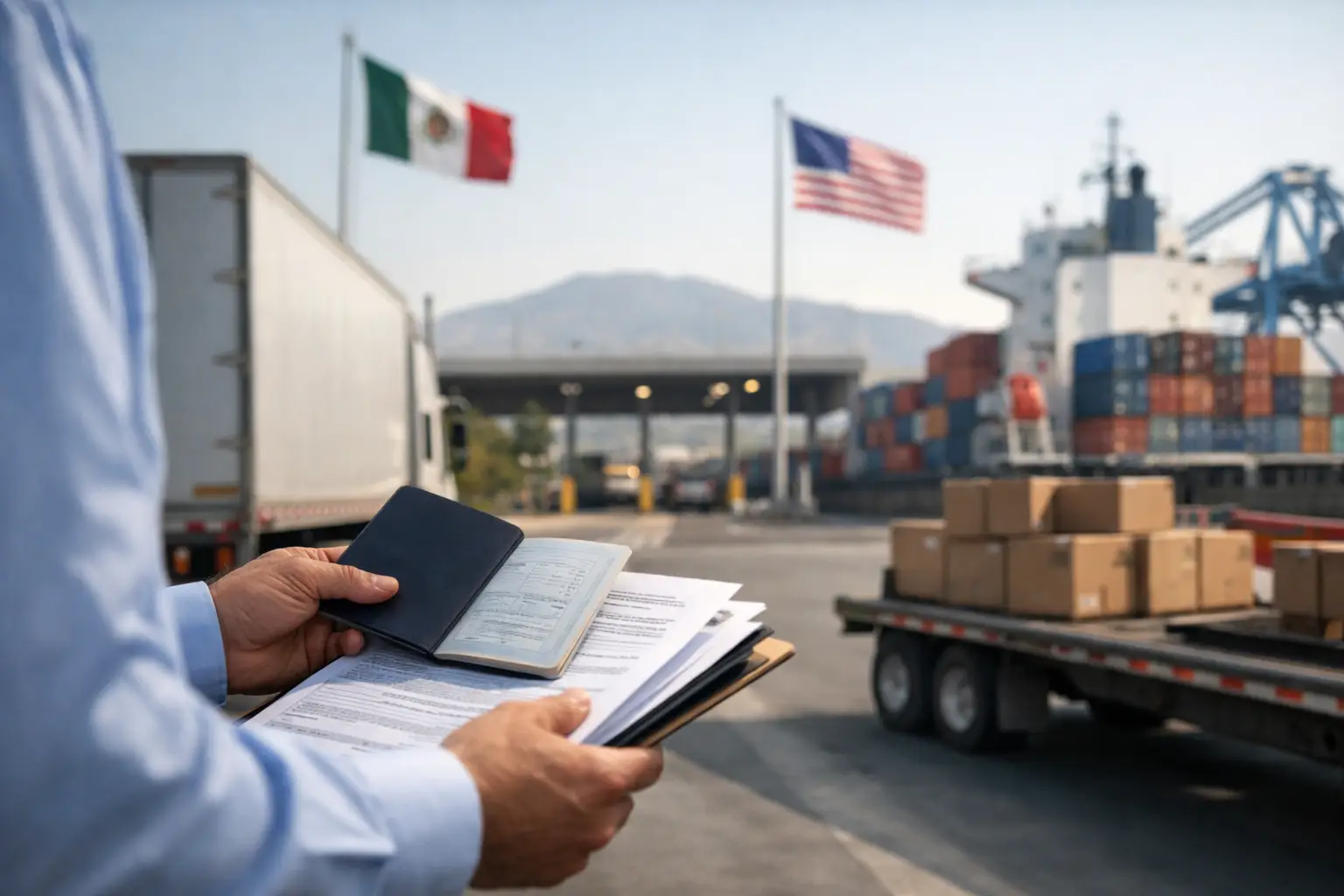
A loaded trailer can be physically ready at the border and still be non-movable because the customs record is incomplete. For commercial freight entering or leaving Mexico, the question is not merely, “are Mexican pedimentos mandatory?” It is which pedimento applies, who is responsible for validating it, and whether every supporting document matches the shipment on the ground.
For most commercial cross-border freight, a Mexican pedimento is required. It is the formal electronic customs declaration used to clear goods under a specific customs regime. Missing it, using the wrong regime, or presenting data that does not align with the invoice, packing list, transportation documents, and product classification can create a hold, assessment, or seizure risk.
Are Mexican Pedimentos Mandatory?
Generally, yes. Commercial goods imported into Mexico must be cleared through a pedimento, and commercial exports from Mexico usually require one as well. The pedimento documents the transaction before Mexican customs authorities and establishes how the goods are entering or leaving the country.
It is not a generic shipping form. A pedimento carries the customs regime, importer or exporter information, tariff classification, customs value, country of origin, applicable duties and taxes, non-tariff compliance data, and other transaction-specific details. Once validated and paid when payment applies, it becomes the core customs record for that movement.
The practical rule for shippers is straightforward: if you are moving commercial cargo across the Mexico border, plan for a pedimento unless your customs provider confirms that a defined legal exception or simplified process applies. Do not treat an exception as a default operating model.
Import pedimentos into Mexico
Imports into Mexico normally require an import pedimento. This includes permanent imports for sale or consumption, temporary imports, and goods entering special operational programs. The regime changes, but the need for a documented customs declaration often does not.
For example, a U.S. manufacturer shipping components to a Mexican plant under an IMMEX program may use a temporary import pedimento rather than a permanent import pedimento. The merchandise is still declared. The regime, inventory controls, permitted time in Mexico, and eventual export or regularization obligations are what change.
A shipment entering Mexico for resale, use in a Mexican facility, repair, bonded storage, or manufacturing must be evaluated against the applicable regime before the truck is dispatched. Selecting a regime after the freight reaches the port of entry is how routine loads become expensive exceptions.
Export pedimentos from Mexico
Exports from Mexico also generally require an export pedimento. This matters for northbound freight because a U.S. Customs and Border Protection entry does not replace Mexico’s export declaration.
A trailer moving from Monterrey to a U.S. distribution center may need two connected but separate customs actions: a Mexican export pedimento and a U.S. import entry. They rely on overlapping commercial data, but they are not interchangeable filings. A release on one side of the border does not cure a filing gap on the other.
For manufacturers, export pedimentos are also tied to proof of export, VAT treatment, IMMEX compliance, origin support, and inventory reconciliation. Treating the export filing as a carrier document instead of a compliance record creates avoidable exposure later.
When a Different Process May Apply
“Mandatory” does not mean every cross-border movement uses the same full pedimento process. Mexican customs law and operating rules provide specific simplified procedures and exceptions. Those scenarios are narrow, fact-dependent, and should be confirmed before freight moves.
Travelers carrying personal effects, certain low-value courier or postal shipments, and some limited samples or specific operational transactions may be handled under a simplified declaration process rather than a standard commercial pedimento. The thresholds, commodity restrictions, shipment value, consignee profile, and carrier program all matter.
There are also consolidated pedimentos used in particular recurring operations. A consolidated pedimento does not eliminate the customs obligation. It changes the filing structure by pairing operational documentation for individual movements with a later consolidated customs declaration under the authorized process.
Companies should be cautious with the phrase “informal entry.” A process that works for a small parcel shipment is rarely a valid shortcut for palletized commercial freight, production material, or regular truckload traffic. The moment a shipment has recurring commercial purpose, controlled goods, meaningful value, or program obligations, simplified treatment may no longer fit.
What the Pedimento Must Match
Mexican customs clearance is data-driven. The pedimento must reflect the actual commercial transaction and be supported by the documents behind it. A clean filing starts well before a truck arrives in Laredo or at any other border crossing.
The commercial invoice should accurately identify the buyer, seller, merchandise, value, currency, Incoterms, and payment terms where applicable. Product descriptions need enough detail to support classification. “Auto parts,” “electronics,” or “metal components” are not operational descriptions when the broker must determine the correct tariff treatment, restrictions, and duty exposure.
Classification is especially consequential. The tariff code can affect duty, VAT, import permits, labeling requirements, standards compliance, and eligibility for preferential treatment under the USMCA. An incorrect code does not become acceptable because the freight physically crossed without an inspection.
Origin documentation deserves the same discipline. Preferential tariff treatment under the USMCA depends on whether the goods qualify under the agreement’s rules of origin. A Mexican export pedimento, a U.S. entry, and a USMCA certification each serve different purposes. They should tell a consistent story about the goods, but one document does not automatically satisfy all others.
For regulated commodities, the data package may also need permits, certificates, registrations, notices, or evidence of compliance with Mexican standards and non-tariff regulations. Food, chemicals, medical products, textiles, steel, electronics, and dual-use goods often need additional review. The right question is not whether the shipment has an invoice. It is whether the product can legally enter under the intended regime.
Who Is Responsible for Filing?
The importer or exporter remains accountable for the accuracy of the customs transaction, even when a customs broker or customs agency prepares and transmits the pedimento. Delegating execution does not delegate liability.
In Mexico, pedimentos are typically processed through an authorized customs representative operating within the applicable customs framework. The broker or agency coordinates validation, payment when required, and presentation of the supporting electronic records. The shipper, importer of record, manufacturer, and carrier each still have responsibilities for providing accurate, timely information.
This is where fragmented operations fail. A carrier may have the freight details. A procurement team may have the commercial invoice. A trade compliance team may own the classification file. A Mexican broker may be waiting on all three. If the handoffs happen through disconnected emails and last-minute calls, the pedimento becomes the point where every upstream data problem surfaces.
Build the Pedimento Into the Shipment Workflow
The most reliable operations do not begin customs work when the truck is at the gate. They build a release-ready data flow before pickup.
Start by identifying the direction of travel and customs regime. Confirm who is the importer or exporter of record, which party owns duty and tax exposure, and whether the shipment is permanent, temporary, returned, repaired, consolidated, or subject to a special program.
Next, validate product master data before the shipment is tendered. That includes the tariff classification, country of origin, product description, unit of measure, valuation method, and any permits or standards requirements. If a new SKU is entering the lane, resolve its customs treatment before it becomes an urgent dispatch.
Then align the commercial documents and transportation data. Piece count, weight, packaging, reference numbers, shipper and consignee names, and commodity descriptions should match across the invoice, packing list, bill of lading, manifest data, and customs instructions. Small inconsistencies can create large delays when an officer compares documents during review.
Finally, establish an exception path. Teams need a defined owner for invoice corrections, classification questions, missing certificates, payment issues, and inspection requests. No portal. No login. No change to your workflow is useful only if document intake, data extraction, review, and customs filing are actively coordinated behind the scenes.
Common Pedimento Failures That Stop Freight
The costliest pedimento issues are usually predictable. They include a declared value that conflicts with the invoice, an incomplete product description, the wrong tariff classification, an unsupported USMCA claim, or a permit requirement discovered after dispatch. Temporary-import programs add another layer: poor inventory control can turn a routine export or return into a compliance problem.
Timing is just as important as accuracy. Late documents compress review time and force customs teams to choose between requesting clarification and risking an incorrect filing. Neither outcome supports a dependable production schedule.
For high-volume shippers, the answer is not more status calls. It is a controlled workflow that captures documents early, checks data against established product records, flags exceptions before pickup, and keeps the U.S. and Mexico customs actions connected to the same shipment record. That is how BorderFlow approaches the corridor: one execution chain, with fewer handoffs and clearer accountability.
A pedimento is mandatory for most commercial Mexico trade because it is the legal record that makes the movement possible. Build it into the shipment plan early, keep its data tied to the freight, and border clearance becomes an operational control point instead of a last-minute gamble.