
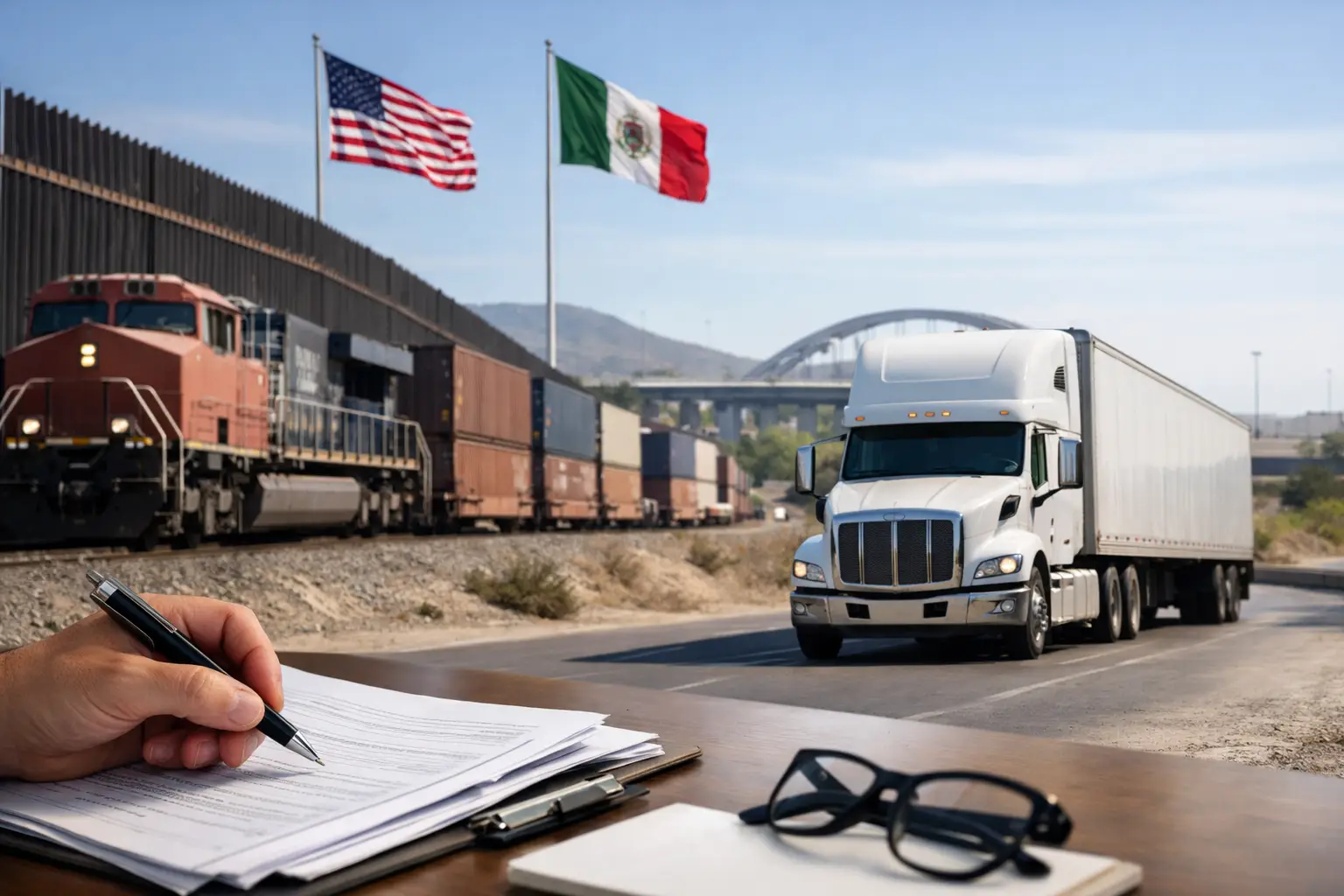
A truck can be loaded, cleared for export, and on schedule for the border - then stop because the freight paperwork does not match the physical move. For shipments moving within Mexico, the carta porte is often the document control point that exposes those gaps. A wrong postal code, an incomplete commodity description, or a mismatch between the carrier and the invoice can create avoidable friction long before freight reaches final delivery.
For US-Mexico shippers, carta porte compliance is not a paperwork task to hand off at the last minute. It is a transportation data problem. The teams that move freight consistently treat it as part of the shipment build: commercial data, routing, equipment, parties, tax information, and carrier details must agree across the workflow.
What Is a Carta Porte?
In Mexico, the Carta Porte Complement is a required digital complement associated with a CFDI, Mexico's electronic tax invoice. It documents the movement of goods through Mexican territory and can be issued as part of an invoice for goods being transported or as a transport document when a carrier is providing the service.
Its purpose is broader than proving that a truck picked up freight. It provides tax and transportation authorities with structured information about what is moving, who is involved, where the shipment starts and ends, and how it is being carried.
That makes the carta porte different from a US bill of lading. A bill of lading defines the transportation arrangement and receipt of freight. A commercial invoice supports the sale and customs valuation of goods. A Mexican pedimento supports the customs import or export declaration. Each document has a separate role. In a cross-border move, they must still tell one consistent shipment story.
The precise issuer and required setup depend on the transaction. A company moving its own goods in its own equipment has different obligations than a shipper hiring a Mexican carrier. That distinction matters. Do not assume a US freight document covers the Mexican domestic leg simply because it covers the full route operationally.
Why Carta Porte Errors Create Border Friction
The most expensive problems are rarely caused by a single missing field. They happen when information changes between booking, customs filing, dispatch, and delivery without every connected document being updated.
Consider a shipment that crosses at Laredo and delivers to a plant in Monterrey. The commercial invoice may describe automotive components, while the carrier dispatch record uses a broad description such as “parts.” The delivery location may be listed under a corporate address rather than the actual receiving site. If the Mexican carrier changes tractors or adds a trailer after the document is issued, the transportation details may no longer reflect the move underway.
Those issues can lead to inspections, delayed release, disputes over responsibility, or difficulty proving the lawful transport of goods. The operational impact is immediate: a missed appointment, detention exposure, a production line waiting for material, and an escalation chain involving the shipper, broker, carrier, drayage provider, and warehouse.
A carta porte is therefore a control document. It forces teams to decide which source owns the shipment facts and when those facts become final.
The Data That Must Stay Aligned
Carta Porte requirements evolve, and the applicable fields depend on the mode, service arrangement, and movement. But for road freight, the same data categories repeatedly determine whether a document can be generated accurately.
First is party and location data. This includes the sender, recipient, origin, destination, and applicable Mexican tax and address details. A facility nickname is useful for dispatch. It is not enough for regulated documentation. Teams need validated legal entities and complete location records, including the correct postal code.
Second is goods data. Descriptions must be specific enough to identify what is moving and consistent with the commercial documentation. Quantity, unit of measure, weight, and packaging data should reconcile with the load plan. If the shipment contains regulated goods, hazardous materials, or special handling requirements, additional detail may apply.
Third is transport data. The document may require the carrier, vehicle configuration, plates, driver information, route elements, and other details tied to the actual movement. This is where late equipment substitutions become a compliance issue rather than a routine dispatch update.
Finally, financial and service data must fit the model. When a carrier issues a transport CFDI, the service charge and tax treatment need to be handled correctly. When the shipper transports its own goods, the documentation path is different. The answer is not one universal template. It depends on who is moving the goods, under whose authority, and where the freight travels in Mexico.
A practical rule: build once, validate twice
The best workflow does not ask five parties to rekey the same shipment details. It captures the source data once, then validates it at two critical points: before documents are issued and again when the physical move changes.
That second validation is essential. Freight operations are dynamic. Loads consolidate, delivery appointments move, drivers swap, and trailers are reassigned. A system that treats the first document version as permanent will eventually produce a mismatch.
Carta Porte in a US-Mexico Shipment Workflow
For cross-border freight, the carta porte should be connected to customs and transportation execution rather than managed as an isolated Mexico-side task. A disciplined workflow usually starts at booking, not at the border.
At booking, establish the commercial parties, Incoterms, commodity descriptions, origin and destination facilities, expected mode, and responsible carrier. That information should flow into the commercial invoice, packing list, customs data, and transport planning without manual re-entry wherever possible.
Before the truck departs, confirm the physical load against the documents. This is the point to catch a pallet count discrepancy, a changed consignee address, or a different carrier assignment. If the shipment will require a Mexican domestic leg after customs clearance, identify who will issue and manage the required transport documentation before the handoff occurs.
At the border, customs clearance and transportation documentation must remain synchronized. A pedimento, commercial invoice, bill of lading, and carta porte do not need to be identical documents. They do need compatible facts: the goods, parties, quantities, and movement should make sense together.
After crossing, maintain proof of delivery and any required document retention in the same shipment record. This matters when a finance, customs, or audit team asks a question weeks later. A scattered email trail is not shipment visibility. It is a recovery project.
Common Failure Points to Eliminate
The recurring failures are operational, not theoretical. Shippers often rely on incomplete master data, especially for Mexican facility addresses and legal entity information. They allow carrier changes to occur by phone or text without a document update. They use vague commodity descriptions because the commercial team and transportation team maintain separate item records.
Another common problem is ownership ambiguity. A US shipper assumes its carrier will handle the carta porte. The carrier assumes the Mexican subcontractor will issue it. The subcontractor receives the load details too late to validate them. By the time someone identifies the gap, the truck is already at the crossing or waiting outside a receiver.
The fix is accountability. Assign a document owner for each leg, define the system of record for shipment data, and require exception approval whenever a material fact changes. This is not extra process for its own sake. It removes the handoff gaps that turn small changes into delays.
How to Build a More Reliable Control Model
Start by mapping every party that touches a cross-border move: shipper, exporter of record, importer of record, US carrier, Mexican carrier, customs broker, drayage provider, and receiver. Then identify who creates, approves, and updates each document. If two parties believe they own the same task, or neither does, the process is already exposed.
Next, standardize master data. Maintain approved facility records, legal names, tax identifiers where applicable, commodity descriptions, packaging units, and equipment details. The goal is not a massive system implementation. It is clean information available when the shipment is built.
Then connect exception management to dispatch. A changed destination, carrier, vehicle, commodity, quantity, or route should trigger a review of affected documents. Teams do not need to stop every load for a minor update. They do need a clear rule for changes that affect compliance or the physical identity of the shipment.
Automation has real value here when it reduces rekeying and flags conflicts early. BorderFlow applies that operating model across customs and freight execution: shipment documents can be ingested from the channels teams already use, structured data can be extracted, and customs and transportation teams can work from the same operational record. No portal. No login. No change to your workflow.
Carta porte compliance gets easier when it is treated as a live part of the move, not a PDF produced after the truck is dispatched. Build the shipment record early, keep the data connected through every handoff, and make document updates as disciplined as equipment updates. That is how freight keeps moving when the border and the road both demand precision.