
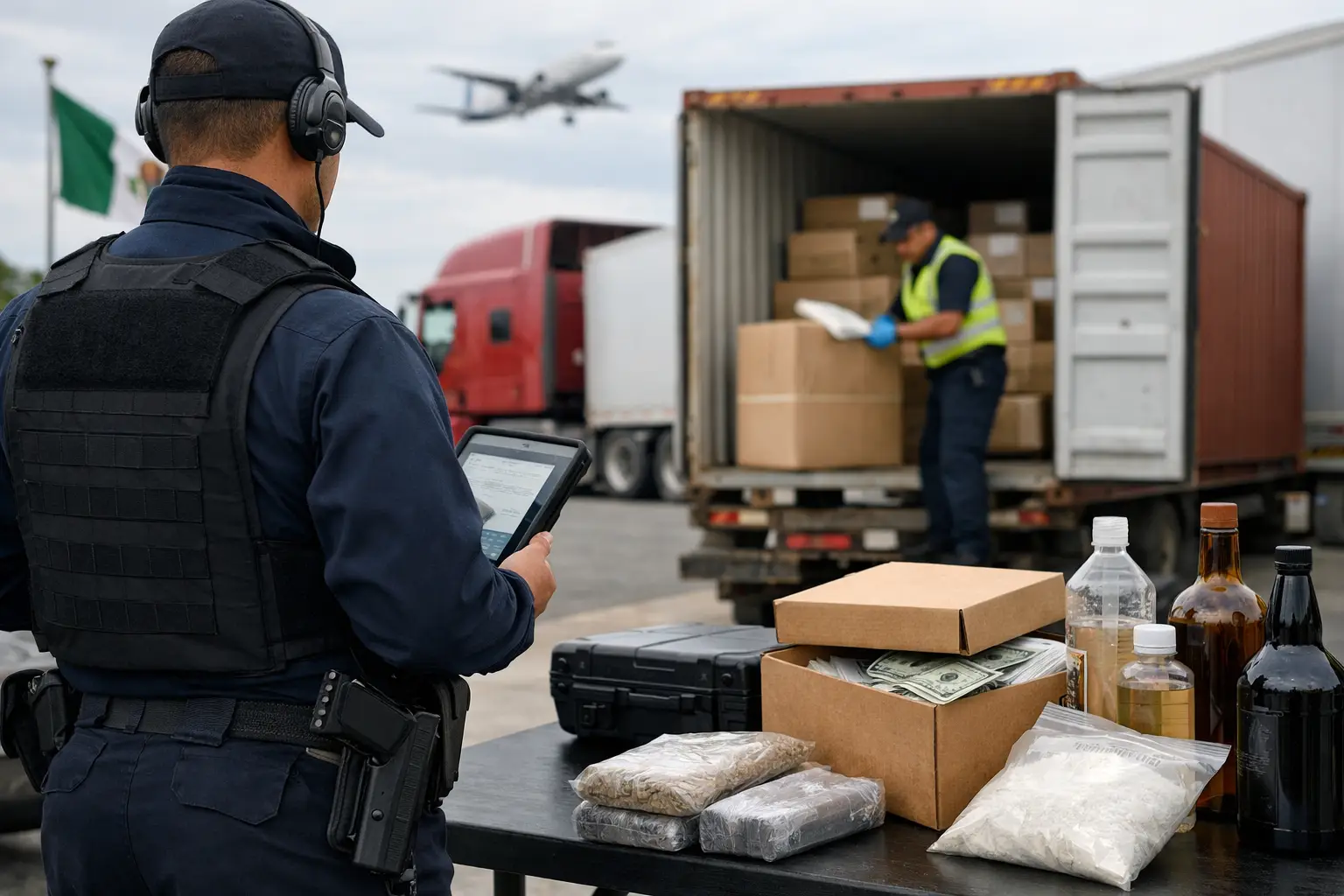
A truck can arrive at the Mexican border with the right cargo, the right broker, and a filed pedimento, then still lose hours because the dispatch package does not match the movement in the yard. DODA is the control point designed to prevent that disconnect. For importers and transportation teams moving US-Mexico freight, it is not just another customs acronym. It is the digital document that ties declared customs data to the physical crossing.
What Is DODA in Mexico Customs?
DODA stands for Documento de Operación para Despacho Aduanero. It is Mexico's electronic customs clearance document used to present shipment data during the customs dispatch process. Instead of relying on a printed pedimento as the primary presentation document, the DODA uses a QR code that Mexican customs authorities can scan and validate.
That QR code points to the electronic information associated with the customs operation. Depending on the transaction, it can connect the movement to one or more pedimentos and related electronic records. The objective is straightforward: customs needs to confirm that the truck, cargo, declaration, and crossing event all align before freight proceeds.
For an operator, the key distinction is this: the pedimento is the customs declaration. The DODA is the electronic dispatch document used to present and validate that declaration at the border. One does not replace the other. A clean DODA cannot fix an incorrect classification, valuation issue, or missing permit in the underlying customs entry.
Why DODA Matters at the Border
Cross-border freight runs on linked events. Commercial documents are prepared, customs data is transmitted, a carrier is assigned, equipment arrives at the border, and the shipment is presented for clearance. If those events are handled in separate systems by separate parties, the final handoff becomes vulnerable.
DODA gives customs a digital checkpoint at the moment that matters most: vehicle presentation. When the code is scanned, the system validates the operation against the information already filed electronically. That reduces dependence on paper handling, but it also raises the cost of poor data discipline.
A QR code is fast only when the data behind it is accurate. If the wrong pedimento is associated with the shipment, the vehicle details are wrong, or the cargo moved before a release issue was resolved, the truck may be stopped for clarification, correction, or inspection. The technology does not remove customs scrutiny. It makes the quality of upstream execution more visible.
This is particularly relevant in high-volume manufacturing corridors. A supplier may ship multiple loads per day from Mexico to a US production facility. A missed clearance window can affect a dock appointment, a line-side delivery, and the next available tractor. Teams do not need more status emails at that point. They need the customs record, carrier movement, and border presentation controlled as one operation.
How the DODA Workflow Works
The exact process varies by shipment type, customs regime, port, and the systems used by the customs broker and carrier. The operating sequence is generally consistent.
1. Customs data is prepared and filed
The broker or authorized customs team prepares the underlying customs declaration. For Mexican imports and exports, this may include the pedimento, commercial invoice data, tariff classification, importer or exporter information, transportation details, and applicable permits or regulatory data.
This is where most risk begins. The DODA can only reflect the records created upstream. If invoice quantities differ from the declared quantities, or a tariff classification requires a non-tariff regulation that has not been addressed, the problem is already in motion.
2. The electronic dispatch document is generated
Once the customs operation is ready for dispatch, the DODA is generated with its QR code. The document may consolidate information associated with the operation for presentation at customs. The driver, carrier dispatcher, yard team, and broker need to be working from the same shipment identity at this stage.
That sounds basic. It is not always basic in practice. A driver can be reassigned, a trailer can be swapped, freight can be split, or an invoice can be revised after the dispatch package was prepared. Each change needs an owner and a clear decision about whether customs data or transport documents must be updated before the unit reaches the border.
3. The vehicle presents at customs
At the border, the DODA QR code is scanned as part of the customs clearance process. The system checks the electronic record and routes the operation through the applicable process, which may include automated release or further review.
A green signal does not mean the shipment was never reviewed. It means the operation can continue based on the applicable automated selection process. A red signal or inspection event requires controlled coordination among the broker, carrier, shipper, and warehouse team. The right response is fast, factual, and document-driven. Speculation from a dispatcher or a last-minute hunt for invoices adds time.
4. Release data must reach downstream operations
Customs release is only one checkpoint. The consignee, warehouse, drayage provider, and final-mile carrier may need confirmation that the load can move, along with accurate estimated arrival times and exception notes.
This is where fragmented vendor models break down. The broker may know the customs status but not the tractor location. The carrier may know the tractor location but not the reason for a hold. The warehouse may only know that a scheduled delivery did not arrive. A controlled workflow connects the customs event to the transportation event in real time.
Common DODA Failures Are Usually Process Failures
Most DODA-related delays are not caused by the QR code itself. They come from mismatched information, late preparation, or unclear handoffs.
A frequent issue is document timing. The carrier arrives before the customs packet is ready, or the shipment is dispatched while a commercial invoice is still changing. Another is poor load-to-entry matching. Multiple trailers, split shipments, consolidated freight, and last-minute equipment swaps create confusion when no one owns the final validation step.
Communication also matters. “Customs is holding the load” is not an actionable update. The operating team needs to know whether the hold relates to documentation, inspection, payment, system availability, transportation data, or a physical cargo issue. Those are different problems with different recovery paths.
The trade-off is clear. A highly manual process may feel flexible because people can adjust by email and phone. But that flexibility becomes expensive when volume rises. A tightly controlled process requires stronger data rules and earlier exception management. In return, it reduces border surprises and gives every party the same operating picture.
Building a DODA-Ready Border Process
The best DODA process starts before the driver is dispatched. It requires a practical control model that connects commercial documentation, customs filing, transport execution, and release communication.
First, establish a shipment-level source of truth. Every load should have a clear identity tied to the invoice set, pedimento, carrier, trailer or equipment reference, crossing location, and final destination. If a team cannot answer those fields quickly, it cannot reliably manage an exception.
Second, validate changes before the border. Freight does change. The point is not to eliminate changes, but to prevent a changed shipment from running on old customs or transport information. Trailer swaps, invoice corrections, load splits, and reroutes should trigger a defined review before dispatch.
Third, give the driver only the information needed to execute correctly, with a direct escalation path if the presentation does not go as planned. Drivers should not be forced to interpret customs data or chase five contacts for a usable document. The border process needs one accountable control tower, even when several licensed and transportation parties are involved.
Finally, measure exceptions rather than merely reporting them. Track how often DODA packages are ready before arrival, how often equipment data changes after filing, which ports generate repeat holds, and how long it takes to resolve a release exception. Those metrics reveal whether the problem is classification, documentation timing, carrier coordination, or a broken workflow between systems.
BorderFlow approaches this as a unified execution problem. Customs filing, Mexican customs handling, drayage, and cross-border transportation should not operate as disconnected handoffs. The goal is one workflow from document intake through final delivery, with automation handling repetitive data work and operators controlling the exceptions that require judgment.
DODA is a small document with an outsized role in border execution. Treat it as the final QR-code checkpoint and teams will keep reacting to avoidable holds. Treat it as the result of accurate, connected operations, and the border becomes more predictable - even when the freight is not.