
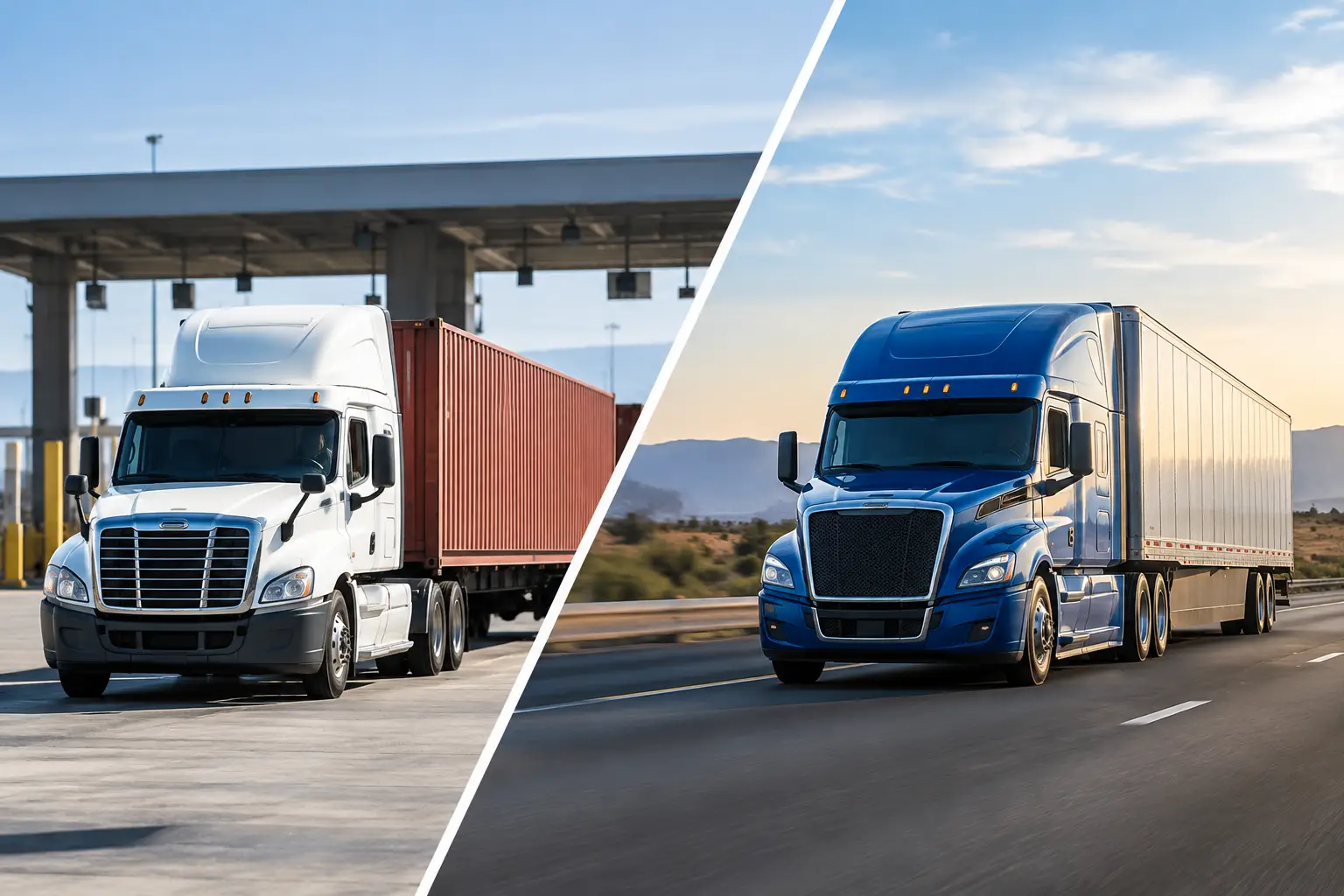
A shipment can clear the border on time and still miss its delivery window because the last 12 miles were never properly planned. That is the operational difference behind drayage vs linehaul trucking. One move gets freight between nearby nodes. The other carries it across the larger transportation network. Both are necessary, but they solve different problems and fail in different ways.
For US-Mexico freight, treating them as interchangeable creates avoidable gaps. A carrier may be ready for the long haul while a container waits for a chassis. A drayage truck may arrive at the yard while customs documents are still incomplete. The freight is physically close, but the workflow is not under control.
Drayage vs Linehaul Trucking: The Operating Difference
Drayage is short-distance freight transportation, usually between a port, rail ramp, border yard, warehouse, crossdock, or distribution center. It is often measured in local miles and tightly tied to appointments, equipment availability, gate hours, and dwell time. In intermodal freight, drayage commonly involves moving containers or trailers to and from terminals.
Linehaul is the longer-distance movement that connects regions, cities, or major freight nodes. A linehaul truck may move a full truckload from Laredo to Dallas, Monterrey to the border, or a consolidated LTL shipment through a carrier network toward its final market. The linehaul leg is generally built around transit time, driver capacity, route planning, and network density.
The simplest way to think about it is this: drayage closes the gap between facilities, while linehaul covers the distance between markets.
That definition has limits. Terminology varies by carrier and freight mode. A 70-mile move may be called drayage by one provider and a short-haul linehaul move by another. The label matters less than the operating scope: who owns the handoff, what equipment is required, when the freight must move, and what happens if it does not.
Where Drayage Fits in a US-Mexico Move
Cross-border freight rarely travels from a Mexican factory dock directly to a U.S. consignee on one truck, with no operational touchpoints. Even when the commercial plan appears simple, the freight may require a pickup, export processing, border staging, customs release, a transfer operation, and a domestic delivery leg.
Drayage can appear at several points in that chain. A local truck may pick up freight from a maquiladora and deliver it to a border transfer yard. Another drayage move may reposition a container from a rail ramp to a warehouse after customs clearance. It may also support transloading, crossdocking, empty-equipment returns, or short moves between a bonded facility and a distribution center.
At high-volume border crossings, drayage performance is not just about driving distance. It depends on gate access, trailer availability, yard congestion, appointment discipline, and document status. A driver arriving without the correct release or pickup reference does not create a minor delay. That truck can consume a delivery slot, tie up equipment, and push the next leg off schedule.
In Laredo, where freight regularly moves through transfer yards and customs workflows before entering domestic networks, local execution can determine whether linehaul capacity is used productively or wasted waiting.
Drayage is often an equipment problem
A drayage provider may need the right chassis, container type, trailer, seal information, gate pass, or warehouse appointment before the wheels turn. Detention and demurrage exposure can also change the economics quickly when ocean containers are involved.
For cross-border operations, there may be additional constraints. A trailer transfer can require coordination between Mexican and U.S. carriers. A shipment may need to remain under customs control until release. Freight that is not properly matched to its documents can be held even when a truck and driver are available.
Where Linehaul Fits in the Freight Plan
Linehaul begins when freight is ready to travel beyond the local border, port, or terminal environment. This is the mileage-heavy segment, and it usually represents the largest transportation cost within a domestic leg.
For FTL freight, linehaul may be a dedicated tractor-trailer move from a border warehouse to a regional distribution center. For LTL, it may involve a pickup, origin terminal, several network transfers, and a destination terminal before final delivery. The linehaul portion can be direct or networked, but its purpose remains the same: move freight between major points in the transportation system.
Linehaul planning is driven by different questions than drayage planning. Dispatchers need to know the route, trailer type, weight, delivery commitment, driver hours, carrier coverage, and whether the freight can travel as a live load or drop trailer. For cross-border freight, they also need confidence that the customs and transfer steps are complete before assigning the downstream capacity.
A fast linehaul carrier cannot recover time that was lost because freight was not released, transferred, or staged correctly. Conversely, a perfectly executed drayage move does not help if no linehaul truck is booked for the next available departure.
Cost Differences: Why Quotes Can Mislead
Drayage is usually priced around short mileage plus accessorial risk. The base rate may look modest, but the final charge can be shaped by wait time, congestion, chassis use, pre-pulls, storage, redelivery, after-hours service, equipment splits, and appointment changes. The cost is tied to local friction.
Linehaul pricing is more directly connected to distance, lane balance, capacity, fuel, trailer requirements, and service level. A long-haul rate can be easier to compare at first glance, especially on established lanes. But it may exclude the local work required to make the linehaul possible.
That is why a low linehaul quote is not necessarily a low total landed transportation cost. If it assumes freight is already available at the correct pickup point, fully released, properly loaded, and ready at a specific time, someone still has to manage every step before that pickup.
When reviewing transportation spend, separate the linehaul rate from local handling charges, then examine the handoffs between them. The biggest cost issue is often not the price of either leg. It is the unplanned charge created when the two legs are scheduled independently.
The Handoff Is the Real Risk
The transition between drayage and linehaul is where fragmented freight programs lose visibility. One provider reports that freight was delivered to the yard. Another says the pickup was not ready. Customs says a document correction is pending. The warehouse says the inbound appointment was missed. Each statement may be accurate, but no one owns the complete outcome.
A controlled handoff requires a shared operating picture. Before dispatching the linehaul leg, the responsible team should confirm four things:
- The freight is physically at the agreed location and matches the shipment record.
- Customs status, release references, and required documents are complete.
- The trailer, container, seals, and equipment are available for the next move.
- Pickup and delivery appointments match the carrier's actual dispatch plan.
These checks are basic, but they are frequently performed in separate email threads, spreadsheets, and carrier portals. That creates a lag between what happened in the yard and what the transportation team believes happened.
For time-sensitive US-Mexico freight, the answer is not more status messages. It is a workflow that connects document intake, customs action, carrier dispatch, and local movement around the same shipment record. BorderFlow is built around that operating model: one accountable workflow from customs processing through drayage and linehaul execution, without forcing teams into another portal.
Choosing the Right Service Mix
The right mix depends on freight mode, border process, delivery requirements, and volume consistency. A dedicated FTL shipment moving from a Mexican plant to a U.S. facility may need limited drayage if one carrier can manage the transfer and onward haul. A containerized shipment moving through rail or port infrastructure may require multiple drayage events before and after linehaul.
Freight with rigid delivery appointments needs more buffer at the local level. A late drayage arrival can make a linehaul departure impossible to recover. Freight with flexible delivery timing may benefit from consolidation or scheduled linehaul departures, but only if storage and handling costs do not outweigh the savings.
The key is to plan the shipment as one movement, not as a collection of vendor tasks. Assign ownership for exceptions before the load moves. If a customs release is delayed, who updates the yard? If the trailer is unavailable, who protects the linehaul appointment? If delivery changes, who rebooks local handling before detention begins?
The freight does not care where one provider's responsibility ends. Build the plan around the next operational decision, keep the handoff visible, and make sure one team can act before a short local delay becomes a missed long-haul commitment.