
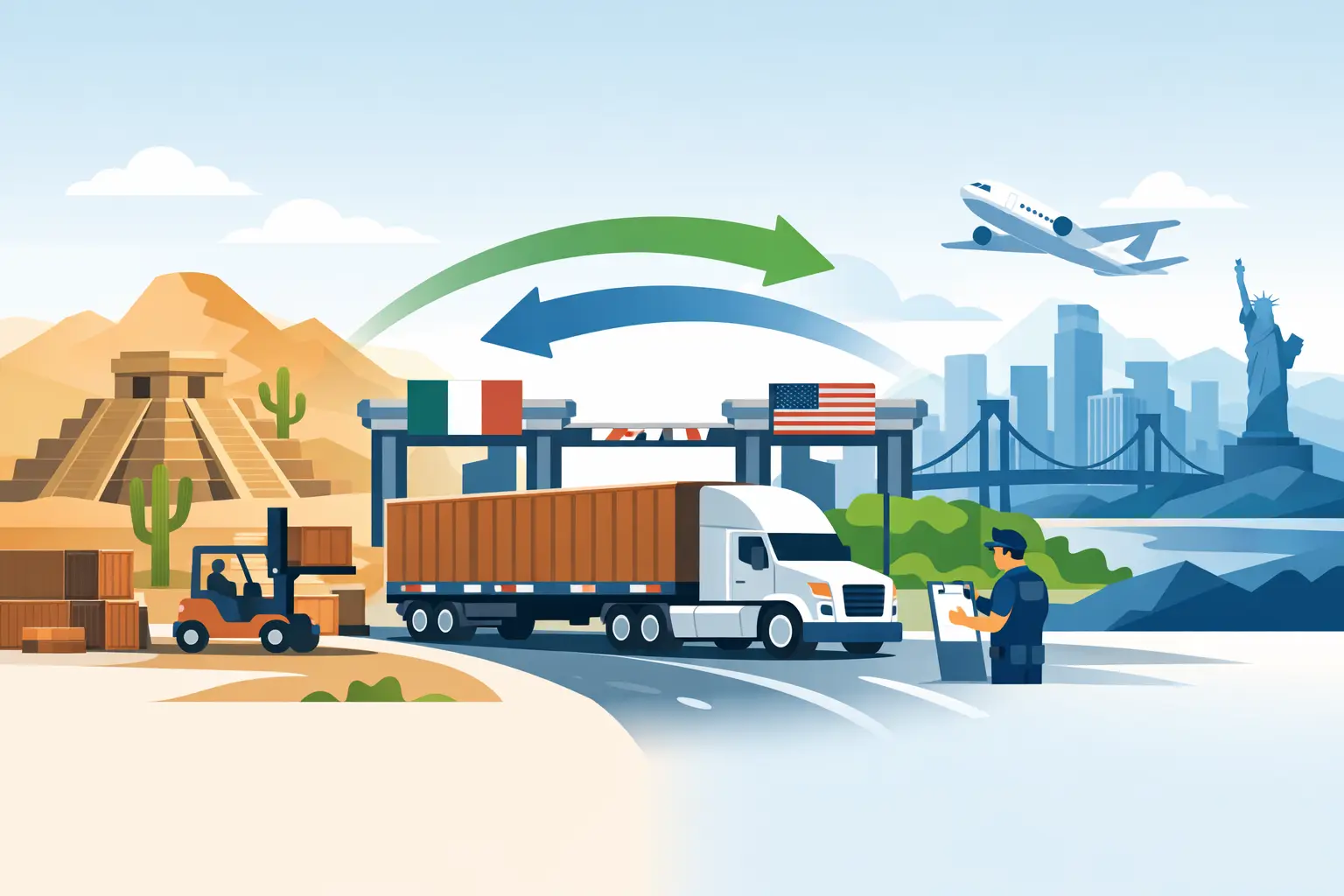
A full truckload leaving Monterrey at 4 p.m. can still miss a delivery window in Texas two days later for one simple reason: too many handoffs. With ftl shipping mexico to us, the linehaul itself is rarely the only problem. The real risk sits at the border, where customs data, trailer transfers, broker timing, and carrier coordination either move in sequence or break apart.
That is why FTL cross-border freight has to be managed as one operating workflow, not a collection of vendors. If your team is still juggling separate trucking providers, customs brokers, drayage partners, and email chains, you are not just adding administrative work. You are increasing the odds of detention, exam exposure, late delivery, and shipment visibility gaps when the freight matters most.
Why FTL shipping Mexico to US gets delayed
Most delays are not caused by the miles between origin and destination. They happen because the shipment is not ready for the border event when the truck arrives. A full truckload can move efficiently through Mexico, reach the crossing on time, and still sit because the commercial invoice does not match the packing data, the customs entry was not transmitted correctly, the pedimento is incomplete, or the drayage handoff was scheduled without enough lead time.
FTL amplifies these issues because the shipment is typically time-sensitive and high-value enough that every hour matters. Unlike LTL, where some delay is often absorbed into a hub-and-spoke model, FTL usually has a direct delivery expectation tied to labor planning, production schedules, or retail appointments. If the border process slips, the whole move slips with it.
There is also a structural issue in many cross-border programs. The shipper may have one carrier in Mexico, a different customs broker on each side of the border, a transfer yard operator, a drayage provider, and another carrier for final-mile US delivery. Each party sees only its segment. No one owns the full execution path. When an exception appears, the buyer ends up playing traffic controller.
What a strong FTL shipping Mexico to US workflow looks like
A stable cross-border FTL move starts before pickup. The shipment data has to be complete and aligned across the commercial invoice, packing list, purchase order, product descriptions, tariff classifications, and consignee information. If any of that is off, the truck may still get loaded, but the problem will surface later when fixing it is slower and more expensive.
From there, the process should run as a controlled sequence. Pickup in Mexico, export preparation, border crossing coordination, customs filing, drayage or trailer transfer if needed, US import release, and final delivery all need to sit inside one timeline. The point is not just speed. It is predictability.
That predictability matters most at the border. Some freight can move through a through-trailer or through-driver model depending on lane, equipment, and carrier structure. Other loads require transloading, trailer interchange, or drayage across the border before a US carrier takes over. There is no universal setup. The right model depends on commodity, origin, destination, service level, and customs requirements. What matters is that the handoff is planned, visible, and backed by the documents already in place.
When the shipment is managed in one workflow, exceptions get caught earlier. If invoice data is missing, it can be fixed before arrival. If customs needs clarification, the team handling transportation can react in real time. If drayage timing changes, the downstream delivery plan can be adjusted before the consignee starts asking where the truck is.
The customs piece is where FTL programs win or fail
Transportation teams sometimes treat customs as a separate compliance task. In cross-border FTL, that is a mistake. Customs is part of execution.
A truck does not care whether the problem is operational or clerical. It waits either way. That is why import filing, export documentation, broker communication, and shipment movement should not be split into disconnected workflows. The border rewards teams that can move documents and equipment with the same level of control.
This is especially true for shippers moving high-volume freight from manufacturing hubs in Mexico into US distribution networks. Repetitive lanes should get faster over time, not slower. But that only happens when classification logic, document intake, entry filing, and carrier dispatch are working from the same source of truth.
Manual document handling is one of the biggest hidden causes of delay. Teams still spend too much time pulling invoice data from PDFs, forwarding emails, checking line items by hand, and chasing down missing shipment details after the truck is already in motion. That creates lag exactly where cross-border freight cannot afford it. No portal. No login. No change to your workflow. The best systems now pull structured customs data directly from inbound shipment emails and move it into execution without adding another layer of work for the shipper.
Where full truckload makes sense across the border
FTL is usually the right choice when freight security, speed, or shipment density outweighs the cost advantage of consolidation. That includes dedicated plant replenishment, high-volume retail freight, automotive components, industrial inputs, and seasonal product flows where appointment reliability matters more than squeezing down cost per pallet.
It also makes sense when handling requirements are tight. If the cargo is fragile, sealed, temperature-sensitive, or difficult to sort at a transfer point, minimizing touches matters. The fewer times the freight is reworked, the lower the risk of damage, shortage claims, and downstream disputes.
That said, FTL is not automatically the better option. If your volumes are inconsistent, your orders are fragmented, or your receivers can tolerate wider delivery windows, LTL or consolidation may produce a better cost-service balance. The mistake is using FTL because it feels simpler while still managing it with a fragmented border process. In that setup, you pay for premium capacity without getting premium execution.
The handoffs that deserve the most scrutiny
If you are reviewing your current cross-border FTL setup, focus on the transition points. Pickup is one handoff. Border arrival is another. Customs release, drayage transfer, and final dispatch each create an opportunity for delay if responsibilities are not clearly defined.
The most common failure pattern is simple. Transportation assumes customs is cleared because documents were sent. Customs assumes the truck will arrive later and queues the filing accordingly. Drayage is scheduled based on an outdated ETA. The US carrier is assigned before the load is actually available. Every individual step looks reasonable in isolation. The shipment still stalls.
This is where operator-led coordination matters. A team that handles both the customs side and the freight side can sequence these decisions correctly because it sees the entire move. In a market like Laredo, where border volume, trailer flow, and customs timing all collide, that operational visibility is not a nice-to-have. It is the difference between a controlled crossing and a reactive one.
What to ask your provider before you move another FTL load
You do not need a flashy presentation. You need direct answers. Ask who owns the shipment from pickup through final delivery. Ask how customs data is collected and validated before the truck reaches the border. Ask whether drayage, brokerage, and delivery are managed in one workflow or across multiple disconnected parties. Ask what happens when documents arrive late, classifications need correction, or the truck misses its original crossing slot.
The right provider should answer in process terms, not sales language. They should be able to explain how shipment data enters the system, when customs is filed, how exceptions are surfaced, and who is accountable when timing changes. If the answer sounds like a relay race across vendors, expect relay-race problems.
For shippers running frequent cross-border freight, the real value is not just moving one truck successfully. It is creating a repeatable operating model that reduces manual work, compresses response times, and gives your team visibility without forcing a new system rollout. BorderFlow is built around that exact requirement - one workflow across customs and transportation, with the control needed for high-volume FTL execution.
If your FTL program from Mexico to the US still depends on inbox monitoring, vendor chasing, and last-minute border fixes, the issue is not demand or lane complexity. It is design. Fix the workflow, and the freight starts moving the way it should.