
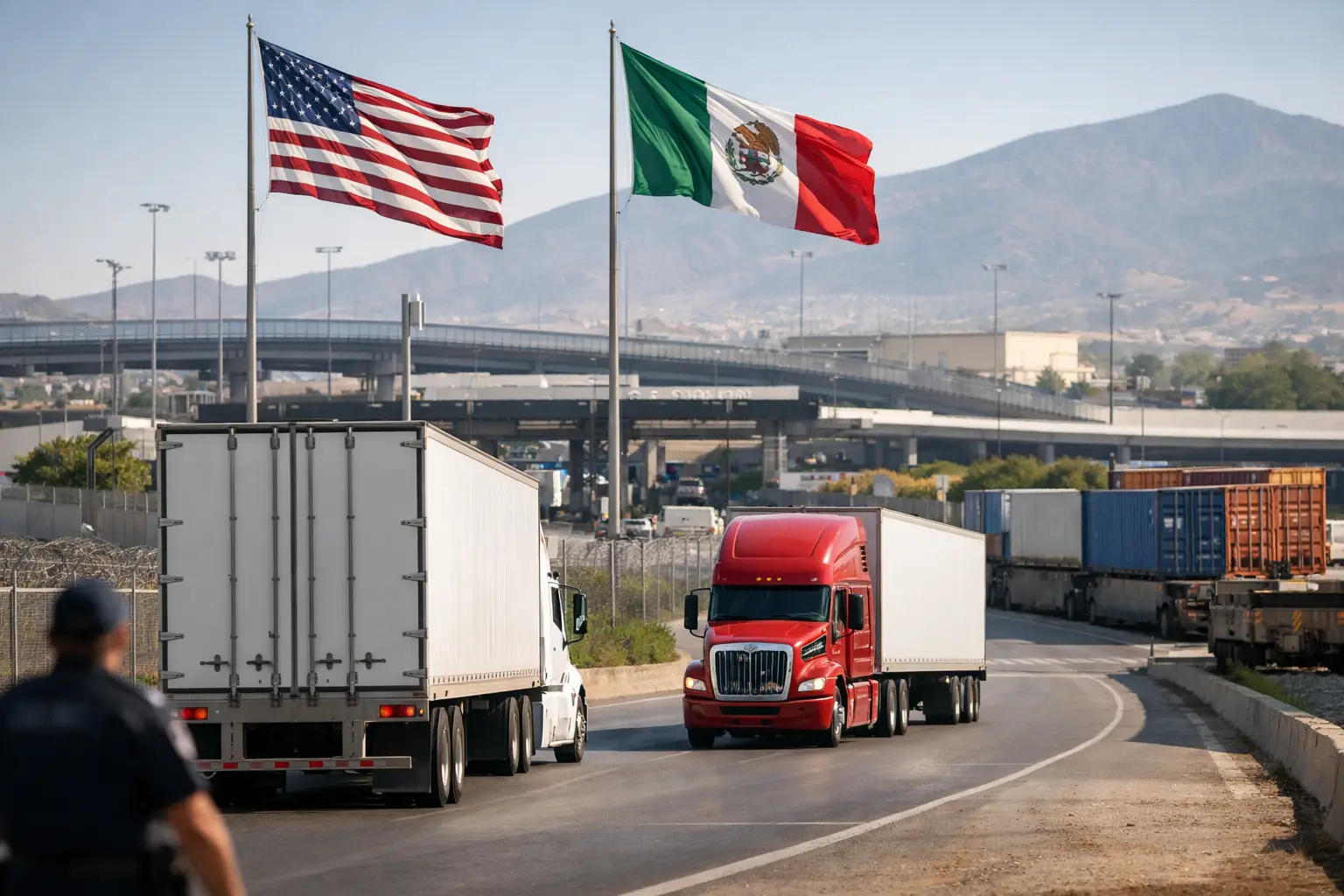
A truck can reach the border on time, have capacity waiting on both sides, and still sit because one commercial invoice conflicts with the entry data. That is the operational reality of trade compliance. It is not a back-office checkpoint added after transportation planning. It is the control system that determines whether freight can legally and predictably move from a plant in Mexico to a U.S. dock.
For US-Mexico shippers, the cost of weak controls shows up fast: holds, rework, demurrage, missed production windows, rejected claims, and teams chasing documents across email threads. The goal is not paperwork for its own sake. The goal is accurate, defensible data moving with the shipment at the speed of the operation.
Trade Compliance Is a Freight Execution Function
Customs filing is one part of compliance, but it is not the whole process. A compliant entry begins much earlier, when a product is created, purchased, or scheduled for shipment. Classification, valuation, country of origin, partner screening, admissibility, and recordkeeping all affect what can be filed at the border.
That matters because a customs broker can submit an entry only from the information provided. If the manufacturer changes a component, the purchasing team accepts a new Incoterm, or a supplier issues a vague invoice description, the risk is already in the shipment before the truck is dispatched.
The strongest programs assign ownership across the operating chain. Product and engineering teams own technical specifications. Trade or customs teams own classification logic and policy. Procurement owns supplier data requirements. Logistics owns document timing and shipment coordination. Brokerage validates and files the entry. Each group has a role, but the controls must work as one process.
In a high-volume corridor, fragmented ownership creates predictable failures. One party has the bill of materials, another has the invoice, another has pickup details, and the broker sees incomplete data near cutoff. The answer is not more status calls. It is a defined data flow, clear exception rules, and one accountable operating view.
Build Trade Compliance Around Shipment Data
Most border delays are data problems that become freight problems. A useful compliance process treats core shipment data as controlled operational input, not as information to reconstruct under pressure.
Start with the product master
Every recurring SKU should have a maintained record that supports its customs treatment. At minimum, this includes the commercial description, Harmonized Tariff Schedule classification, country of origin, unit of measure, value methodology, manufacturer information when required, and any applicable program or agency requirement.
Descriptions need to explain what the item is, not repeat an internal part number. “Automotive component” is usually not enough. A description that identifies the material, function, and product type gives the customs team a basis to validate classification and admissibility. Technical data sheets, drawings, and bills of materials should be accessible when a classification needs support.
Classification is especially sensitive because an incorrect tariff number can affect duty, statistical reporting, eligibility for preferential treatment, and partner government agency requirements. Do not assume a supplier's tariff code is correct for U.S. import purposes. Use supplier information as an input, then validate it against the actual product and the importing country's tariff schedule.
Origin requires the same discipline. A part manufactured in Mexico is not automatically eligible for USMCA preferential treatment. Eligibility depends on the product-specific rule of origin and the supporting production or sourcing facts. If a claim is made, retain the records that support it. If the documentation is incomplete or the analysis is uncertain, it may be better to enter without preference than make an unsupported claim.
Control the commercial documents
The commercial invoice, packing list, transportation document, and customs data must agree on the facts that matter. Variances in quantity, value, consignee, description, or origin create questions at exactly the point where the operation has the least time to answer them.
Invoice controls should be practical. Confirm the seller and buyer, currency, terms of sale, item-level descriptions, quantities, unit prices, total value, origin, and any assists, royalties, tooling, or other additions that affect customs value. For related-party transactions, make sure the valuation approach is documented and consistently applied.
Document timing is just as important as document quality. For ocean shipments, Importer Security Filing requirements create a separate deadline before arrival. For truck freight, the broker and carrier still need accurate information early enough to prepare the entry, resolve exceptions, and coordinate crossing. “We will send the invoice when the truck is loaded” is not a process if loading happens minutes before a border cutoff.
Make Screening and Filing Part of the Same Workflow
Denied-party and restricted-party screening cannot be a disconnected annual exercise. Screen customers, suppliers, consignees, intermediaries, and other relevant parties at onboarding and again when transactions change. Screening logic should match the transaction risk, including the parties involved, destination, product, and end use.
For most routine US-Mexico freight, the challenge is execution discipline. A held party name, a mismatch in legal entity details, or an unclear end user needs a documented escalation path. The shipping team must know whether to stop the load, who can clear the issue, and what evidence is needed. A vague “compliance review required” label does not keep a truck from rolling.
Filing should follow a simple operating sequence:
- Receive shipment data and documents before the broker cutoff.
- Validate required fields against the product and customer master.
- Resolve classification, value, origin, and party-screening exceptions.
- Submit the U.S. entry and Mexican pedimento data as required for the move.
- Release the shipment, retain the transaction record, and log any post-entry correction.
The sequence is straightforward. The hard part is avoiding handoffs where data is rekeyed, forwarded, or interpreted by multiple parties. That is where errors multiply. A unified customs and transportation workflow reduces those handoffs by letting the same shipment record drive entry preparation, drayage coordination, border crossing, and final-mile execution.
For example, a manufacturer shipping daily from Monterrey to a U.S. distribution center may use one broker for U.S. entry, another provider for Mexican customs, a carrier for linehaul, and a separate drayage partner at the border. Each handoff can create a new version of the shipment. A single operating workflow keeps the document set, clearance status, equipment details, and delivery plan aligned. BorderFlow applies that model through customs orchestration and managed cross-border execution without requiring teams to abandon the email-based workflows they already use.
Design for Exceptions, Not Just Clean Shipments
A compliance program is tested by exceptions. Clean, repetitive shipments should move quickly. The real measure is what happens when the invoice value changes after filing, an unfamiliar SKU appears, the manufacturer differs from the master record, or a truck arrives before clearance is confirmed.
Define which events automatically stop a shipment and which can proceed with a documented review. A new product, missing country of origin, material value discrepancy, potential sanctions hit, or expired USMCA support should trigger an escalation. A minor formatting difference may not. The thresholds depend on product risk, shipment volume, duty exposure, and the importer's risk tolerance.
Then give operators authority and response times. If the customs team must approve every low-risk correction, freight waits unnecessarily. If dispatch can override a significant data gap to protect a delivery appointment, the company may create a much larger problem. Fast decisions come from preapproved rules, not from removing controls.
Keep Records Ready Before an Audit Starts
CBP recordkeeping obligations are not satisfied by scattered inboxes and shared folders with unclear ownership. A defensible record connects the entry to the commercial documents, classification support, valuation analysis, origin records, corrections, and communications that explain material decisions.
Retention periods and record requirements vary by transaction and authority, so companies should align their policy to the applicable rules and their broker arrangements. The operational standard is simpler: retrieve a complete file quickly, identify who made the decision, and show the basis for it.
Use periodic reviews to find patterns rather than waiting for a government inquiry. Look for repeated invoice corrections, unusual duty swings, late document arrivals, recurring classification overrides, frequent broker queries, and entries filed under temporary assumptions. These are not just compliance metrics. They reveal process failures upstream in purchasing, product data, supplier management, or transportation planning.
Automate Repetition, Keep Judgment Accountable
Automation is valuable when it removes manual copying and flags risk early. Email intake, document extraction, field validation, classification suggestions, and entry drafting can reduce the time between receiving documents and preparing a filing. It also creates a more consistent audit trail than a process built on inbox searches and spreadsheets.
But automation should not turn uncertain data into a fast error. Product classification, valuation, origin, and restricted-party issues still require accountable human review when the facts are incomplete or the risk is material. The right model is automation for repeatable work, with operators controlling exceptions and final decisions.
The best trade compliance process is usually the one that operators can follow at 4:30 p.m. on a Friday when freight is loading, a document changes, and the production team needs a straight answer. Build the controls into the movement of the shipment, keep ownership clear, and make exceptions visible before they become border delays.