
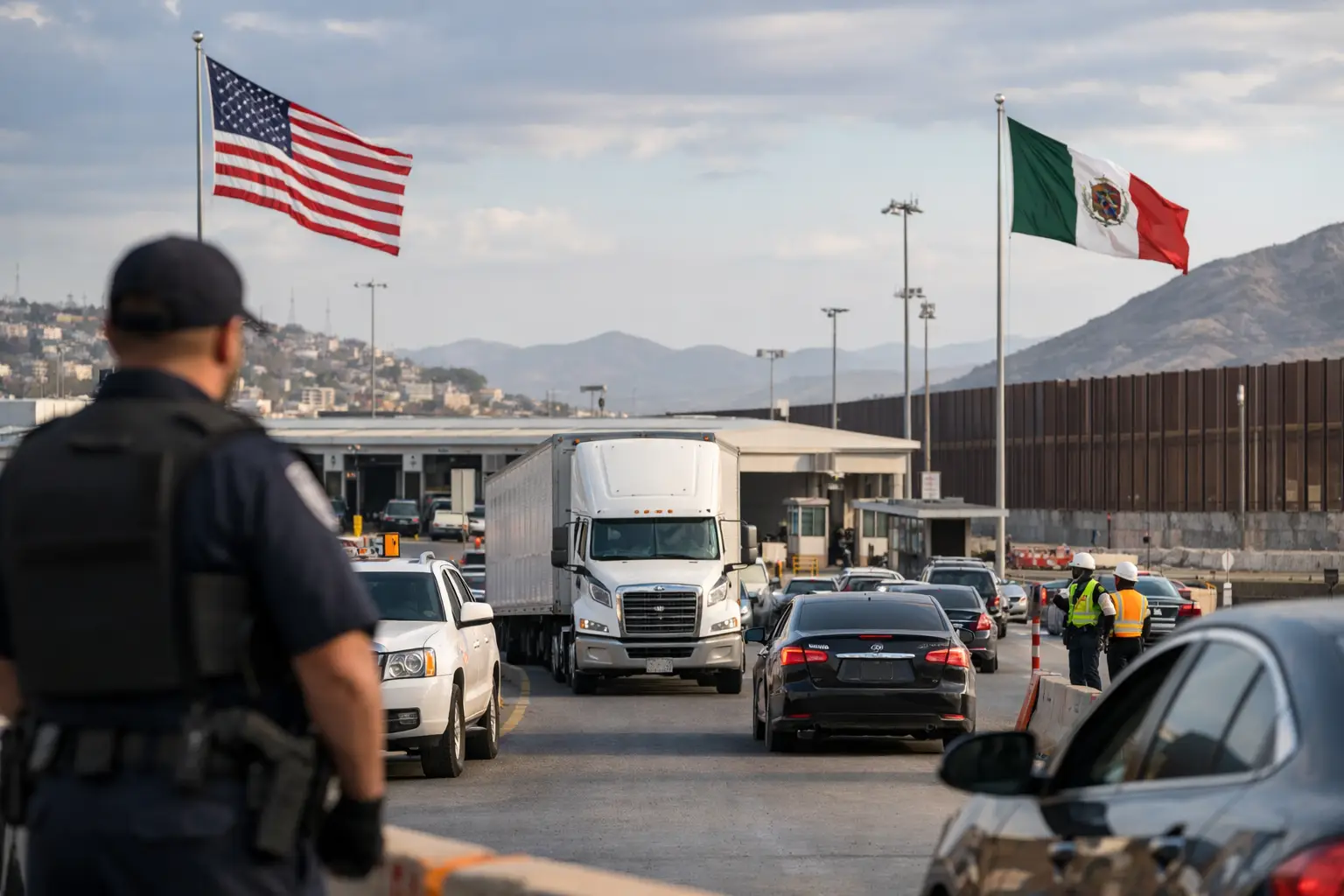
A missed seal check in Monterrey, an unverified drayage handoff in Laredo, or a carrier account that was never formally reviewed can create exposure far beyond one delayed load. That is where ctpat becomes operational, not theoretical. The program asks importers to prove they control supply chain security from supplier to final delivery - including the partners and handoffs that sit outside their four walls.
For US-Mexico freight, that standard reaches into nearly every part of the move: Mexican manufacturing sites, yard access, trailer loading, cross-border trucking, customs documentation, broker coordination, drayage, and receiving. The companies that get value from CTPAT are not simply collecting policies for an audit. They are building a repeatable control system around freight that already needs to move fast.
What CTPAT Actually Covers
CTPAT, or the Customs Trade Partnership Against Terrorism, is a voluntary U.S. Customs and Border Protection program focused on supply chain security. Members work with CBP to identify security risks, document controls, and improve those controls over time. In return, eligible members may receive benefits that can include fewer security-related examinations, priority consideration after a disruption, access to program resources, and a more direct working relationship with CBP.
Those benefits matter, but they should not be oversold. CTPAT does not eliminate exams, fix a bad classification, replace entry compliance, or guarantee a truck crosses on schedule. A shipment can still be held for admissibility, agricultural, commercial, or enforcement reasons. The program reduces certain risk and gives CBP more confidence in the importer’s security posture. It is not a border fast pass.
That distinction is especially relevant for high-volume US-Mexico operations. Security controls and customs execution are connected, but they are not the same workstream. A shipper needs both: defensible CTPAT processes and accurate, timely entries, invoices, manifests, and pedimentos.
CTPAT Is a Partner-Management Program
Importers often begin by looking inward: facility cameras, visitor badges, employee screening, container seals. Those are necessary controls. But the harder part is proving that the same discipline extends across a network of suppliers, consolidators, carriers, brokers, warehouses, and service providers.
CBP’s minimum security criteria are risk-based and can evolve, but the operating model is consistent. A company must identify risks, establish written procedures, train people, verify performance, keep records, and correct exceptions. Security cannot depend on one experienced shipping manager remembering what to do at 5:30 p.m. on a Friday.
For a Mexico-to-U.S. lane, the control points commonly include:
- Business partner screening and periodic review
- Physical security at manufacturing, warehouse, and yard locations
- Conveyance and container security, including seal issuance and inspection
- Access control, visitor management, and employee vetting
- Cybersecurity and protection of shipment and customs data
- Security awareness training, incident reporting, and corrective action
The exact depth of each control depends on the importer’s role, commodity, facilities, and risk profile. A company importing sealed full truckloads from a controlled factory network faces a different exposure than one consolidating freight from dozens of suppliers. CTPAT should reflect that reality. Copying another importer’s binder is not a security strategy.
The weak point is usually the handoff
Cross-border freight changes custody often. A loaded trailer may move from a supplier’s yard to a local carrier, then to a border carrier, a U.S. drayage provider, a warehouse, and a final-mile truck. Each transfer creates questions: Who inspected the equipment? Who verified the seal? Was the trailer left unattended? Was a discrepancy recorded and escalated? Can the importer retrieve proof later?
If the answers live in texts, inboxes, and driver memory, the process is fragile. The strongest programs turn those questions into standardized events with accountable owners. That creates better audit evidence, but the larger benefit is operational. Teams can identify a broken handoff before it becomes a border problem.
How to Build a CTPAT Program That Works in Daily Freight
A workable program starts with an honest lane-level assessment. Map the physical flow of freight, not the ideal process shown in a slide deck. Include every pickup location, consolidation point, crossdock, carrier change, crossing, warehouse, and destination. Then identify where cargo, equipment, data, or access can be compromised.
Next, assign control ownership. The importer remains accountable for its program, but each partner should know exactly what it must do and how it will prove completion. A carrier may be responsible for conveyance inspections and seal discrepancy reporting. A supplier may own outbound loading controls and restricted-access procedures. A broker or customs team may protect commercial data and maintain documented escalation paths when information does not match the shipment.
Written procedures matter, but only when they match the dock. A procedure requiring a seven-point trailer inspection is useless if supervisors have not trained loaders on what to inspect, where to record it, and what to do when they find damage or evidence of tampering. Keep the process specific enough for execution: who performs the check, at what point, what evidence is retained, and who receives an exception notice.
Training needs the same discipline. Annual slide-based training may satisfy a calendar requirement, but it does not prepare a guard, driver, loader, or dispatcher to recognize a real anomaly. Use scenarios from actual operations: an incorrect seal number, an unexpected driver, a trailer arriving early without an appointment, a vendor requesting shipment data from an unfamiliar email address. Then confirm that people know the escalation path.
Documentation should follow the freight
Many CTPAT programs fail under pressure because evidence is separated from the shipment workflow. Inspection forms sit in one shared drive, seal logs in another, and carrier credentials in a procurement folder. When CBP asks for support, the customs or security team has to reconstruct the move after the fact.
A better model connects security evidence to the load. That does not require forcing every supplier and carrier into another portal. It requires a consistent intake process, structured records, and exception visibility across the people responsible for the move. When documents arrive by email, the operation should be able to capture the data, identify missing fields, match documents to the shipment, and route exceptions before the truck reaches the border.
This is where customs orchestration has practical value. Commercial documents, entry data, shipment milestones, and security checks should not be treated as unrelated tasks. A mismatch between an invoice, a booking, a seal log, or a carrier identity is often a signal that deserves review. Automation can surface that signal quickly, but accountability still needs a named operator.
What CBP Validation Looks For
After acceptance into the program, members can be selected for validation. A validation is not a paperwork-only exercise. CBP may review how the company’s documented controls function in practice, including business partners and relevant facilities. The goal is to determine whether the program is active, risk-based, and aligned with the applicable minimum security criteria.
The companies that handle validation well can show a clear line from policy to execution. They can explain their risk assessment, produce partner records, demonstrate training, retrieve incident documentation, and show how deficiencies were corrected. They do not claim perfection. They show that exceptions are found, managed, and used to improve the process.
That last point matters. A seal discrepancy, attempted social engineering incident, or unapproved carrier arrival is not automatically proof that a program failed. Ignoring it is the problem. Document what happened, contain the risk, investigate the cause, and update the relevant process. Corrective action is evidence of control.
Common CTPAT Mistakes in US-Mexico Operations
The first mistake is treating CTPAT as a procurement checkbox. Asking a carrier whether it is CTPAT certified is useful, but it does not replace due diligence or performance management. Verify the relationship, understand the carrier’s role in the lane, and monitor whether agreed controls are actually followed.
The second is separating security from transportation. A security team may own the manual while transportation owns the carriers and customs owns the documents. That split creates gaps at the exact points where freight changes hands. Establish a shared exception process across security, logistics, customs, and warehouse operations.
The third is letting documentation become manual overhead. More forms do not automatically mean more control. If an operator has to rekey the same shipment data across emails, spreadsheets, and broker instructions, errors multiply. Standardize the data flow and automate repetitive capture where possible, while preserving human review for exceptions and decisions.
BorderFlow approaches this as one operating workflow: freight execution, customs data, document handling, and the handoffs that determine whether a load is ready to move. No portal. No login. No change to a shipper’s established email workflow just to gain visibility over the work.
Make Security a Source of Control, Not Delay
CTPAT is most valuable when it makes the operation more predictable. The goal is not to add checkpoints for their own sake. It is to know who touched the freight, whether the equipment and data are secure, what changed, and who owns the response before a small exception becomes a missed production window.
Start with one active lane. Map the handoffs, test the evidence trail against a real shipment, and fix the points where ownership is unclear. A CTPAT program earns its value when security controls hold up at the border, on the dock, and during the busiest hour of the week.