
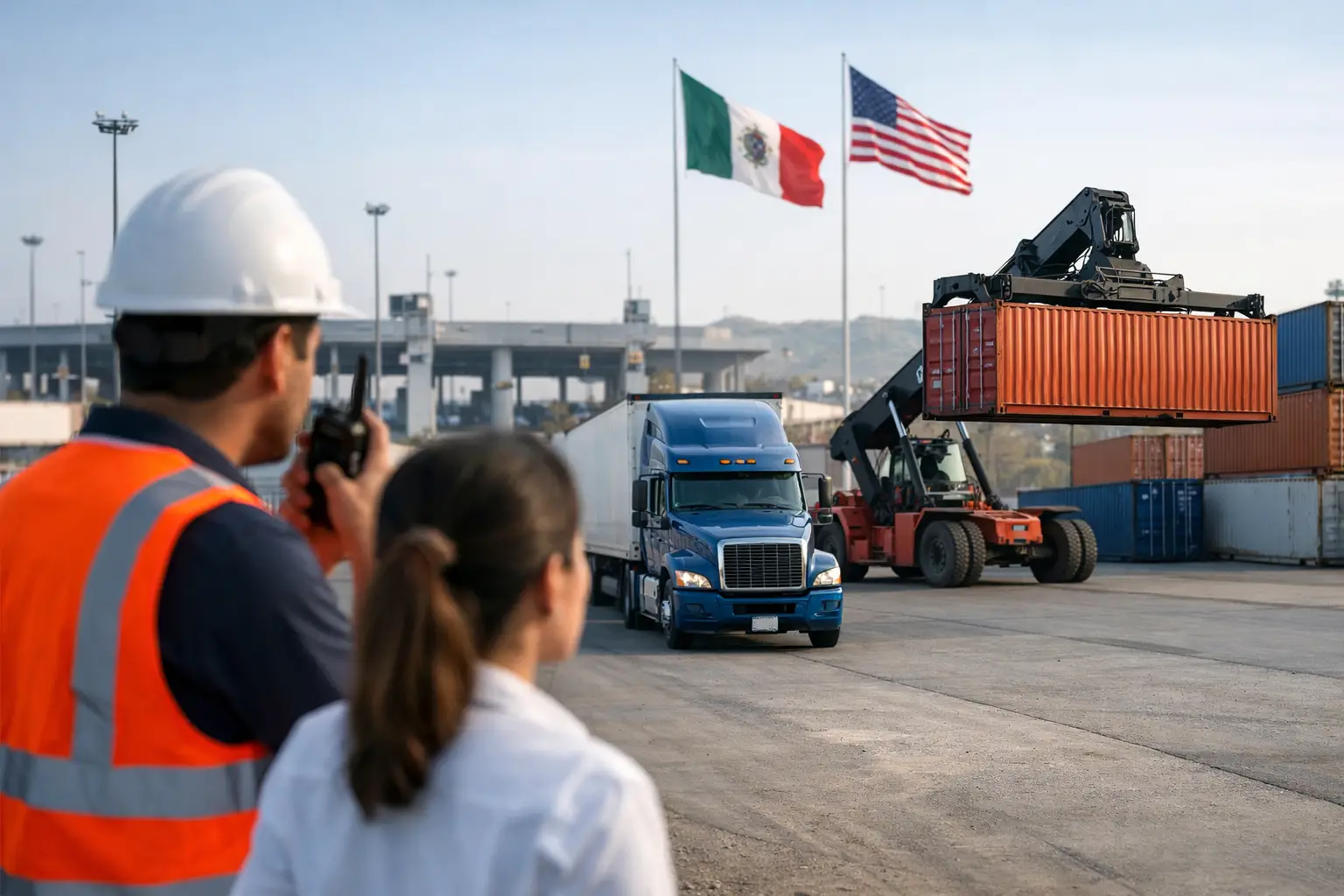
A loaded trailer can clear the border and still lose a day before it reaches its destination. The failure point is often not customs clearance or linehaul capacity. It is the handoff between the yard, the drayage driver, the broker, the carrier, and the receiving facility. That is why Laredo drayage companies matter far beyond the short move they perform.
For high-volume US-Mexico freight, drayage is the control point between border processing and the next operational step. It determines whether freight gets pulled on time, whether a trailer is delivered to the correct yard, whether an empty is returned before detention grows, and whether the people handling the shipment have the same information. A low rate does not offset a missed appointment, a document mismatch, or an unloaded trailer sitting without a plan.
What Laredo Drayage Companies Actually Control
Drayage around Laredo is frequently described as a local pickup-and-delivery service. That description is incomplete. In a cross-border workflow, the drayage provider may coordinate equipment interchange, bridge transfers, customs-release status, yard staging, transload timing, delivery appointments, empty returns, and communication between U.S. and Mexican transport partners.
The scope depends on the shipment. A full truckload moving from a plant in Monterrey to a Dallas distribution center may require a transfer at the border, U.S. customs processing, trailer recovery, and a linehaul dispatch shortly after release. A less-than-truckload or consolidated move may require freight to be staged, counted, sorted, or transferred before it can continue. In both cases, a local driver is only one part of a larger execution chain.
That distinction matters when comparing providers. Some drayage companies supply capacity when asked. Others run the handoffs around the capacity. The second model is usually more valuable for freight teams managing tight production schedules, retail appointments, automotive supply chains, or compliance-sensitive imports.
Border drayage is an information problem
The physical move is short, but the shipment data must be right before the truck arrives. Dispatch needs the correct pickup number, trailer or container details, release confirmation, delivery location, contact information, and appointment requirements. The customs team needs commercial documents that match the freight and the entry. The warehouse needs realistic arrival timing, not a vague estimate based on a driver having crossed the bridge.
When these details live in separate inboxes, the driver becomes the person expected to resolve them. That is a poor operating model. Drivers should execute planned moves, not chase documents, wait for release updates, or determine which party owns an exception.
The Handoffs That Create Delays
Border delay is often used as a catchall term, but the root cause is usually more specific. The fastest way to improve performance is to identify which handoff repeatedly fails.
A common issue is dispatching a drayage unit before the freight is actually ready for pickup. Release may be pending, a document may need correction, or the Mexican carrier may not have delivered the trailer to the planned yard. The truck arrives, waits, and either loses productive time or leaves without freight. Both outcomes create a second scheduling problem.
Another issue is unclear ownership after customs release. Freight may be cleared, yet no one has confirmed who is booking the delivery appointment, assigning the outbound tractor, or monitoring the empty return. Clearance is a milestone, not final delivery. Teams that treat it as the finish line often discover late-stage gaps when a trailer is already consuming yard space.
Equipment mismatches also create avoidable cost. The outbound carrier may need a specific trailer type, a seal may need verification, or the receiving site may refuse equipment that does not meet its requirements. These details are routine, but routine details become expensive when they are handled by phone calls after the truck arrives.
Finally, there is the communication gap between customs and transportation. A broker can file an entry correctly while the transportation side works from an old reference number or incomplete release status. Neither function is necessarily failing on its own. The workflow fails because the systems and teams do not share a single operating picture.
How to Evaluate a Drayage Partner
The right provider depends on your freight profile. A shipper with predictable daily full truckload volume needs dependable capacity, fixed operating cutoffs, and disciplined appointment management. A shipper handling mixed freight, urgent replenishment, or frequent documentation changes may place more value on exception response and customs coordination.
Start by asking how the provider receives and validates shipment instructions. If the answer is simply email or a spreadsheet, ask what happens next. Who checks that the pickup and delivery references match? Who confirms release status? Who alerts your team when the planned move cannot happen? The tool matters less than the process, but a process without structured data will eventually rely on manual interpretation.
Ask how status is reported. “Driver dispatched” is not enough. Useful milestones distinguish between freight ready, driver assigned, driver at pickup, freight recovered, customs released, delivered, and empty returned when applicable. The provider should also be able to explain the exception, the owner, and the next action. Visibility without accountability is just a longer status report.
Capacity should be evaluated by lane and operating window, not by a broad claim that trucks are available. Border operations are sensitive to peak periods, bridge conditions, inspection activity, yard congestion, and appointment cutoffs. A provider that understands your specific movement pattern can plan around those constraints. One that accepts every request without qualification may be shifting risk back to your team.
Questions worth asking before freight moves
A practical selection conversation should cover four operating areas:
- How are customs-release updates connected to dispatch decisions?
- Who owns missed pickups, rejected deliveries, or incomplete documents?
- What milestones are captured, and how quickly are exceptions communicated?
- How are equipment, appointment, and empty-return requirements tracked?
These questions reveal more than a rate sheet. They show whether the provider has a repeatable operating system or is managing each load as a separate fire drill.
Build One Workflow From Origin to Final Delivery
The strongest drayage performance comes from reducing vendor handoffs, not from asking one local carrier to solve every problem alone. Customs brokerage, Mexican carrier coordination, U.S. drayage, linehaul, warehouse scheduling, and document control should operate from the same shipment record whenever possible.
That does not mean every shipper needs a large transportation management system rollout. Many teams already have established ways of tendering freight and sharing documents. The goal is to remove duplicate entry and disconnected status checks. A customs document sent by email should not need to be manually rekeyed by multiple parties before an entry can be filed and a truck can be dispatched.
This is where technology earns its place in border operations. Automation should capture shipment data, flag missing information, route documents to the right customs workflow, and make release status available to transportation execution. It should not force operators to abandon functioning processes just to use another portal. No portal. No login. No change to your workflow is a meaningful standard when teams are already managing time-critical freight.
BorderFlow approaches this as one managed workflow: customs handling, drayage, cross-border trucking, and shipment data coordinated through the same operating layer. For a shipper, the practical benefit is not software for its own sake. It is knowing who owns the freight from document intake through delivery, with fewer opportunities for a release update or appointment change to disappear between vendors.
Measure Drayage by Control, Not Just Cost
The lowest drayage rate can be the most expensive option if it produces recurring detention, expedited linehaul, missed receiving appointments, or internal labor spent tracking basic shipment status. Cost still matters, especially on repeat lanes, but it should be measured alongside service reliability and exception handling.
Track pickup-to-delivery cycle time, on-time pickup and delivery performance, dwell by location, detention and layover events, rejected loads, and the time required to resolve documentation exceptions. These metrics expose whether the issue is capacity, process discipline, yard congestion, or incomplete data upstream.
Do not expect every shipment to move without disruption. Weather, inspections, bridge traffic, and receiving constraints are real. The operational test is whether a partner identifies risk early, communicates it clearly, and presents a workable next step before the delay becomes a missed production window.
The best drayage relationship gives your team less to chase. When freight, documents, customs status, and delivery ownership stay connected, the border becomes a managed operating point rather than a daily source of uncertainty. That is the standard worth setting before the next trailer reaches the yard.