
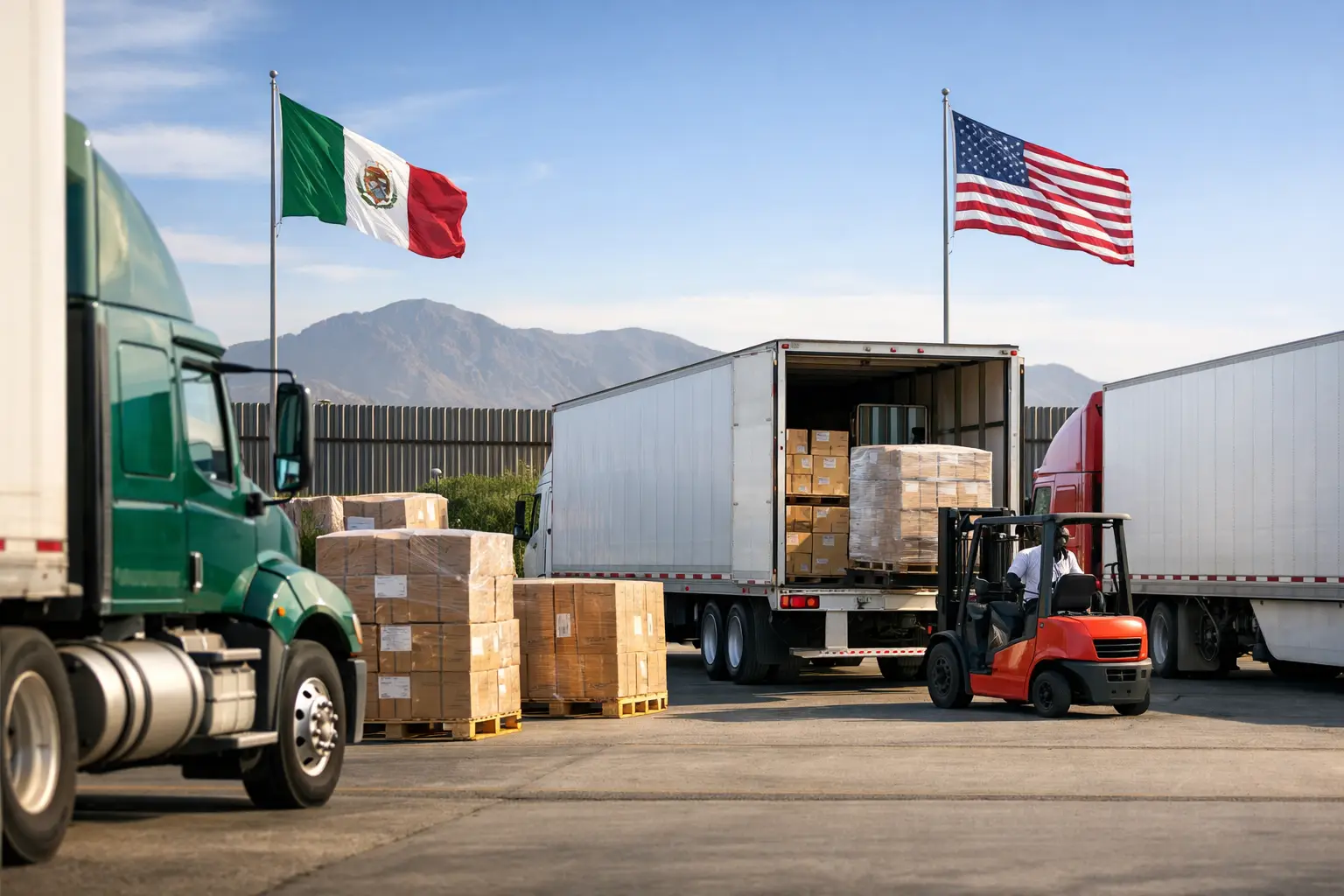
A truck that crosses half empty is expensive. A truck that waits at the border because the commercial invoice, packing list, and entry data do not match is worse. Mexico US freight consolidation is how shippers combine compatible loads into fewer, better-controlled cross-border moves - but only when freight planning and customs execution are designed as one operation.
For manufacturers supplying U.S. plants, distributors replenishing regional inventory, and logistics teams managing multiple Mexican origins, the goal is not simply to fill more trailer space. The goal is to reduce handoffs without losing delivery control. That requires disciplined pickup planning, clear freight rules, accurate trade data, and one owner for exceptions.
What Mexico US Freight Consolidation Actually Means
Freight consolidation combines smaller shipments from multiple suppliers, plants, or pickup points into a shared cross-border move. The freight may travel as LTL, be consolidated into a full trailer for linehaul, or move through a cross-dock near the border before final delivery.
A typical example is an importer collecting components from three facilities in Monterrey and Saltillo for delivery to a manufacturing site in Texas. Shipping each order independently can create three carrier bookings, three sets of border coordination, multiple drayage handoffs, and inconsistent arrival times. Consolidating those orders can reduce the number of border moves and improve trailer utilization.
But consolidation is not automatically cheaper or faster. Every added stop introduces dwell time, loading risk, and a chance that one late supplier holds up the rest of the shipment. The operating question is straightforward: does the savings from combining freight exceed the cost of waiting, handling, and managing exceptions?
When Freight Consolidation Delivers a Real Advantage
Consolidation works best when shipment frequency is high enough to create predictable density. Companies with recurring freight from the same industrial regions can establish cutoff times, scheduled milk runs, defined cross-dock procedures, and regular border capacity. That turns consolidation from an ad hoc cost-saving exercise into a repeatable transportation program.
It is especially effective when individual orders are too large for parcel but too small to justify dedicated FTL. In those cases, a planned consolidation can give shippers more control than conventional LTL while avoiding the cost of sending underutilized trailers across the border.
The model is less attractive for highly urgent material, freight with incompatible handling requirements, or shipments tied to fixed production windows. A line-down part may need a direct dedicated truck regardless of its size. Temperature-controlled freight, hazardous materials, high-value cargo, and products requiring segregation can also limit which shipments may travel together.
The right decision depends on the freight profile. Weight, cube, commodity, pickup geography, lead time, customs status, and final destination all matter. A consolidation program should have clear rules for when freight moves on schedule and when it bypasses the pool.
Start With the Lane, Not the Trailer
Strong consolidation programs are designed around lanes and demand patterns, not around a one-time desire to fill a truck. Start by mapping the origin clusters, destination clusters, average order size, weekly volume, transit requirements, and supplier shipping behavior.
A shipper may find that several northern Mexico suppliers produce enough volume for two scheduled northbound consolidations each week. Another group of suppliers may have irregular volume that is better managed as direct LTL. Treating both groups the same usually creates either unnecessary cost or unnecessary delay.
Set operating cutoffs that suppliers can follow. For example, freight received by a stated time can make the next scheduled departure, while late freight moves on the following cycle or ships direct under an exception process. Those rules protect the network from constant last-minute replanning.
Supplier compliance is central here. If pickup-ready notices arrive late, labels are inconsistent, or shipment dimensions are inaccurate, consolidation becomes a warehouse problem instead of a transportation advantage. Suppliers need concise routing instructions, packaging requirements, document standards, and escalation paths.
Customs Must Be Part of the Consolidation Plan
A loaded trailer is not a border-ready trailer. Consolidated freight can contain multiple purchase orders, importers of record, tariff classifications, country-of-origin details, and valuation data. The physical load plan and customs plan need to agree before the truck reaches the crossing.
That means validating documentation at the shipment level, not after the trailer has been sealed. Commercial invoices, packing lists, bills of lading, product descriptions, classification data, and required government-agency information must be complete and internally consistent. If a shipment requires an ISF, the timing and data ownership need to be established before departure.
The challenge increases when one trailer includes freight for multiple consignees or separate customs entries. This can be managed, but only with explicit load sequencing and release instructions. Freight intended for the first delivery should not be buried behind pallets for the final stop. Likewise, a customs hold on one portion of the load should not create confusion about what can proceed.
For Mexico-to-U.S. freight, the border handoff often involves Mexican customs handling, drayage or transfer coordination, U.S. entry filing, and onward linehaul. Fragmenting those activities across disconnected providers creates blind spots precisely where timing matters most. A unified execution model gives the operator a better chance to identify a document issue before it becomes a parked trailer.
Build a Workflow That Handles Exceptions
The best consolidation plans assume exceptions will happen. A supplier misses pickup. A pallet count changes after the packing list is issued. A classification question appears hours before departure. The process must specify who sees the issue, who can make a decision, and how the change reaches customs and transportation teams.
Email remains the working system for many cross-border teams, and forcing every supplier or warehouse into a new portal can slow adoption. The better approach is to capture documents from the channels people already use, extract the required data, flag missing fields, and route tasks to the correct operator.
This is where technology should remove repetitive work rather than create another layer of administration. BorderFlow OS and Zight AI, for example, are designed to ingest customs documents directly from email, extract key data, and support entry preparation without requiring customers to change their core workflow. The practical benefit is faster issue detection and a clearer operating record for every shipment.
No portal. No login. No change to the way a supplier sends a packing list. What matters is whether the data is usable before the freight reaches the border.
Measure the Program Beyond Cost Per Shipment
Cost per shipment is too narrow to judge a consolidation program. A low transportation rate has little value if it increases detention, creates production risk, or leads to repeated customs corrections.
Track trailer utilization by weight and cube, but also track the percentage of freight that makes its planned consolidation cutoff. Monitor origin dwell, cross-dock dwell, border crossing time, customs release exceptions, on-time pickup, and on-time final delivery. These measures show whether the operation is actually becoming more controlled.
Pay attention to exception patterns. If the same supplier repeatedly misses cutoff, the answer may be a changed pickup schedule or stronger routing enforcement. If one commodity causes recurring entry delays, the issue may be product data or classification governance rather than carrier performance. Operational data should lead to operational fixes.
Choosing the Right Execution Model
Some shippers can run consolidation through their own transportation management team and use separate brokers, carriers, and warehouses. That can work when the internal team has the time, systems, and cross-border expertise to manage every handoff. It also puts the shipper in the middle when something breaks.
Others need one accountable partner that can coordinate pickup, Mexican customs, U.S. customs filing, border transfer, linehaul, and final delivery. The advantage is not just vendor reduction. It is a single operating view of the shipment, with fewer chances for a document update or schedule change to disappear between providers.
The right partner should be able to explain the actual workflow: when documents are reviewed, how entries are prepared, how freight is staged, how release status is communicated, and who owns an exception after hours. General promises about visibility are not enough. Cross-border visibility is useful only when it gives the team time to act.
A consolidation program earns its value when it makes freight more predictable, not merely more compressed. Build it around repeatable lanes, clean trade data, supplier discipline, and a clear exception process. Then every fuller trailer becomes more than a cost decision - it becomes a controlled border move.