
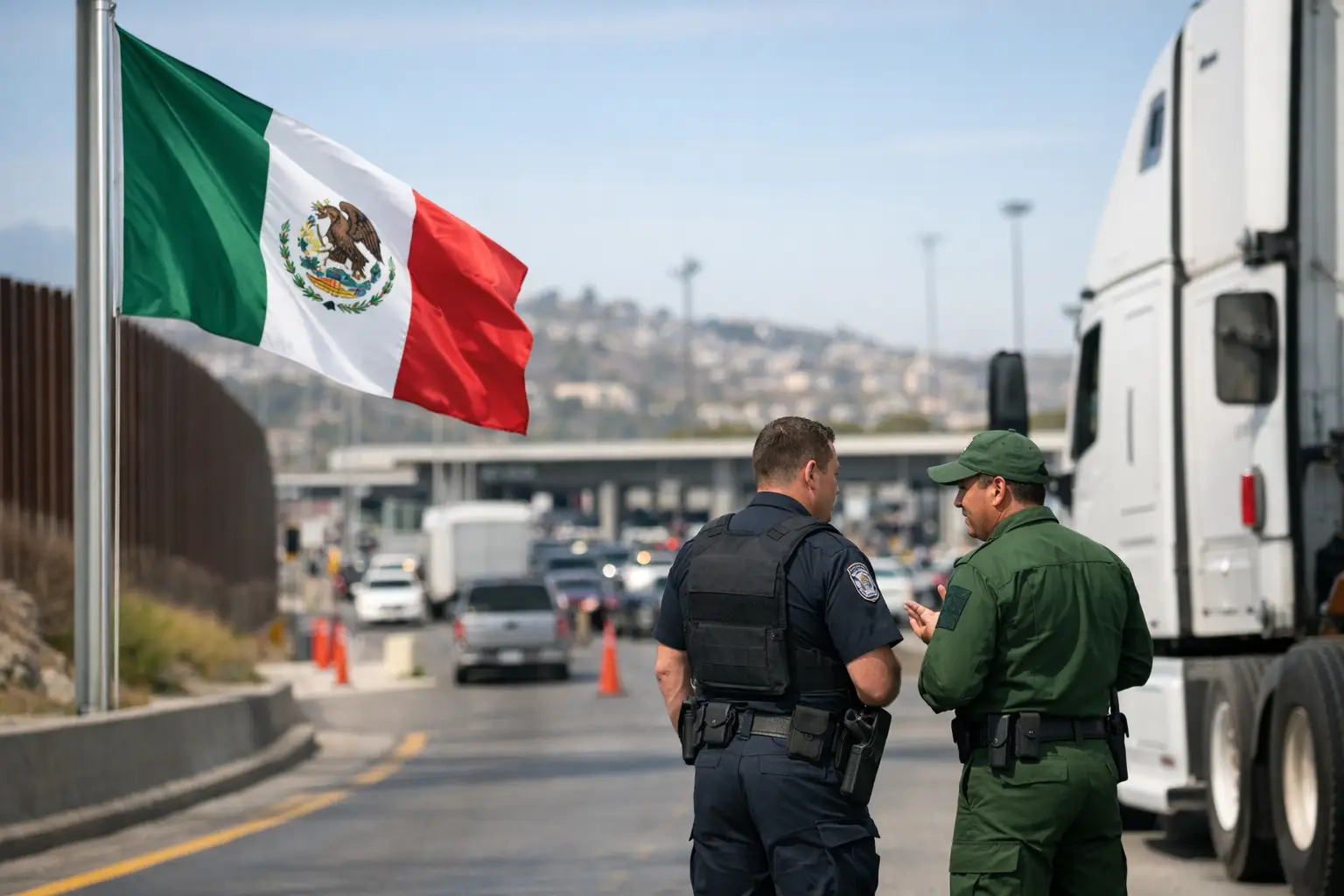
A missed seal check, an unverified carrier handoff, or incomplete access control can create a border problem long before a shipment reaches the port of entry. That is the operating reality behind OEA in Mexico. It is not simply a customs credential. It is a security and compliance framework that asks companies to prove they control the physical, procedural, and data risks surrounding international trade.
For US-Mexico shippers, OEA can be a meaningful advantage when it is supported by disciplined execution. It can also become a costly distraction if a company treats certification as a paperwork project instead of an operating model.
What OEA Means in Mexico
OEA stands for Operador Económico Autorizado, or Authorized Economic Operator. Mexico's program is administered by the Servicio de Administración Tributaria, commonly known as SAT. It recognizes companies that demonstrate strong customs compliance, supply chain security, and internal controls.
The program applies to qualified participants in the international supply chain, including manufacturers, importers, exporters, customs-related service providers, carriers, and logistics operators, depending on the certification category and current program rules. The core premise is straightforward: a company that can demonstrate reliable controls presents less risk to customs authorities.
That does not mean an OEA-certified company is exempt from customs oversight. Freight can still be inspected, documentation can still be challenged, and classification or valuation issues can still trigger enforcement action. OEA changes the risk posture. It does not remove the obligation to file accurate pedimentos, maintain records, manage inventory controls, and comply with Mexican customs law.
Why OEA Matters to Cross-Border Operations
Border delays are rarely caused by one event. They usually result from compounding weaknesses: documents arrive late, a driver is not properly credentialed, seals are handled inconsistently, shipment data does not match commercial documents, or no one owns the exception when freight stops moving.
OEA addresses the control environment around those risks. Certified companies may qualify for operational benefits established under the applicable rules, which can include more favorable customs treatment, security-related facilitation, and recognition through international arrangements. The exact benefit depends on the company type, certification modality, border location, and current authority guidance.
For a manufacturer moving daily freight from Monterrey, Saltillo, or Bajio into the United States, the practical value is not a logo on a slide deck. It is a more controlled chain of custody from plant release through Mexican export processing, border transfer, US entry, and final delivery.
That control matters most when freight is time-sensitive. Automotive, industrial, electronics, medical device, and retail supply chains often have little room for a preventable hold. OEA cannot guarantee a crossing time. What it can do is help establish the security and operating discipline that reduces avoidable friction.
OEA Is Not the Same as CTPAT
US companies often assume OEA is simply Mexico's version of CTPAT. The programs are closely related in purpose, but they are not interchangeable.
CTPAT is the United States' voluntary partnership program focused on supply chain security. OEA is Mexico's Authorized Economic Operator program, administered under Mexico's customs framework. Mexico and the United States have mutual recognition arrangements designed to support trusted-trader supply chains, but each program has its own requirements, application process, audit expectations, and benefits.
A company with CTPAT certification should not assume it automatically qualifies for OEA. Some existing security controls may support an OEA application, such as documented seal procedures, employee screening, visitor management, carrier verification, and incident reporting. But the Mexican program requires its own evidence, assessment, and ongoing compliance.
The same caution applies in reverse. OEA certification does not replace US importer obligations, CBP entry requirements, Importer Security Filing responsibilities where applicable, or a separate CTPAT application.
What an OEA Review Looks for
The strongest OEA applicants do not build a separate compliance binder for the audit. They can show that their operating controls are already active, assigned, tested, and documented.
Physical and personnel security
Authorities will look at how a facility controls access, handles visitors, protects loading areas, manages keys and badges, and responds to security incidents. This is not limited to a guard desk at the front gate. It includes the places where cargo can be accessed, altered, or removed without authorization.
Personnel controls matter as well. Companies need clear processes for hiring, role changes, termination, training, and access removal. A former employee retaining credentials or system access is a security failure, not an HR detail.
Cargo integrity and conveyance controls
Freight security depends on consistent handoffs. Companies should be able to show who inspected a trailer, when a seal was applied, how the seal number was recorded, who verified it at each handoff, and what happens if the seal is compromised.
The same standard applies to containers, yard movements, staging areas, and carrier dispatch. A procedure that exists only on paper will fail quickly when a late pickup, a substitute driver, or a weekend shipment creates an exception.
Customs and data controls
OEA requires more than physical security. Companies need accurate trade data, defined document retention practices, controlled access to systems, and processes for identifying irregularities. Commercial invoices, packing lists, bills of lading, manifests, and pedimento data must align.
For high-volume shippers, this is where manual work creates exposure. Re-keying documents across email, spreadsheets, broker systems, and carrier portals increases the chance of mismatched quantities, incorrect parties, and late corrections. Automation helps, but only if exceptions are routed to a person who can resolve them before the shipment reaches the border.
Business partner verification
A certified operation is only as strong as the parties touching its freight. That includes carriers, warehouses, drayage providers, customs brokers, security vendors, and subcontractors.
Companies should know how partners are screened, what security expectations apply, how performance is monitored, and how failures are escalated. A signed vendor agreement is not enough if no one verifies whether the provider follows the agreed process at the dock or in the yard.
The Operational Trade-Off: Control Requires Maintenance
OEA certification can deliver value, but it imposes a real operating burden. Procedures must be kept current. Employees need recurring training. Security events must be investigated. Vendor files need review. Internal audits need to find weaknesses before an authority does.
For a company with stable facilities, repeat carriers, controlled freight flows, and a mature compliance team, the requirements may fit naturally into existing operations. For a business using rotating carriers, multiple temporary warehouses, frequent new suppliers, or loosely managed Mexican transport providers, the gap can be significant.
That does not make OEA the wrong choice. It means the implementation plan should begin with a gap assessment, not an application deadline. Identify the control owners, map each cargo handoff, compare written policy with actual behavior, and fix the disconnects first.
How to Build an OEA-Ready Border Workflow
The practical objective is simple: every shipment should have an accountable owner, a documented chain of custody, accurate customs data, and a defined response when something goes wrong.
Start by mapping the move from origin release to final delivery. Include plant security, loading, seal application, carrier dispatch, Mexican customs processing, border crossing, US entry, transload or drayage if used, and receiving. Most gaps become visible when the process is mapped by handoff rather than by department.
Next, centralize document intake and exception management. If commercial documents arrive by email, the team needs a controlled method to extract data, validate it, and route missing information before filing. The goal is not to force operators into another portal. The goal is to create a reliable record and prevent late surprises.
Then measure execution. Track seal discrepancies, document corrections, carrier no-shows, rejected entries, inspection events, shipment holds, and response times. OEA readiness improves when a company can show not only that a policy exists, but that management detects and corrects recurring failure points.
For companies moving freight through Laredo, the value of coordination is especially clear. Customs filing, Mexican-side handling, drayage, carrier dispatch, and delivery timing need to operate as one sequence. A fragmented vendor model can turn a minor exception into a missed production window.
Where a Unified Provider Helps
OEA controls do not eliminate the need for a capable customs and logistics partner. They make partner accountability more important. A broker may manage the customs entry, while a carrier controls conveyance security and a drayage provider handles the border transfer. If each party works from separate data and separate escalation paths, the shipper still carries the operational risk.
BorderFlow brings customs execution, cross-border trucking, drayage, and document automation into one workflow. That structure is useful when a shipment issue needs an immediate answer rather than a chain of forwarded emails. No portal. No login. No change to your workflow.
OEA works best when it reflects how freight actually moves on the ground. Build the controls around real drivers, real docks, real documents, and real exceptions. That is where trusted-trader status becomes operational leverage instead of another certificate on the wall.