
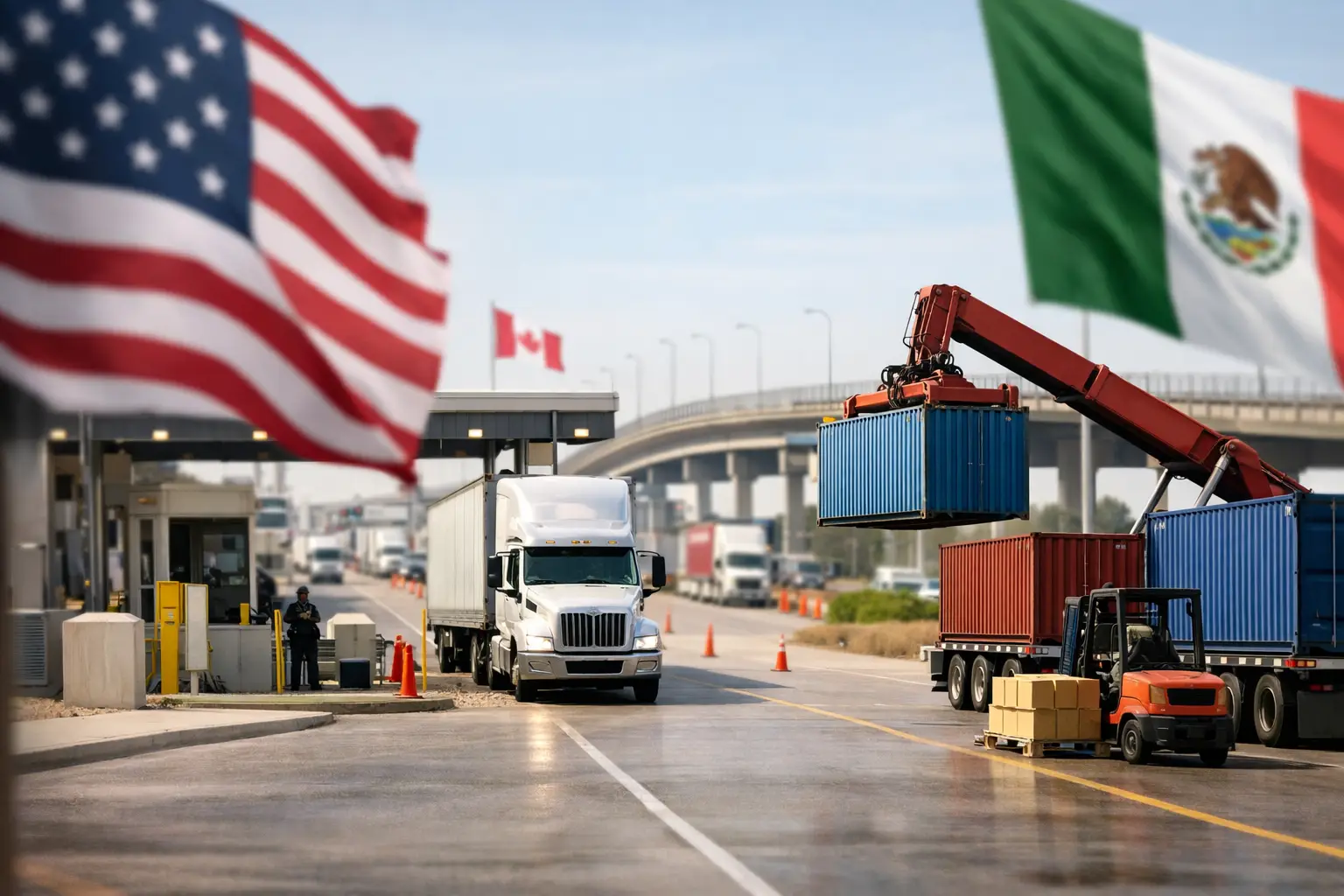
A truck can clear Laredo on a normal transit plan one day and lose hours the next because a preference claim, supplier statement, or product classification cannot withstand scrutiny. That is the operating reality behind USMCA changes. For importers moving high-volume freight between Mexico and the United States, the issue is not simply whether the agreement changes on paper. It is whether your shipment data, documents, brokers, carriers, and warehouse teams can respond before freight reaches the border.
The USMCA entered into force in 2020, but its rules have never been static in practical terms. Agency guidance, enforcement priorities, dispute outcomes, supplier behavior, and the agreement's scheduled joint review all affect the work required to claim preferential treatment. Teams that treat USMCA as a box checked at onboarding often discover the gap when CBP asks for substantiation, a Mexican pedimento needs correction, or a production change breaks a rule of origin calculation.
USMCA changes are not one event
The 2026 joint review is a major checkpoint in the agreement's lifecycle. It is not an automatic rewrite, and it does not by itself change a tariff rate or rule of origin. The three countries can review performance, identify issues, and decide whether to extend the agreement's term. If they do not confirm an extension, the agreement remains in place while the review process continues under its existing framework.
That distinction matters. Trade headlines can make every policy discussion sound immediate. Freight teams need to separate proposed changes, negotiated outcomes, published regulatory requirements, and enforcement activity already happening at the port. Only the last two should change a shipment release plan today.
Still, the review raises the stakes for preparation. Automotive rules of origin, labor value content, regional value content, steel and aluminum sourcing, de minimis treatment, enforcement tools, and North American supply-chain policy remain areas of active attention. A manufacturer does not need to predict each outcome. It does need a controlled process for identifying which SKUs, suppliers, facilities, and lanes would be exposed if a requirement shifts.
Where USMCA exposure actually shows up
A USMCA preference claim lives at the product level, not at the relationship level. A supplier may be located in Mexico, but that does not make every item it sells originating. Likewise, a shipment can move from Mexico to Texas and qualify as Mexican country of origin for marking purposes while failing the separate test for USMCA preferential tariff treatment.
That difference is where many avoidable errors start. Classification drives the applicable rule of origin. The rule may require a tariff shift, a regional value content calculation, or both. A change in a component's tariff classification, sourcing location, cost structure, or production process can alter the result. If the certificate or certification statement continues to say "originating" after the underlying facts changed, the importer carries the compliance risk.
Automotive freight deserves separate attention because the calculations are more layered. Vehicle and parts claims can involve core parts, principal parts, complementary parts, labor value content, and steel or aluminum requirements, depending on the product and claim. A commercial invoice is not a compliance file. Teams need the calculation support, supplier data, and version history behind the claim before the shipment is tendered.
Labor enforcement is another operational concern. The USMCA Rapid Response Labor Mechanism is not a customs classification rule, but it can affect facilities and supply continuity. If an imported product is tied to a facility subject to labor-rights enforcement, the consequences can move quickly from a legal issue to a release, sourcing, and production problem. Logistics leaders should know which Mexican facilities feed their critical SKUs and who owns escalation if a facility becomes exposed.
Build a control plan before freight is staged
The practical response to USMCA changes is not another spreadsheet that only customs can access. It is a shipment-level control model that connects product data to border execution. Start with a clean map of what you import, where it is produced, the HTS classification used on entry, and whether you claim USMCA preference.
For each high-volume or high-duty SKU, maintain the origin basis and evidence required to support it. That file should identify the applicable rule of origin, the calculation method where required, the bill of materials version, the supplier certification source, effective dates, and the internal owner. If a supplier certification is broad, old, or missing the facts needed to validate a claim, treat it as a risk signal rather than a permanent approval.
Then put change management around the inputs. Procurement needs a trigger when it changes a component source. Engineering needs one when a bill of materials or manufacturing step changes. Finance needs one when costs materially affect a regional value content calculation. Customs needs a defined review point before the next entry, not after a post-entry audit identifies the discrepancy.
A working control plan usually needs four operating rules:
- Classify products before recurring freight begins, and revalidate classification when the product or its components change.
- Tie every preference claim to current, retrievable origin support rather than a generic supplier letter stored in an inbox.
- Flag high-risk shipments before pickup, including new suppliers, new SKUs, expired certifications, and facilities with unresolved compliance concerns.
- Maintain one exception owner who can decide whether to claim preference, pay duty, seek clarification, or hold the shipment before it becomes a border delay.
These controls are not designed to force every shipment through a slow compliance gate. The point is the opposite: route routine, validated freight straight through and escalate only the exceptions. That is how high-volume operations protect speed without turning customs into a last-minute document chase.
Make the customs handoff match the freight handoff
USMCA compliance often breaks in the gap between the people who know the product and the people filing the entry. A Mexican plant may send commercial documents to a carrier, while a U.S. broker receives a separate email with a preference statement and a warehouse receives an incomplete packing list. Each party has part of the picture. No one has full accountability.
The border workflow should capture documents at the earliest practical point, extract the data once, and make the same shipment record available to the teams handling export, Mexican customs, U.S. entry, drayage, and final delivery. This is especially important for fast-turn freight where the trailer arrives before a customs team can reconcile a late document revision.
Automation helps when it removes manual rekeying and exposes missing data early. It does not replace classification judgment, origin analysis, or licensed customs oversight. The right model uses automation to read and organize inbound documents, compare them against shipment and product rules, and send exceptions to an operator who can act. No portal. No login. No change to the workflow should not mean no controls. It should mean controls are built into the way the freight already moves.
Decide when not to claim preference
A preference claim is valuable only when it is supportable. For some low-duty products, the cost of pursuing incomplete origin evidence can exceed the duty savings. For other products, especially high-volume components or goods facing meaningful normal duty rates, the financial exposure makes validation non-negotiable.
That decision should be deliberate. If origin support is incomplete, the importer may choose to enter the goods without a USMCA claim, preserve the documentation trail, and evaluate whether a later correction is appropriate once the facts are confirmed. The best option depends on the product, duty impact, entry timing, confidence in the records, and the company's risk tolerance. What does not work is claiming preference because the shipment is already at the border and nobody wants to stop the truck.
The next phase of USMCA will reward operators who can prove what is in the freight, where it was made, and why the claim is valid without slowing the line. Build that discipline now, while you can fix the workflow on your schedule instead of CBP's.