
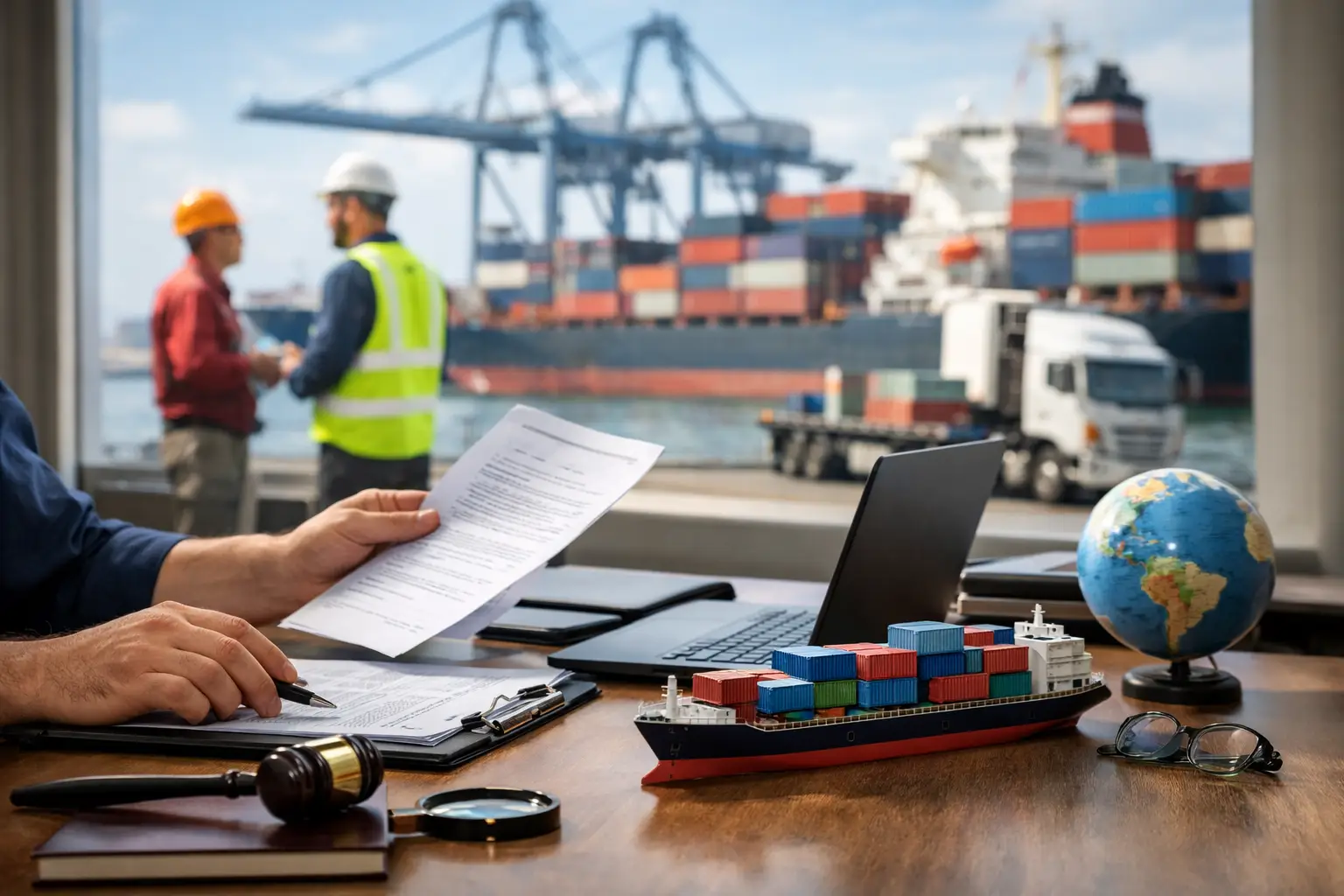
A truck can arrive at the Laredo port with the freight loaded, the driver checked in, and the delivery appointment still at risk. The deciding factor is often not transportation capacity. It is whether the customs entry is complete, accurate, and filed under the right party. So, who files customs entries? In most U.S. imports, either the importer of record files directly or a licensed customs broker files as the importer’s authorized agent.
That answer sounds simple. The operating reality is not. Entry filing sits at the intersection of tariff classification, valuation, country of origin, admissibility, partner government agency requirements, bond coverage, and shipment timing. A broker can transmit the entry, but the importer remains responsible for the declarations made to U.S. Customs and Border Protection (CBP).
Who Files Customs Entries in the United States?
A customs entry is the electronic declaration submitted to CBP to request release of imported merchandise and report the details CBP uses to assess duties, taxes, and regulatory compliance. For most commercial shipments, the entry is filed through the Automated Commercial Environment, or ACE, before or when the freight arrives at the port.
The party that files is called the entry filer. In practice, that is usually one of two parties: the importer of record or a licensed customs broker acting under a valid power of attorney.
The importer of record
The importer of record is the party legally responsible for the import transaction. It may be the U.S. buyer, consignee, owner of the goods, or another qualified entity with a financial interest in the shipment. The importer provides its importer number, takes responsibility for duties and fees, and must exercise reasonable care in the information reported to CBP.
An importer can self-file entries. Large companies sometimes do this when they have an in-house customs department, experienced classification staff, established ACE access, a reliable document-control process, and enough volume to justify the operating cost. Self-filing gives the importer direct control over data and timing, but it also puts the entire execution burden inside the company.
That burden includes validating commercial invoices, maintaining product classifications, confirming declared values, managing country-of-origin rules, securing bonds, tracking cargo status, correcting errors, and responding to CBP questions. Self-filing is not simply a software decision. It is a compliance operating model.
The licensed customs broker
Most importers use a licensed customs broker. A broker is licensed by CBP to conduct customs business on behalf of others. Once authorized by a power of attorney, the broker can prepare and transmit entries, coordinate release, calculate estimated duties and fees, and communicate with CBP on entry matters.
A broker does not replace the importer of record. The importer is still accountable for the accuracy of classification, value, quantity, origin, and admissibility information. If an invoice is incomplete or a product description is vague, the broker can flag the issue and request clarification. The importer still needs to provide defensible source data.
The right broker relationship is operational, not transactional. For recurring US-Mexico freight, the broker needs shipment visibility before the truck reaches the border, current product data, reliable invoice flow, and direct access to the people who can resolve exceptions. Filing an entry five minutes before arrival is not a process. It is a gamble.
What a Customs Broker Files - and What They Do Not Own
A broker may file the entry and entry summary electronically, including the data used for cargo release and duty assessment. Depending on the shipment, the filing may involve the commercial invoice, packing list, bill of lading, arrival details, Harmonized Tariff Schedule classification, declared value, country of origin, bond information, and required agency data.
For ocean imports, the Importer Security Filing, or ISF, is a separate pre-arrival requirement that also needs clear ownership and timing. The party submitting an ISF may be the importer, a broker, or another authorized agent, but the importer carries the liability for late or inaccurate filing.
A customs broker also does not automatically control the freight. The carrier moves the shipment. The drayage provider handles local transfer. The warehouse receives it. The foreign supplier prepares source documents. Each party may have a critical piece of the transaction, but none of those roles makes them the entry filer by default.
This distinction matters when a shipment is delayed. A carrier may say it is waiting on customs. Customs may be waiting on missing documentation. The broker may be waiting on a corrected value or classification from the importer. Without one owner coordinating the full chain, teams lose hours identifying where the handoff failed.
When Self-Filing Makes Sense
Self-filing can work for importers with mature internal controls and predictable product lines. It is more practical when product classifications are stable, supplier documentation is disciplined, and the company has enough qualified customs staff to manage daily exceptions.
It becomes harder when the business imports across multiple ports, launches new SKUs frequently, relies on several suppliers, handles regulated goods, or needs around-the-clock shipment coordination. A low volume of entries does not always mean low risk. One incorrect classification, missed agency requirement, or unsupported valuation can create exposure far beyond the cost of a broker fee.
The decision should be based on execution capability, not a preference for owning every task. Ask who will review source documents before loading, who will resolve a CBP hold, who owns post-entry corrections, and who can see the truck, the entry status, and the delivery appointment in one operating view.
The U.S. Entry and the Mexico Pedimento Are Separate Workflows
For US-Mexico freight, one common mistake is treating customs clearance as a single filing. It is not. A shipment moving from Mexico into the United States requires U.S. import clearance, typically through a CBP entry. The Mexico export side may require its own documentation and customs process.
For freight moving from the United States into Mexico, the Mexican import process uses a pedimento rather than a U.S. customs entry. Mexican customs handling must be managed through the appropriate authorized parties and systems. A U.S. customs broker cannot simply extend its CBP authority into Mexico.
That split creates a real coordination problem at the border. The export documents, Mexican customs process, U.S. entry, carrier dispatch, drayage handoff, and final-mile delivery must all align. If one side clears and the other side lacks a required document, the shipment is still not moving.
This is why high-volume cross-border programs need a unified workflow, not a collection of email threads between separate providers. BorderFlow coordinates brokerage, customs data, transportation milestones, and document intake in one operating flow, so teams can identify an exception before it becomes border dwell.
Keep Filing Authority Clear Before Freight Moves
The cleanest import process starts before the supplier releases freight. The importer should establish who is acting as importer of record, who holds the power of attorney, which broker is filing, what bond will support the entry, and where final product data is maintained.
Commercial documents should describe goods precisely enough to support classification and admissibility review. “Auto parts” or “machine components” may be commercially familiar descriptions, but they are rarely sufficient for customs analysis. Product function, material composition, use, brand, part number, quantity, value, and origin all affect entry quality.
The best operating teams do not wait for a rejected entry to find missing data. They build document intake and validation into the shipment workflow. When invoices arrive by email, the data should be captured, checked against established product rules, and routed to the right customs and transportation teams without forcing people into another portal or manual tracker.
A broker can file the entry. A carrier can cross the border. But only a controlled process keeps the entire move accountable. Set the filing responsibility early, make source data available before arrival, and give one team clear visibility from origin through final delivery.