
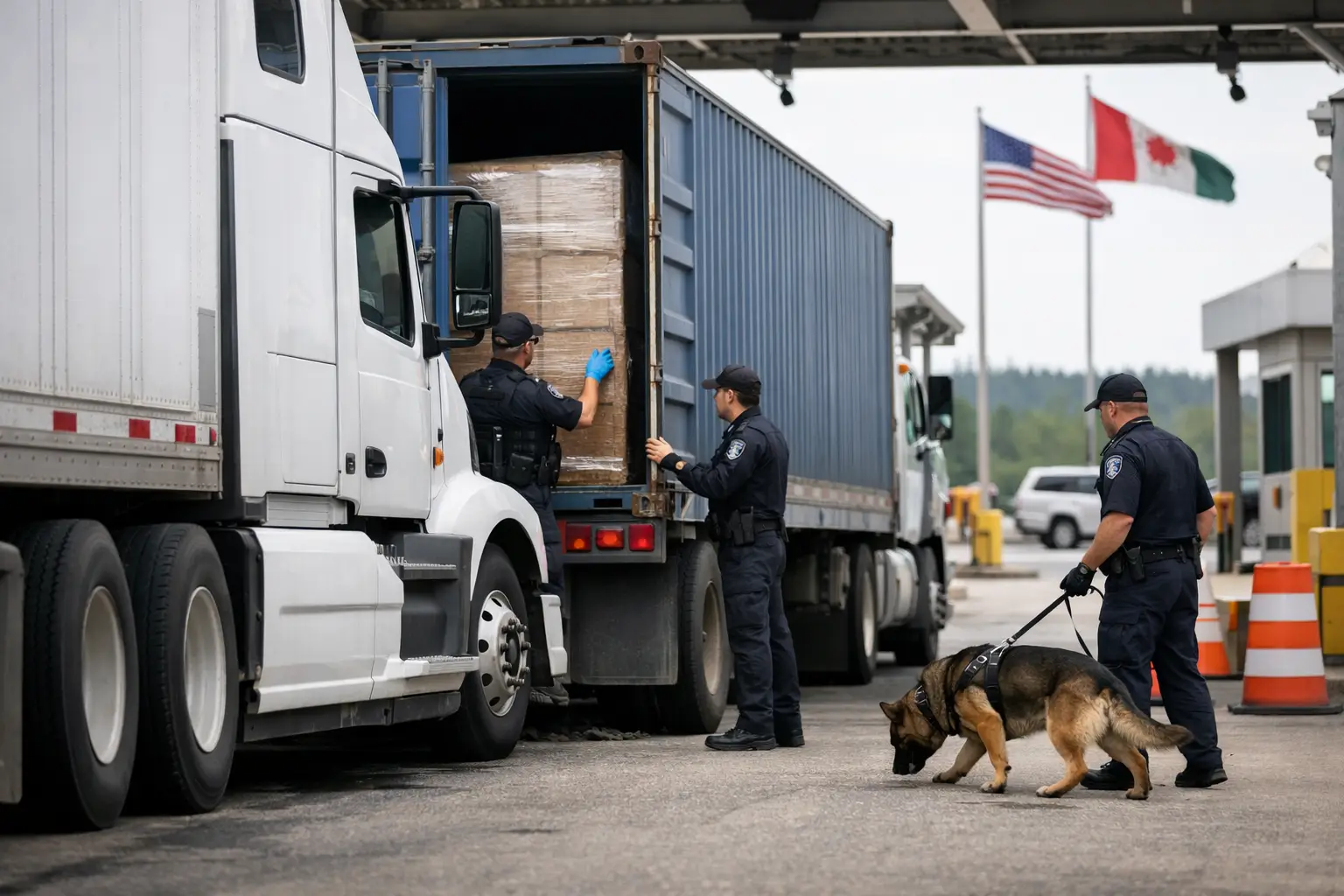
A truck can be cleared to cross, arrive at the port, and still lose its appointment window because CBP selected the shipment for inspection. That is the practical answer to when do border exams happen: an exam can be initiated before arrival through risk targeting, but it happens once cargo is available to Customs and Border Protection at or near the port of entry.
For US-Mexico freight, there is no fixed exam schedule and no reliable way to predict that a specific load will be selected. Customs uses data, enforcement priorities, shipment history, and random selection to determine which entries need a closer look. The operational goal is not to guess whether an exam is coming. It is to submit a clean entry early, keep documents aligned, maintain visibility on the truck, and have a response process ready when a hold appears.
When Do Border Exams Happen in the Shipment Timeline?
A customs exam is not the same as the standard border processing every commercial shipment receives. Most freight is reviewed electronically through the entry process. If CBP identifies a concern or selects the shipment for review, the entry can receive a hold or exam instruction.
The targeting decision may occur while the truck is still in Mexico, while the broker is transmitting entry data, or after the freight has reached the U.S. side. CBP cannot physically inspect freight until it is presented and accessible, but the decision to inspect may already be in place before the driver reaches the primary booth.
For a northbound truck, the typical sequence is straightforward. Commercial documents and entry data are prepared before crossing. The carrier presents the shipment at the port. CBP either releases the entry, refers the truck for additional processing, or places an exam hold that requires the freight to move to a designated inspection area. The carrier, drayage provider, broker, warehouse, and consignee then need to work from the same status - not from separate emails and assumptions.
Timing depends heavily on the freight lane and port conditions. At a major gateway such as Laredo, an exam instruction can create a short delay or extend into multiple days if an inspection bay is constrained, the shipment must be unloaded, agricultural review is required, or CBP requests additional information. A truck appointment at destination does not change the exam process. Once CBP holds the load, the inspection takes priority.
An exam can happen after entry release activity begins
One common misconception is that customs clearance is final the moment an entry is accepted. Entry filing, cargo arrival, release messaging, and physical inspection are connected but distinct events. A shipment may look operationally ready until a hold message arrives, or CBP may request documentation that prevents release from moving forward.
That is why teams should avoid treating a preliminary status as a delivery commitment. Build room into critical production schedules, warehouse labor plans, and carrier appointments, especially for freight with a higher likelihood of scrutiny.
What Triggers a Border Exam?
CBP does not publish a formula that tells importers why a particular shipment was selected. That is by design. Still, experienced customs teams know that clean, consistent data reduces avoidable friction, even though it cannot eliminate random or enforcement-driven exams.
Selection can be influenced by discrepancies between the commercial invoice, packing list, manifest, and entry data. Commodity classification, country of origin, declared value, importer history, supplier history, unusual shipment patterns, and partner government agency requirements can also matter. For ocean cargo, Importer Security Filing quality and timing can add another compliance dimension before freight ever reaches the land border.
Certain products naturally receive more attention. Goods subject to FDA, USDA, EPA, DOT, FDA food rules, textile enforcement, antidumping and countervailing duties, or other admissibility controls may require additional review. That does not mean the shipment is noncompliant. It means the compliance burden is higher and the data needs to stand up to inspection.
Random selection is also real. A shipment can be fully documented, correctly classified, and moving under a strong compliance record, then still be referred for a non-intrusive inspection. No broker, carrier, or technology platform can promise zero exams. Anyone who does is selling certainty they do not control.
Exam types affect the delay, not just the status
The phrase “border exam” covers several different activities. A non-intrusive inspection may involve scanning the truck or trailer with imaging equipment. It can be relatively quick, but queue time at the port still matters.
A tailgate exam usually requires access to the trailer so officers can visually review the cargo near the rear. An intensive exam can require unloading, counting, opening cartons, comparing goods to documents, and potentially repalletizing freight. Agricultural or partner-agency reviews may add their own procedures and timing.
The difference is operationally significant. A scan may preserve the original load configuration. An intensive exam can create labor charges, detention exposure, damaged packaging risk, missed delivery appointments, and a need for a reefer or secure trailer to remain available longer than planned. Teams should plan the recovery workflow as carefully as the crossing itself.
How Long Do Customs Exams Take?
There is no single service-level clock for a CBP exam. Some inspections clear the same day. Others take several days or longer. The duration depends on the exam type, port volume, staffing, cargo availability, whether a third agency is involved, and whether CBP finds a documentation or admissibility issue that needs resolution.
The first delay is often not the inspection itself. It is the handoff gap. The broker may see a hold, while the carrier is waiting for a crossing instruction and the consignee is expecting delivery. If nobody owns the status change, the truck may sit before it is properly positioned for the exam.
The second delay is access to the cargo. If freight is tightly loaded, mixed with other consignees, sealed in a way that complicates handling, or missing a usable packing list, the exam facility has more work to do. Clear carton counts, piece-level detail where appropriate, legible marks and numbers, and accurate trailer information make a difference when the shipment is physically opened.
Do not use best-case timing as the basis for a production shutdown or a just-in-time delivery promise. For critical loads, establish an exception plan before departure: alternate inventory, receiving flexibility, carrier detention authority, and a clear escalation path for document requests.
How to Reduce Avoidable Border Exam Delays
You cannot control CBP selection, but you can control the quality and speed of your response. Start before pickup. The commercial invoice, packing list, purchase order data, classification, origin, valuation, and carrier information should tell the same story. Late corrections at the border create noise precisely when the shipment needs a clean release path.
Treat document intake as an operating process, not an inbox task. If a supplier emails a revised invoice, that revision must reach the broker and be reconciled before the entry is filed or amended. If the bill of materials changes, confirm whether classification, origin, or value treatment also changes. Small data mismatches are often what turn a manageable question into a delayed load.
The carrier must also have precise instructions. Drivers need to know which crossing to use, whether the entry is ready, what reference numbers apply, and who to contact if they receive a referral. A driver should never be forced to interpret a customs status from a text message while waiting at the port.
Once an exam is issued, execution matters more than explanation. Confirm the hold type, trailer location, party responsible for moving cargo to the exam site, expected fees, required documents, and the next status checkpoint. Keep the consignee informed in operational terms: “held for CBP intensive exam, freight presented, awaiting exam start” is actionable. “Customs delay” is not.
BorderFlow combines brokerage, cross-border trucking, drayage, and customs orchestration in one workflow so the team filing the entry and the team moving the freight can act on the same exception immediately. No portal. No login. No change to your workflow. The advantage is not merely faster messaging. It is clear accountability when a load stops moving.
Do Mexico Customs Reviews Follow the Same Timing?
Not exactly. Mexico customs processes and inspections are governed by Mexican authorities and the pedimento process, not CBP entry rules. A northbound shipment may face Mexican export-side review before it reaches the U.S. port, then a separate CBP decision after crossing. Southbound freight has the same principle in reverse: U.S. export requirements and Mexican import processing are separate control points.
For shippers, the practical takeaway is simple. “The truck crossed the first checkpoint” is not the same as “the shipment is cleared end to end.” Build a status model that tracks export clearance, border movement, import entry, examinations, release, and final delivery as separate events. That is where real visibility begins.
A border exam is an exception, but it should not become an operational surprise. Clean data, early filing, connected providers, and a defined response owner give your team control over everything around the exam - which is exactly what protects the freight schedule when CBP decides to look closer.